street art

The following guest post is by Houda Lazrak, a graduate student in Museum Studies at New York University.
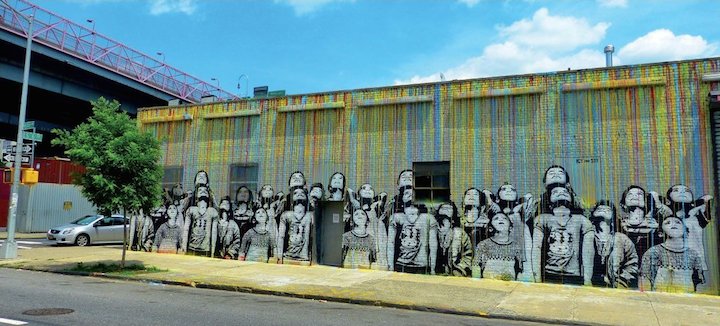
"Icy and Sot"

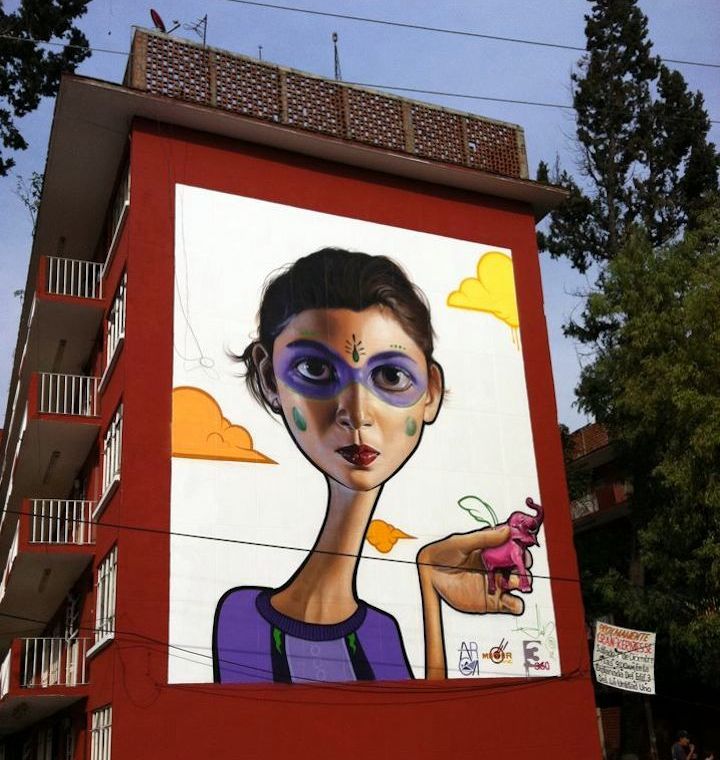
As street art continues to gain legitimacy as a contemporary art movement throughout the world, New York City remains its cradle of birth and continues to attract artists from around the globe.  Gingko Press’s recently published Outdoor Gallery — New York City by author and photographer Yoav Litvin bears witness to the unmediated and diverse creative expression of New York City’s street art.  Thought provoking, comprehensive and aesthetically pleasing,  Outdoor Gallery presents hundreds of street art photographs, accompanied by interviews, featuring more than forty artists.
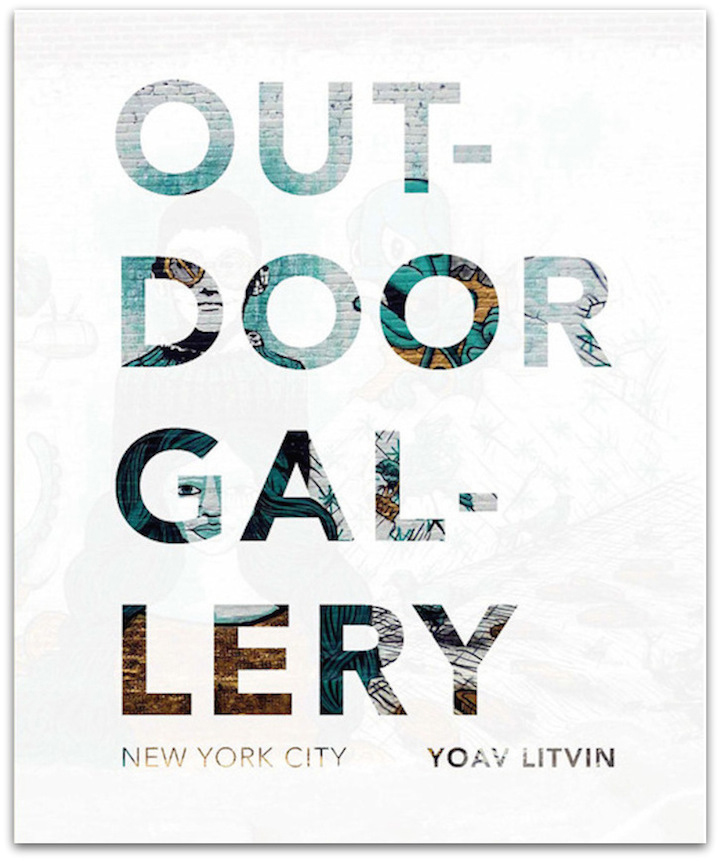
"Outdoor Gallery"

For two years Yoav immersed himself in the world of street artists, learning their visual language, engaging in their community and observing their habitus. Outdoor Gallery justly frames street art as a platform for disrupting society’s notion of the use of public space.  As the author states, street art is “a creative and non-violent form of rebellion.”
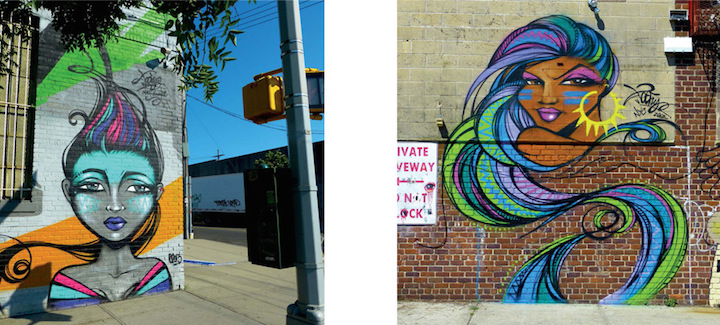
Toofly

The author provides us with a rare opportunity to view the artists’ actual process.  Yoav photographs artist Adam Dare’s steps as he installs his signature bunny paste-up on scaffolding in the dark of the night.  Jilly Ballistic, known for subway site-specific images, also agrees to guide us through a 9-step process of pasting an image of a city officer in the Astor Place metro station.
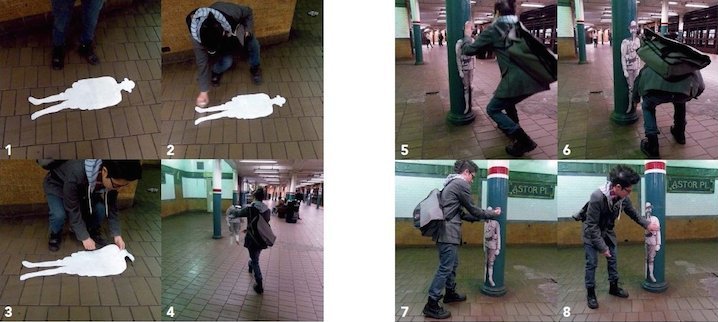
"Jilly Ballistic"

Although most of the photographs are taken soon after the images have surfaced, Yoav eloquently emphasizes the ephemeral nature of the art form in his opening commentary and throughout the interviews he conducted.  He also reminds us that street art is continuously at the mercy of many factors, such as neighborhood gentrification, weather conditions, vandalism and police intervention.   Photography serves as an ally in keeping the art works alive after they have faded or disappeared.
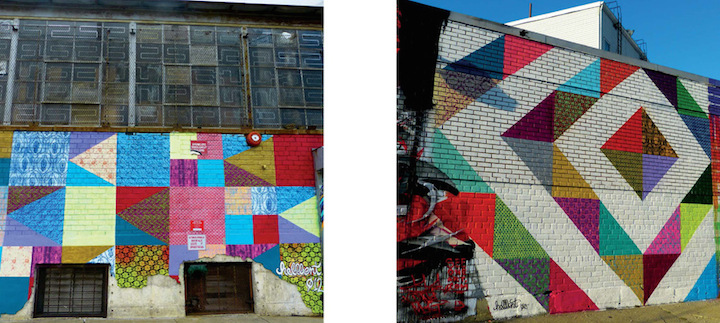
Hellbent

The book’s narrative also acknowledges and insists on the diversity of mediums, surfaces and messages embedded in the art pieces.  The interviews inform us of the range of intention behind the pieces.  For some artists, such as gilf!, Enzo & Nio, and Icy & Sot, political commentary is the rationale behind their work.  Alice Mizrachi, on the other hand, uses her large-scale murals to encourage community engagement. Finally, street art serves as a creative outlet and as a form of self-expression. Shiro describes her signature character as her “alternative self, reflecting [her] experiences and emotions as [she] goes through life.”
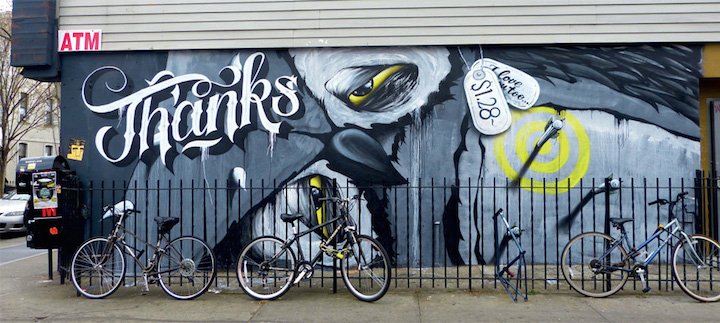
Never

This book provides remarkable insight into the motivations and the creative process of dozens of street artists whose works have surfaced in NYC. More than shedding light on the extraordinary talent of these artists, Outdoor Gallery inspires readers to discover for themselves the treasure trove of outdoor art New York City has to offer.

Outdoor Gallery — New York City can be ordered online at Amazon and is available from retailers worldwide including Low Brow Artique and Zakka in Brooklyn and Strand Books, the MoMA and Guggenheim Museum shops in Manhattan.

Images © Yoav Litvin 1. Icy & Sot in Williamsburg, Brooklyn; 2. Toofly in Bushwick, Brooklyn and in Astoria, Queens; 3. Jilly Ballistic process in underground metro; 4. Hellbent in Astoria, Queens & 5. Never Satisfied in Williamsburg, Brooklyn

{ 0 comments }
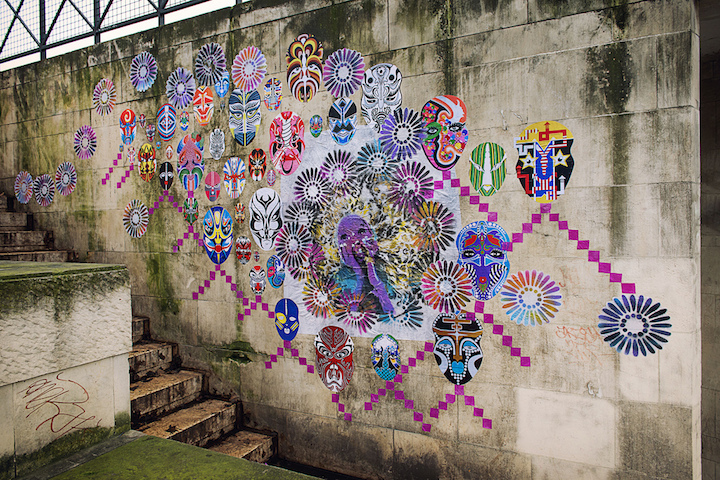
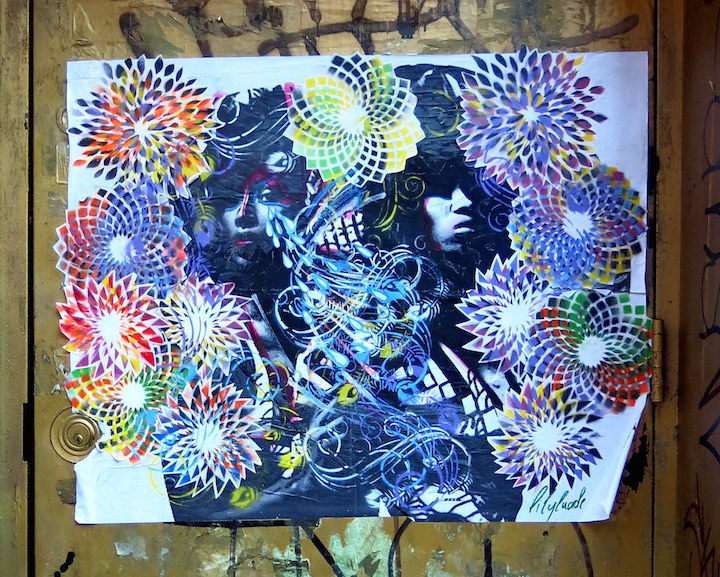
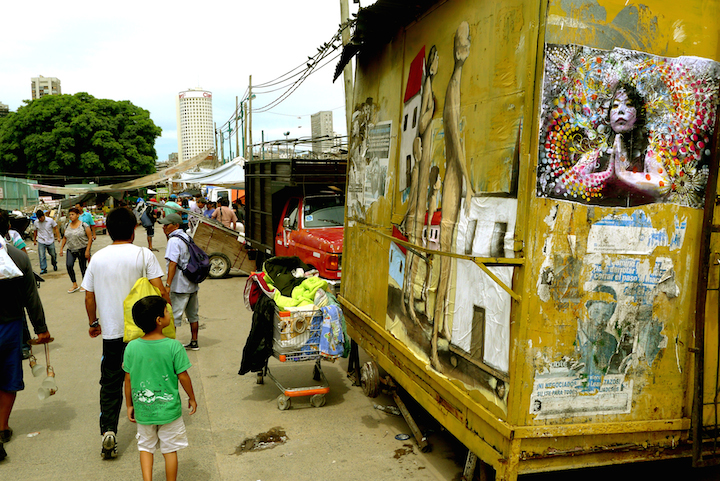
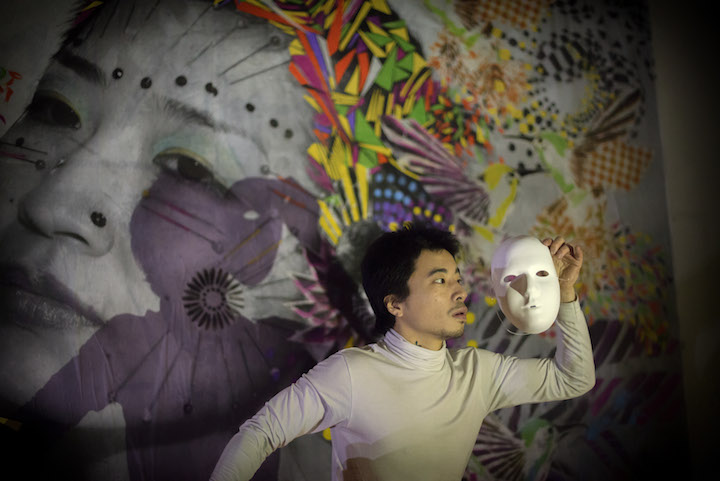
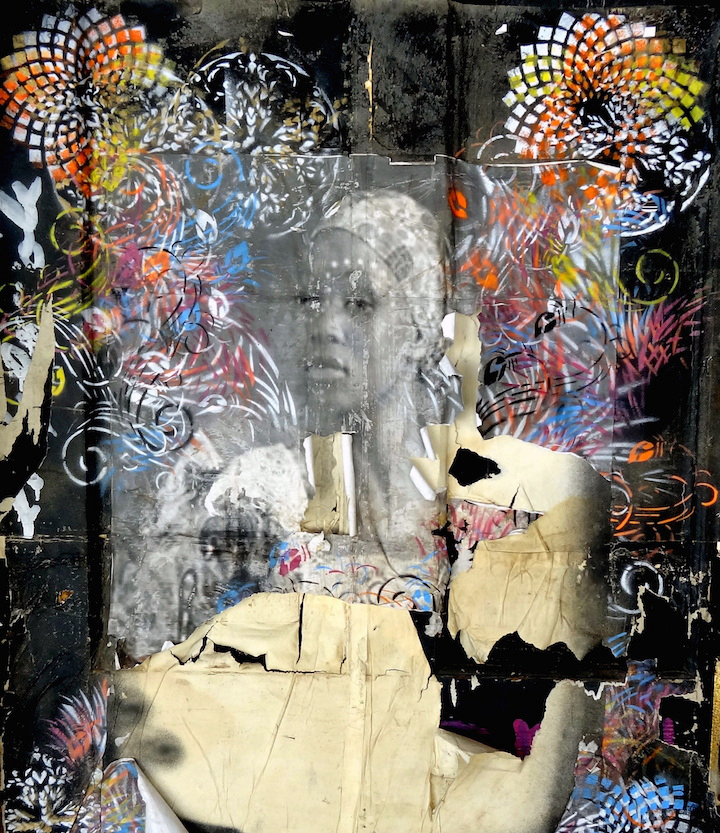
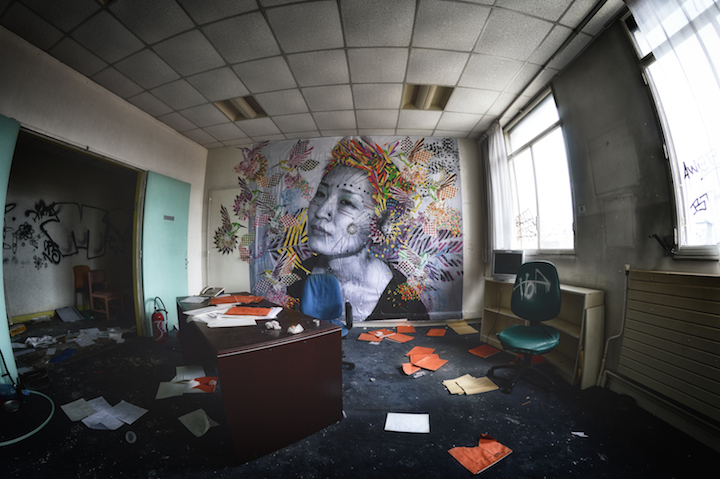
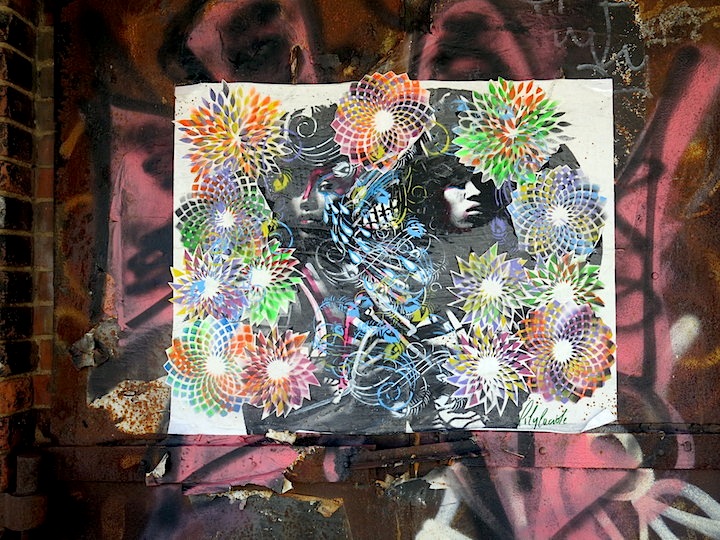
Currently based in Montreal, Canada, lilyluciole has been sharing her distinct vision and luscious aesthetic throughout the globe. We met up when she was in New York City.

Lilyluciole

When did you first begin to share your artwork in public spaces?

I began three years ago. I was living in Paris at the time and recovering from a painful operation. Creating art was a way for me to express my feelings and, at the same time, heal my psychic and physical wounds.

What inspired you to hit the streets?

I wanted to share my vision with others, while transforming public space in a positive way. I feel that I have a unique way of seeing the world. The first image that I pasted after I arrived Montreal in 2011 was a portrait of an African woman who represented survival amidst difficulties. She was a woman who remained faithful to her dreams despite adversity.

lilyluciole

Which cities have you hit since?

I’ve gotten my artwork up in Montreal, Paris, Berlin and New York City. And Eric Marechal has pasted for me in China, Brazil, Argentina and Mexico for Street Art without Borders and the ArtFabric. I was also involved in JR’s Inside Out Project in Sao Paulo, thanks to Eric and Fabi Futata.

What is the riskiest thing you ever did in the public art sphere?

I never think about it, so there are no risks.  What I’m doing is too important. Any “risks” that I take only enhance my viewpoint.

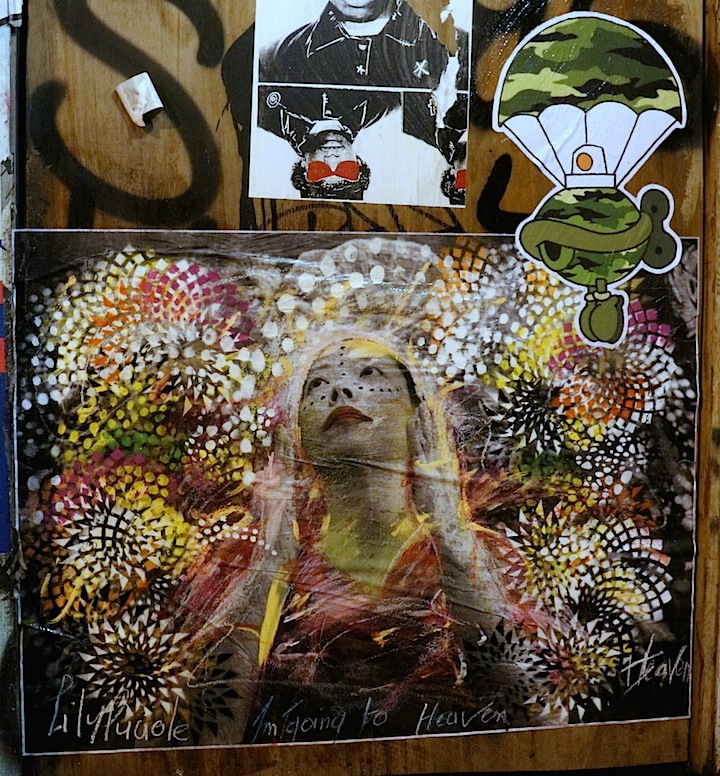
Lilyluciole

Do you belong to any crews?

I belong to Collective Offmurales, a Montreal-based collective made up largely of women. It includes a range of artists from yarn bombers to street artists –like Zola, Stela, Wall of Femmes, Camille Larrivée and Harpy. I also work independently of this crew on an informal basis with a gamut of artists including street artists, photographers and dancers.

Have you any favorite artists? Artists who’ve inspired you?

I’ve been in love with Swoon since I first discovered her. But there are many others I really appreciate. I have a great respect for artists who are passionate, who seek their own truth, who view the world critically and who connect to others’ realities – those whose lives and art are one.

Lilyluciole

Have any particular cultures influenced you?

Not consciously. But I suppose I’ve been influenced by African and European ones. My inspiration is rooted in my travels, in dance and in life, itself.

Are you generally satisfied with your finished piece?

Sometimes. But as soon as I’m finished creating one, I’m already thinking about the next one.

Do you have a formal art education? Was it worthwhile?

I began studying for a BFA in 2002, and I completed it in 2008. Yes, I’d say it was worthwhile, as it helped open me to many things, including the interdisciplinary fusion of techniques and genres, such as photography, fine arts and video.

lilyluciole

Have you shown your work in galleries?

Yes, mainly in Paris, because in Montreal galleries tend to focus on a select group of artists.

Any thoughts about the graffiti/street art divide?

I don’t understand it. I want to bridge the so-called divide.

How has your work evolved in the past few years?

It’s gotten lighter in tone.

lilyluciole

How does the street art scene in Montreal differ from the one here in NYC?

The street art scene in Montreal is new compared to the one here in NYC. It is still emerging, and it does not yet have the energy of NYC, Paris or Berlin. It has yet to open itself to the world. But it will.

How do you feel about the role of the Internet in all this?

The streets are what matter in this movement. But I’m not against the Internet as a tool to promote what’s on the streets. And I am grateful to all the photographers who document and share my work — the artfabric, Sylvain Borsatti, Alex TassotStreet Art Shooteurs and everyone else who has captured my work.

lilyluciole

Have you any feelings about the bloggers in the scene?

I’d like to see more discussion beyond a superficial level. Bloggers need to question the artists and listen to them.

What do you see as the role of the artist in society?

To provide society with an alternate voice, an individual one. I see my particular role as blurring the boundaries among cultures.

lilyluciole-

What do you see as the future of street art?

It will become bigger and bigger and more socially conscious at the same time.

What about you? What’s ahead for you?

I don’t know, but I will continue to explore my identity, my sense of truth and my position as a woman and as an artist.  Women have a particular wisdom and perception of the world that come from their intuition. I hope to continue to broaden my distinct insights and express them through my art.

Interview conducted and edited by Lois Stavsky. Photos: 1. lilyluciole & Baubô in Paris by Alex Tassot; 2. lilyluciole in NYC by Lois Stavsky; 3. lilyluciole & Herard for ArtFabric in Buenos Aires with photography & Choice of collaboration by  Fabi & Eric Marechal; 4. lilyluciole & Ismaera in Paris by Alex Tassot; 5. lilyluciole in NYC by Sara Mozeson; 6. lilyluciole in abandoned space by Street Art Shooteurs; 7. ilyluciole in NYC by Lois Stavsky  and 8. lilyluciole and Keith QbNyc in NYC by Rachel Fawn Alban

{ 0 comments }
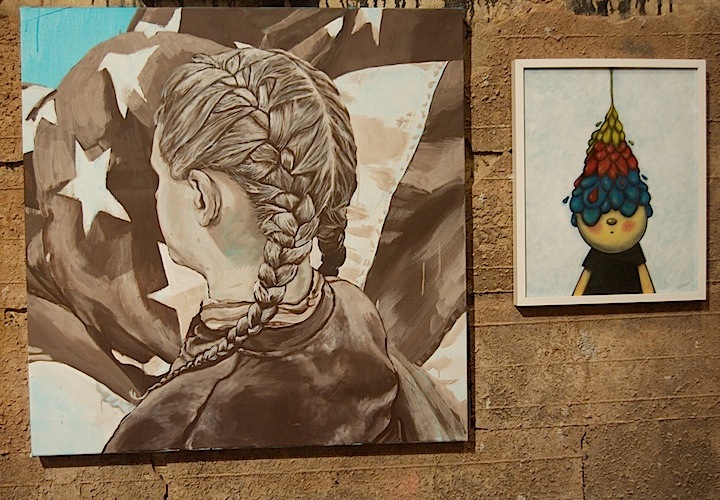
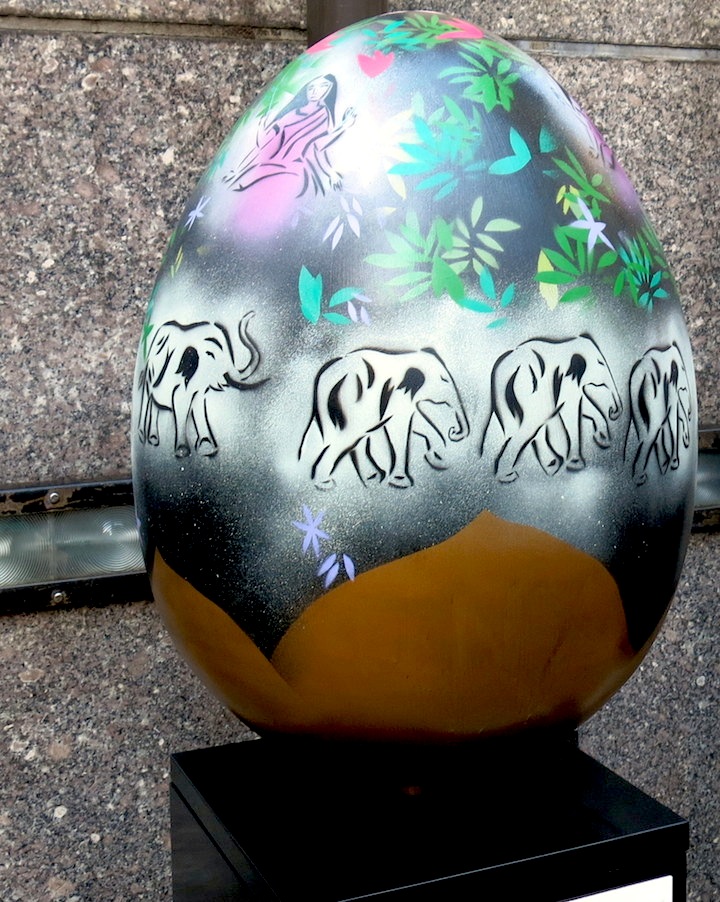
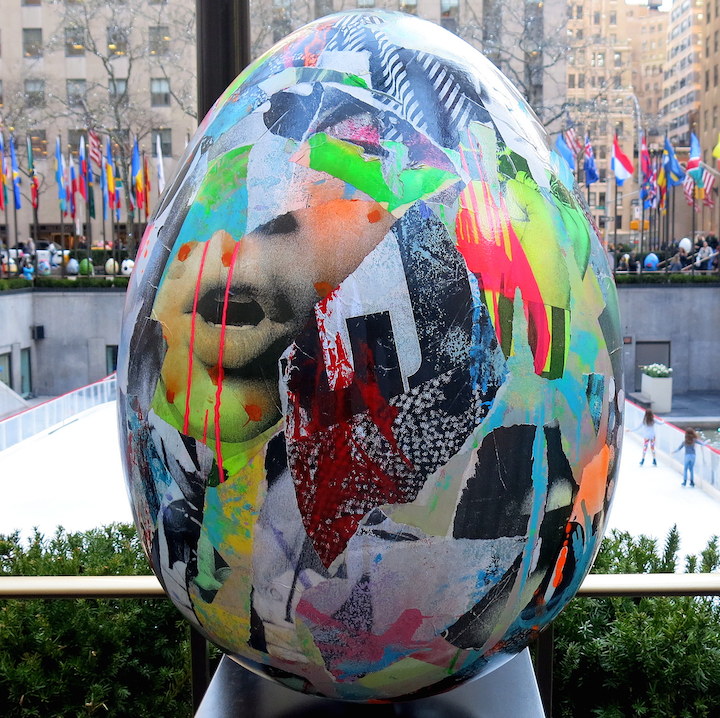
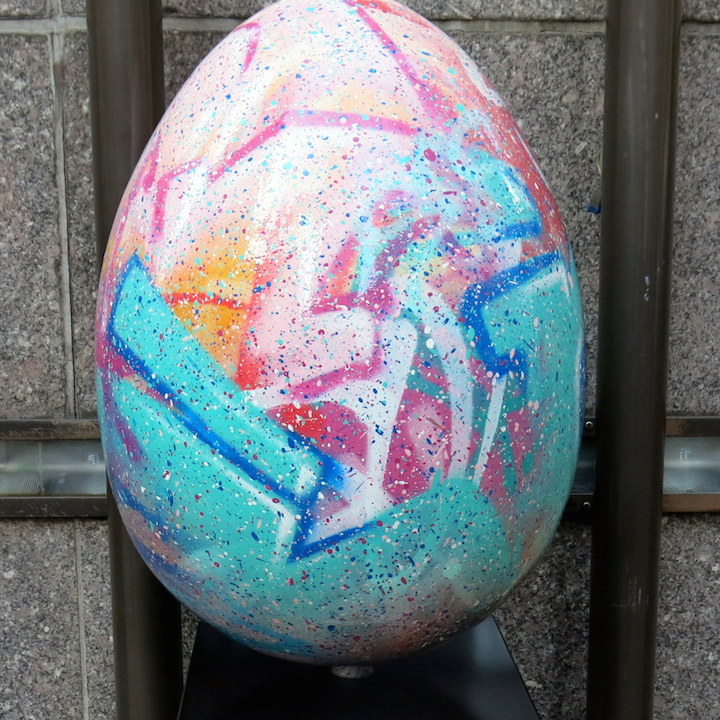
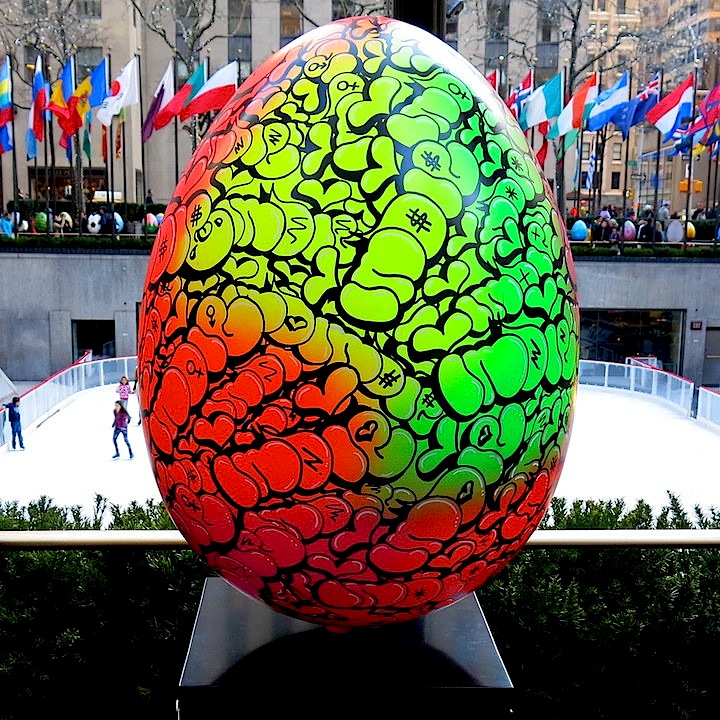
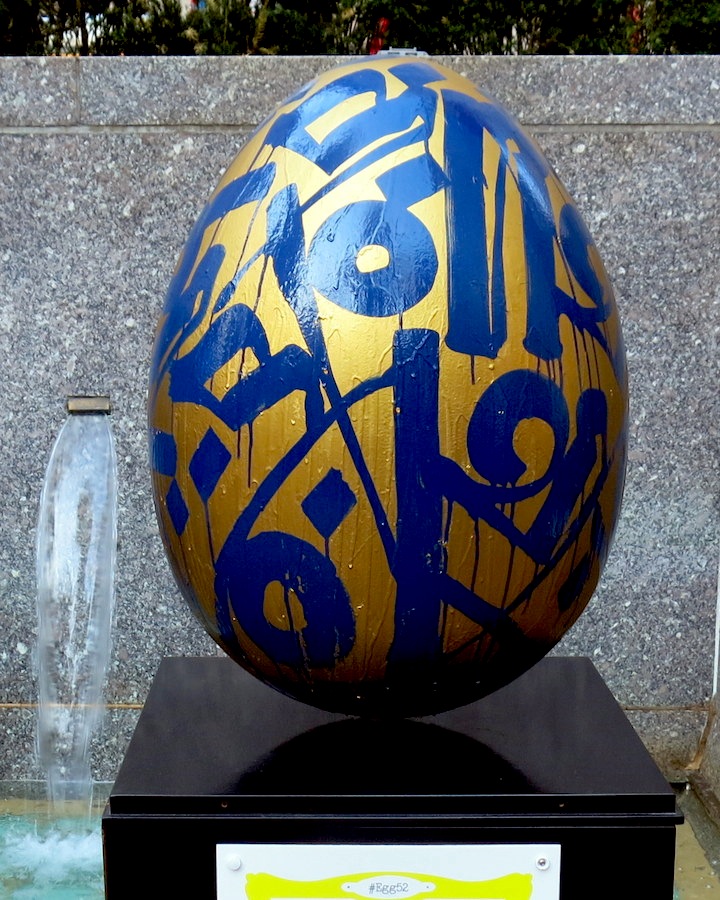
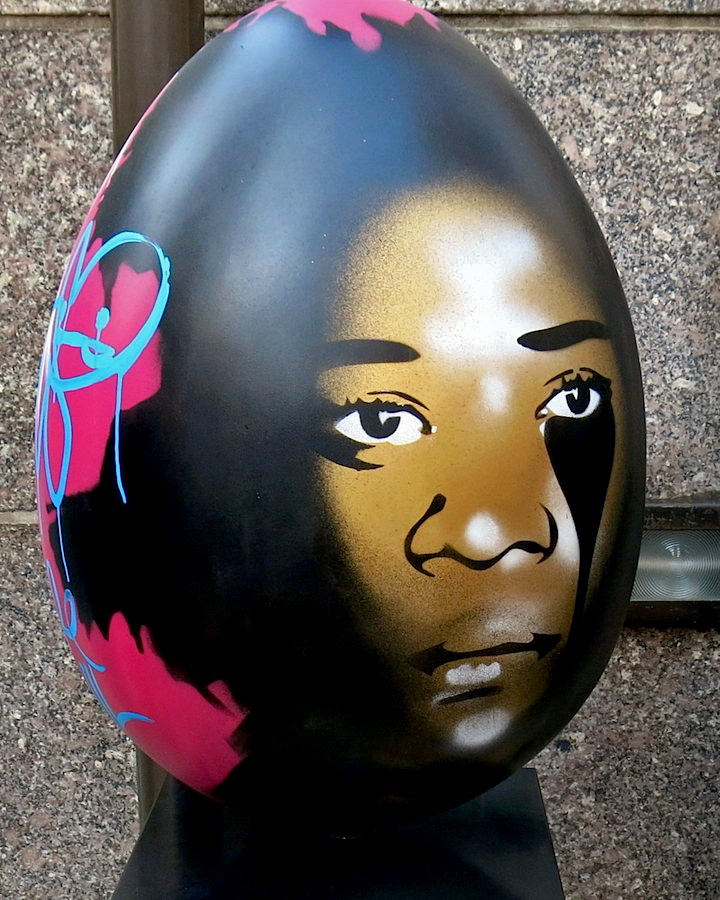
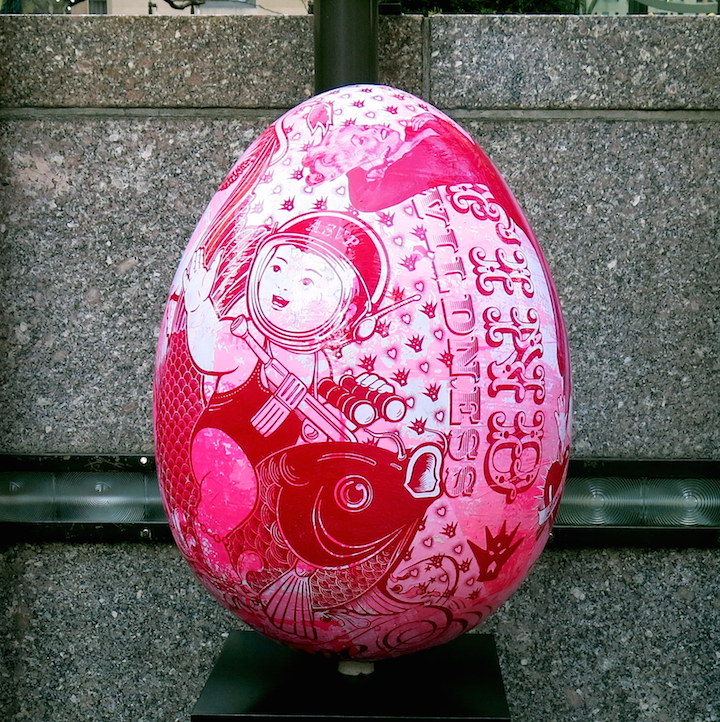
The finale of the Fabergé Big Egg Hunt began this past weekend and continues through Friday. Among the 260 egg sculptures on view at 30 Rockefeller Plaza are quite a few by artists with roots in the streets. Here’s a small sampling:

Vexta

Vexta

Enx

enx-street-art-egg

Dain

Dain

Seen

Seen

Indie 184

Indie

Retna

Retna

Pure Evil

"Pure Evil"

ASVP

ASVP

Friday marks the final day of the auction with all proceeds going to Studio in a School and to Elephant Family.

Photos by Dani Reyes Mozeson

{ 0 comments }
The following guest post is by Yoav Litvin, a writer, photographer and author of the recently released Outdoor Gallery – New York City book on contemporary NYC graffiti/street art.

Newmerica

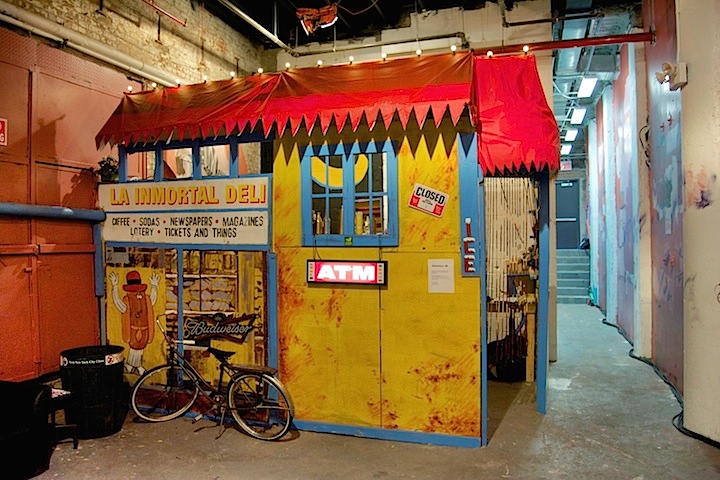
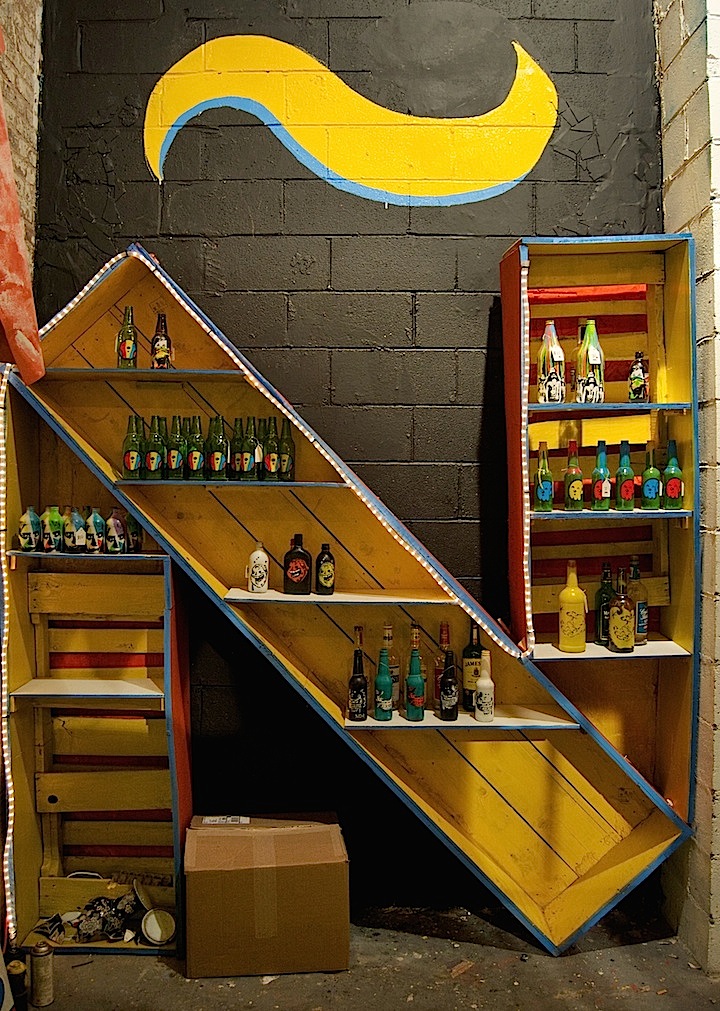
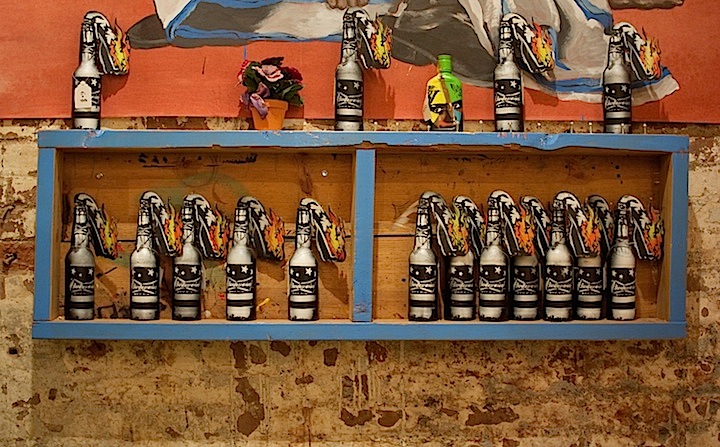
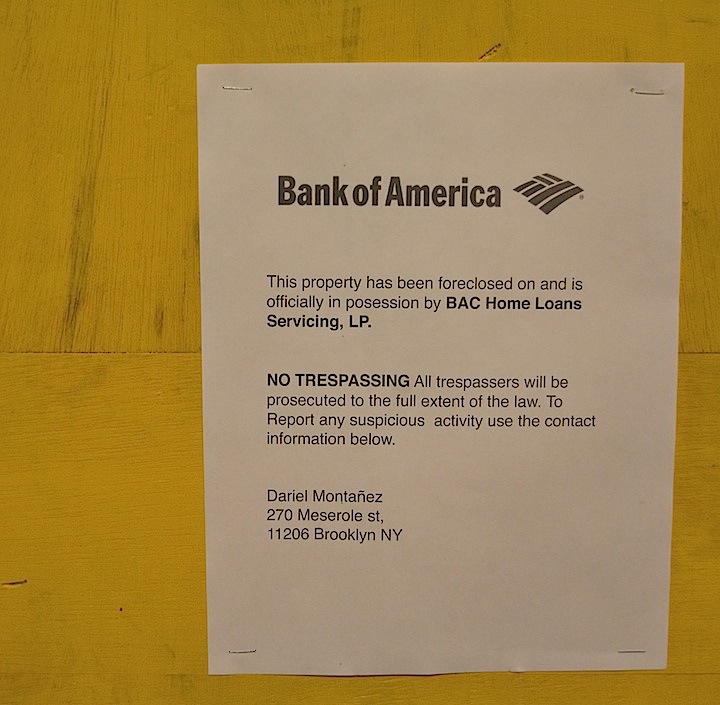
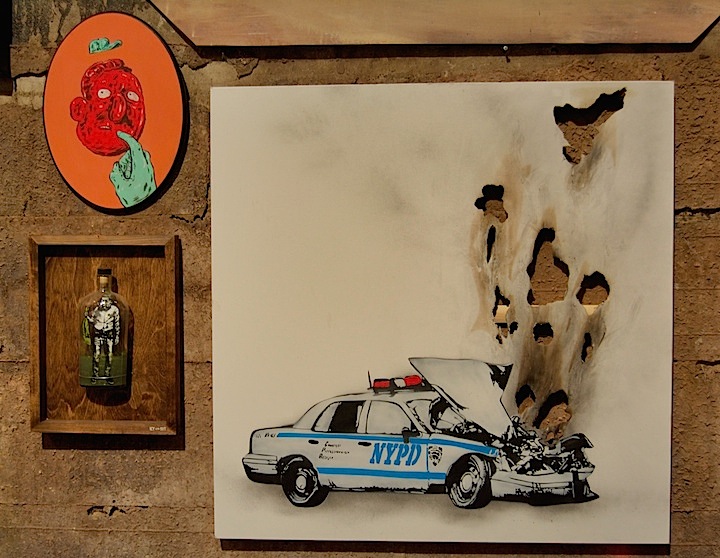
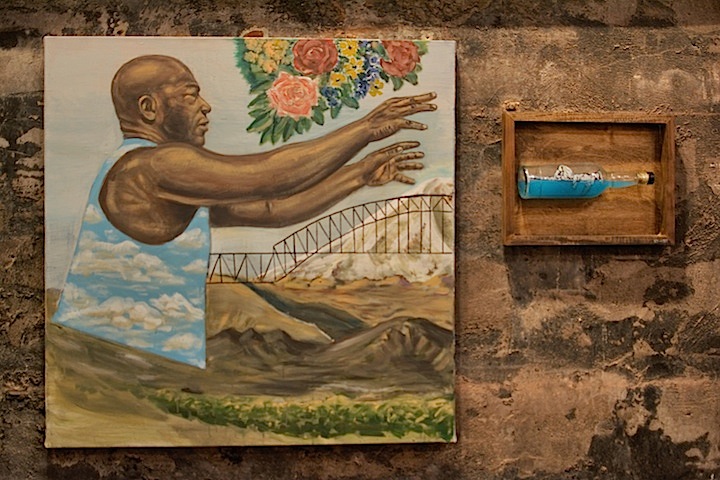
Ñewmerica is a collective of artists, which includes LNY, Icy and Sot, Mata Ruda, NDA and Sonni. Each well-known to street art enthusiasts in New York City and worldwide, they joined forces in “The Birth of a Nation,” currently on display at Exit Room in Bushwick. After a fantastic opening chocked full of performances, raffles and other fun surprises, I returned to Exit Room to re-examine the art.  The first piece one encounters is an installation piece constructed by the group —  “La Inmortal Deli,” a bodega stocked with hand-embellished bottles and cigarette boxes. Outside the bodega are pieces by each of the artists in the main hall of Exit Room.

Newmerica

It is very refreshing, Ñewmerica, to see a group of talented artists — each in their own right — form a collective. What are you trying to achieve with Ñewmerica?

Ñewmerica is a friendship and a platform for independence. When artists start out, they are free to create a body of work as they see fit, but then as the gallery system takes over, the work gets dissected and profiled to fit curatorial restraints or group show themes that tell their own stories. This can take away from an artist’s ability to present and represent his or her work. Ñewmerica is a collective push to take that complete artistic expression back by making the work we want to see exactly the way we want to see it. Ñewmerica is freedom.

Newmerica

Is there a collective experience for foreign artists trying to make it in NYC? Can you tell us something about the name, Ñewmerica?

None of us are native to NYC – our shared playground. NYC is the perfect stage for anybody to talk about anything resembling national identity, immigrant identity, or issues of gentrification and generational perspectives. Our individual work speaks about these issues already, and it gets amplified when we work together. At the same time this is just our reality. Even if we don’t make identity an issue we see it coming up in every day life. Analyzing identity is a way of discussing the reality of New York.

Bodega-foreclosure-at-Exir-Room

What’s wrong with America and what are you trying to change?

We are not necessarily trying to change anything, but just better ourselves through collaboration, sharing, and friendship. That’s the only way we can create a better commons and consequently better communities, neighborhoods, cities and nations. Know thyself before you wreck thyself and thy town.

"NDA and Icy & Sot"

The bodega – why did you choose a bodega as the collaborative point for the collective, and not some other nexus? Why did you choose to make art on alcohol bottles and cigarettes boxes?

The bodega is a contested battleground. Much like the subway, it unifies a city because all social strata melt into it. Commerce and necessity make the bodega a contemporary secular place of worship where we all get our alcohol, coffee, cigarettes and purchase dreams on lottery tickets. It is this quintessential NYC icon — that has played an important role forming our culture — that is slowly getting lost. The bodega icon has been the focus of a lot of scrutiny, a specific example for this is the Street Market installation by Barry McGee, Todd James and Stephen Powers at Deitch Projects back in 2000 — something we all looked at and talked about at the beginning of this production and in a way are paraphrasing as part of this longer dialogue in time.

"Mata Ruda and Icy and Sot"

Is there significance to the name, “La Inmortal Deli?”

“La Inmortal Deli” is our nod to this history and our wish for this type of questioning to continue while simultaneously dealing with contemporary issues. Contrary to its name, “La Inmortal Deli” has an expiration date; it has been foreclosed and will soon be replaced by a Bank of America. So where will our culture go? What will replace the bodega in this new city we are building? What can we do about it?

Newmerica

Please tell us some of Ñewmerica‘s plans for the future.

Ñewmerica has lots of fun and secret events planned for the future months – check back with us to find out @nwmrca and on our Facebook page.

"Sonni and LNY"

____________________________________

 “The Ñewmerican Dream is our biggest success to date,” commented Exit Room founder Dariel MTZ and co-founder Daniela Croci aka Zoe. “This group of artists represents the perfect balance between a grittier street art style and fine art, highlighting diversity in style, ethnic influences and a critical, yet progressive, new vision for American society.”

“The Birth of a Nation” continues through April 19 at 270 Meserole Street.  Gallery hours are Wednesday – Sunday: 5 – 8pm

All photos by Yoav Litvin; photos 1-4. Bodega installation; 5. NDA and Icy & Sot; 6. Mata Ruda and Icy & Sot; 7. Ñewmerica — all members, and 8. LNY and Sonni

{ 0 comments }
"army of one"

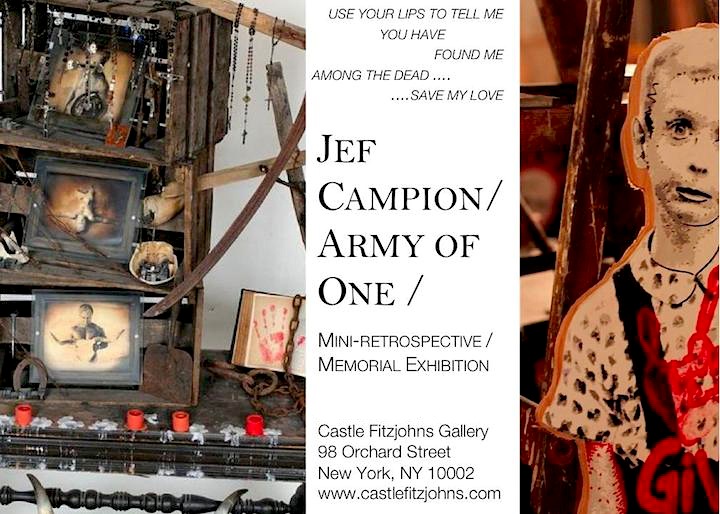
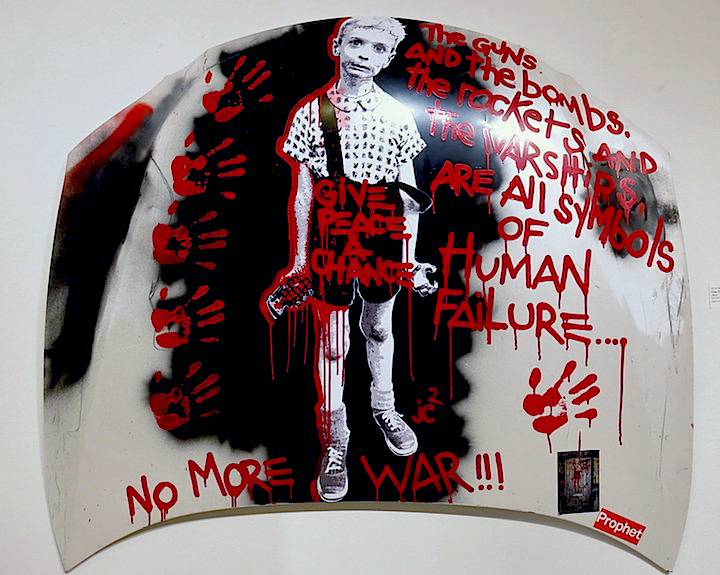
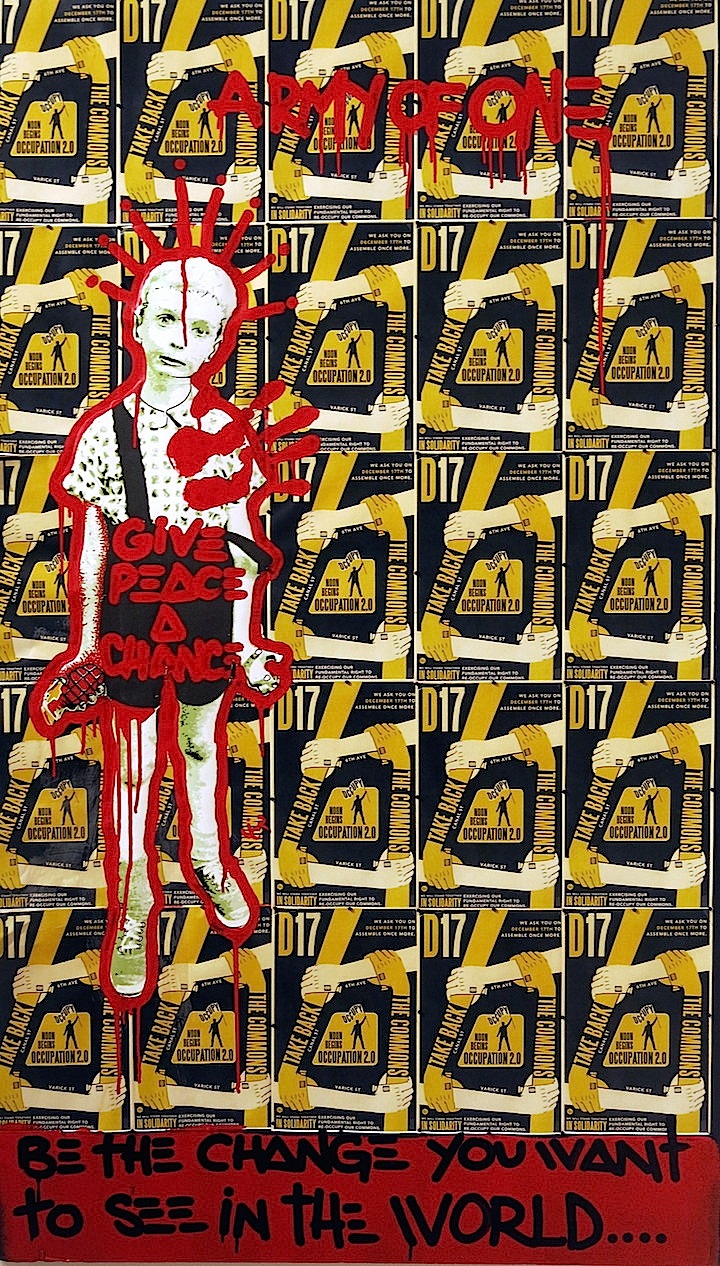
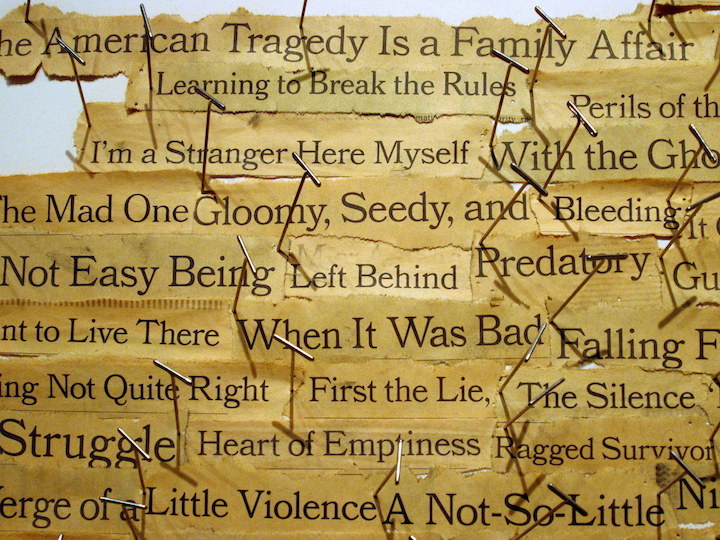
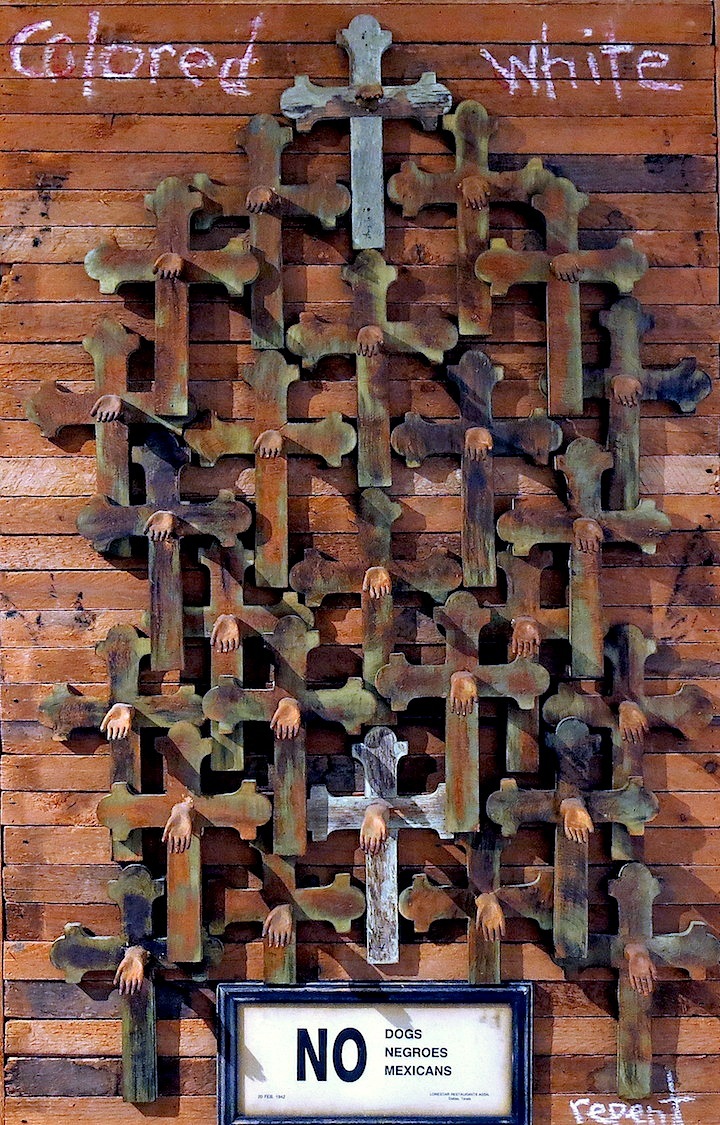
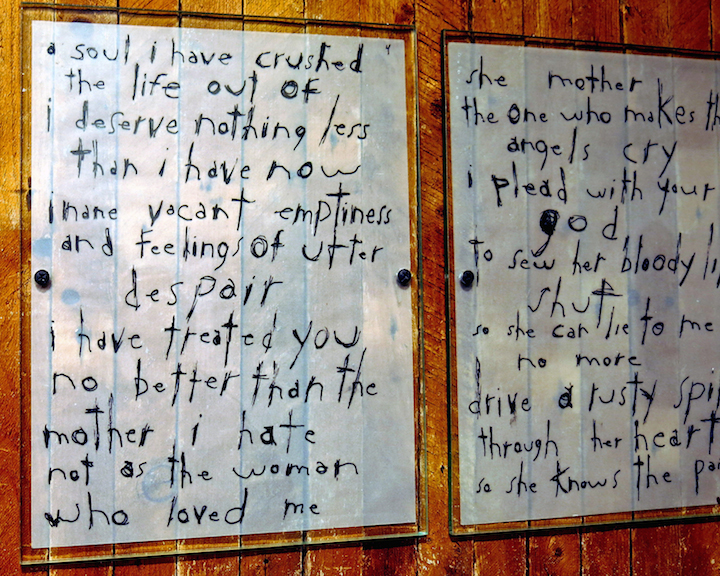
Most of us street art aficionados identify Jef Campion aka Army of One with his appropriation of Diane Arbus’s compelling image, “Child with Toy Hand Grenade in Central Park.” But currently on exhibit at Castle Fitzjohns Gallery at 98 Orchard Street is a series of works never viewed before — from poetry to sculptures fashioned on salvaged wood — that provide a poignantly intimate look into the talents and torments of this distinctly complex and sensitive artist.

We visited the gallery the day after the exhibit opened and had the opportunity to speak to its owner, Vincent Harrison.

Where and when did you first meet Jef?

I discovered Jef at Art Basel in Miami in 2012. He was standing in front of his van, covered with red paint from a project he’d been working on.

"army of one"

What was your first impression of him?

He was a very intense guy, but also one of the nicest you’d ever meet. I was impressed by his sincerity and passion — in addition to his artistic and technical skills. He had a strong sense of justice that he carried throughout his work both as an artist and as a firefighter. In fact, he never intended to exhibit his work in galleries or make money from his art. Whatever money he made he donated to causes and charities such as the Ronald McDonald House. He just wanted to make a difference.

"army of one"

Why do you suppose Jef took his art to the streets?

Jef studied at CalTech and SVA and was making fine art long before he hit the streets. But after 9/11, he became intent on reaching as many people as possible. And the streets were the perfect vehicle for him to do this.

Have you any thoughts on Jef’s appropriation of Diane Arbus’s iconic Grenade Boy?

He always felt a strong connection to Diane Arbus, someone who also led a tragic life. Her iconic image was the ideal way for Jef to highlight the plight of children affected by war and the loss of innocence within American society.

"Jef Campion"

There seems to be so much pain and angst in Jef’s work.

He had his demons. He struggled with issues related to his childhood, his relationships with women and his abuse of drugs and alcohol.  Though spiritual, he rejected organized religion and the Catholicism that was imposed on him as a child. He felt that religion had been used to promote prejudice. But the biggest battle he faced was with PTSD (Post Traumatic Stress Disorder). He was a first responder following the 9/11 attack and stayed at Ground Zero for 40 consecutive days. He was left struggling with traumatic, painful memories.

"Jef Campion"

Can you tell us something about this particular exhibit?

We wanted to commemorate Jef Campion’s life as an artist and individual who gave so much back to his community.  Brooke Lynn McGowan, who was in touch with Jef’s former girlfriend, curated it. None of the work on exhibit is for sale, but some museums have expressed interest in the work.

"Jef Campion"

How did the opening go?

It was a wonderful tribute to Jef. His close friends, along with street artists, firemen, members of the police department and representatives of charities, attended and shared their memories. He will be missed.

The exhibit continues through Thursday at 98 Orchard Street on Manhattan’s Lower East Side.

Interview with Vincent Harrison by Emily Thaler; photos of Jef’s work by Dani  Reyes Mozeson, Lois Stavsky and Dea Sumrall

{ 0 comments }
"Joe Iurato"

Intrigued by the small artworks that surface unexpectedly thoughout New York City, Amy Young has curated a delightful exhibit featuring small works by over a dozen artists.  Here’s a sampling:

Another cut-out by Joe Iurato

"Joe Iurato cut-out"

Elbow-Toe, close-up

"Elbow Toe"

Cake

Cake

Hellbent

Hellbent

Jaye Moon

"Jaye Moon"

Other featured artists include: Jilly Ballistic, C215, Clown Soldier, Enzo and Nio, Gilf!, Jay Shells, Shin Shin and Wing.  A closing party will take place tomorrow, April 4, from 5-9pm. The works will remain on exhibit through Sunday at R. Jampol Projects, 191 Henry Street between Clinton and Jefferson on the Lower East Side.

Photos: 1. courtesy of  the gallery; 2. 3. & 5.  Sara Mozeson; 4 & 6, City-as-School intern Dea Sumrall

{ 0 comments }
DAIN

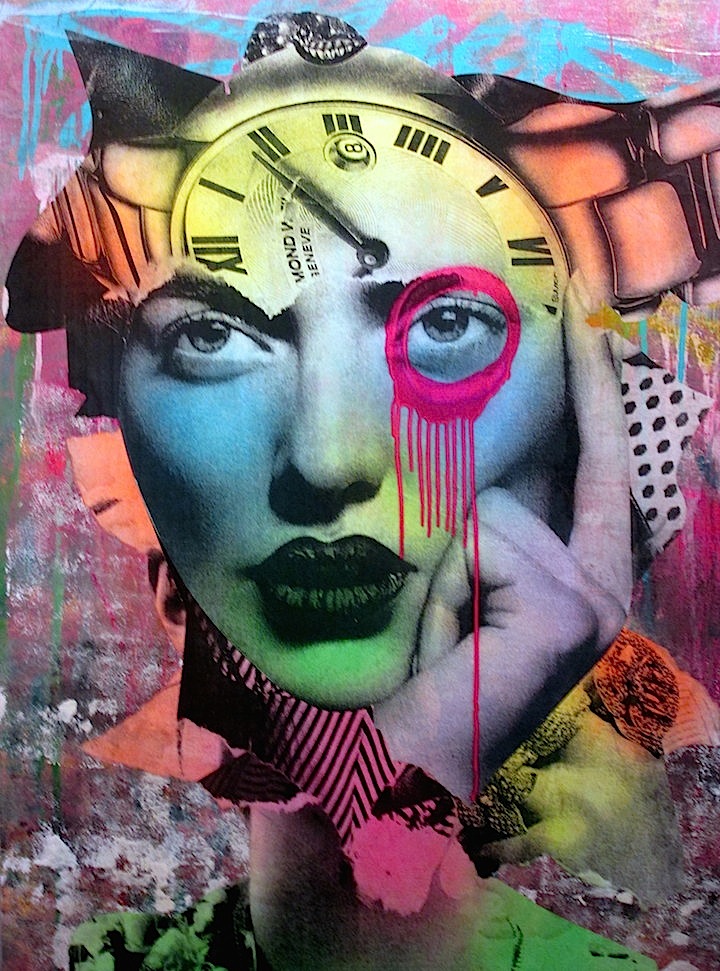
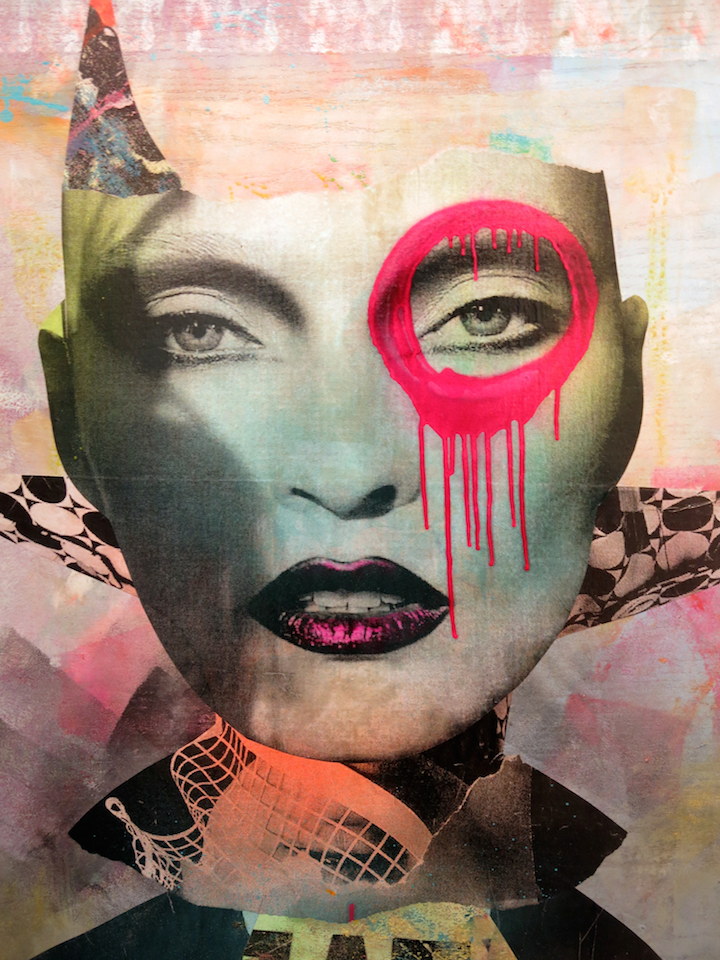
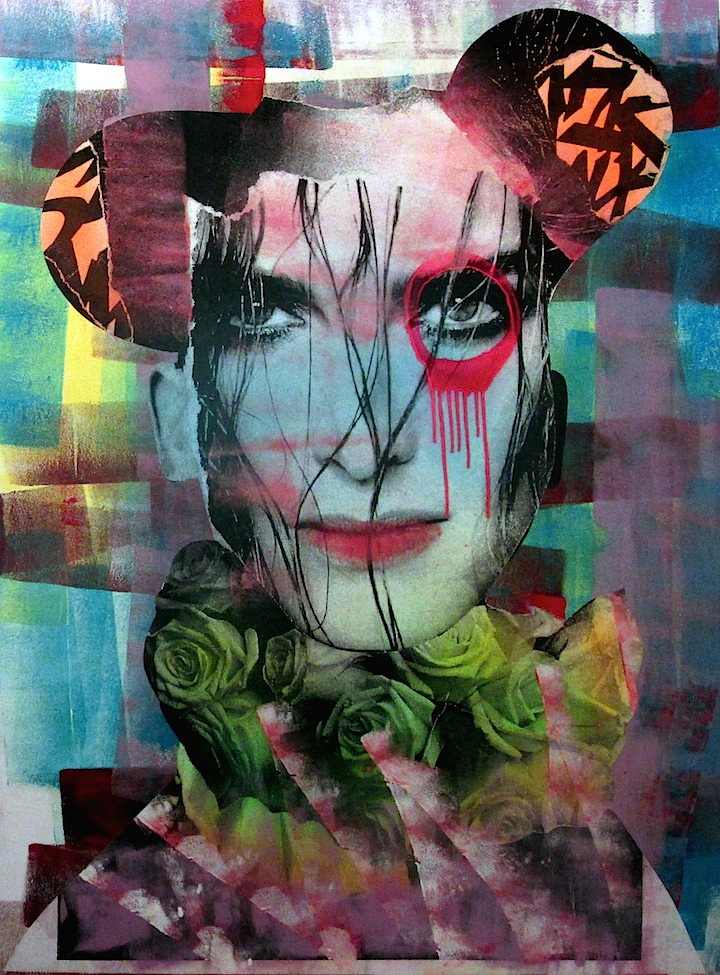
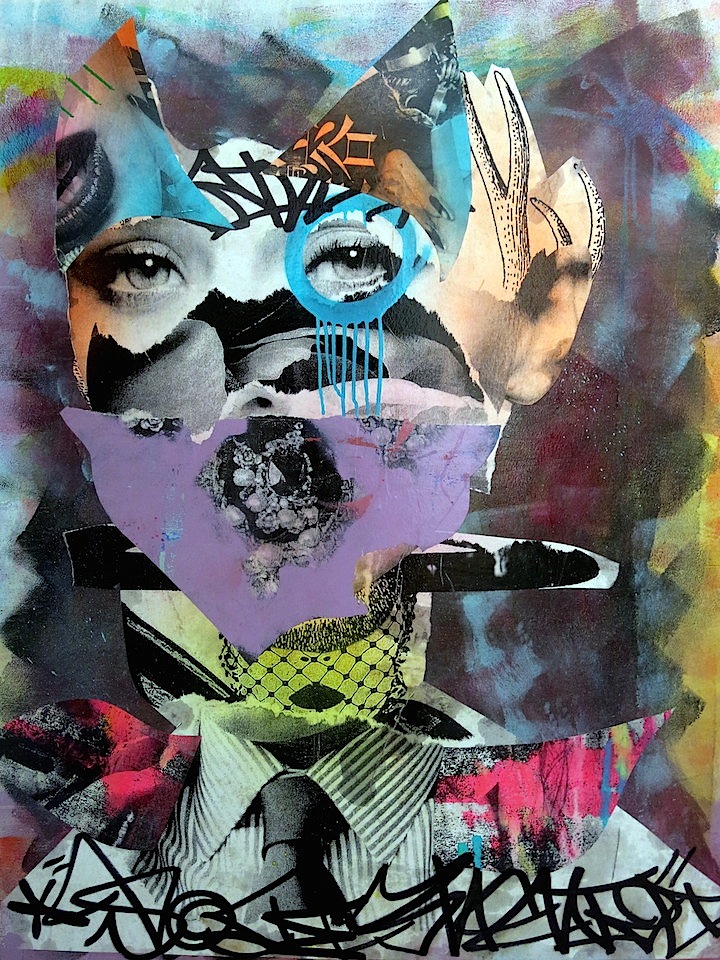
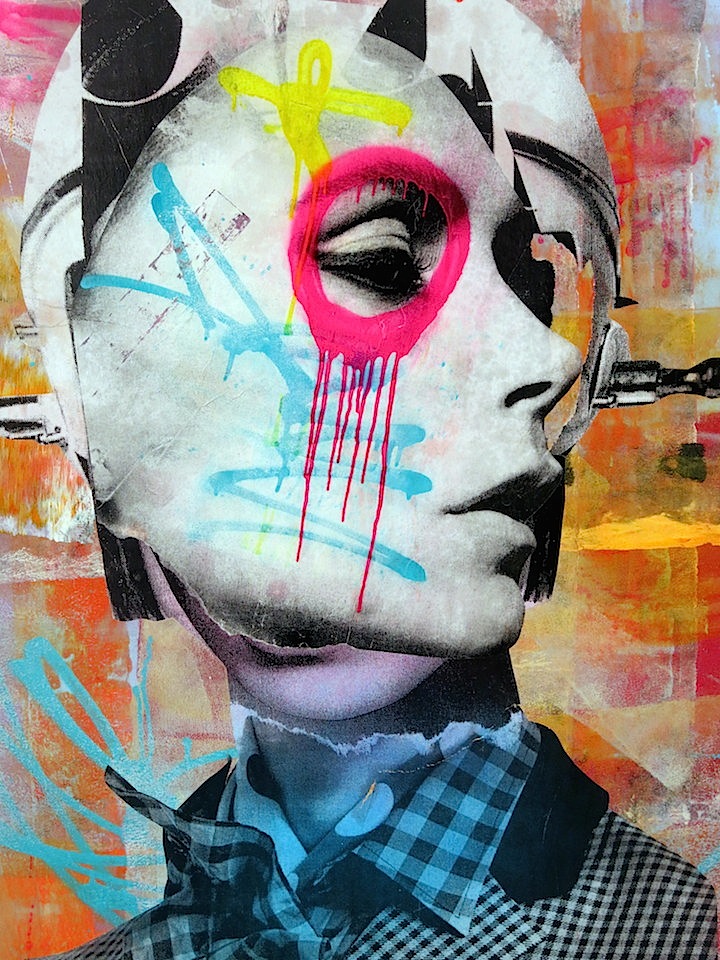
Whether seen on gritty city streets or in formal gallery settings, DAIN’s masterfully conceived artworks always intrigue. And those in his upcoming exhibit at Dumbo’s Folioleaf are among his most dazzling to date. While previewing a few of his new collaged portraits at the Folioleaf gallery space at 111 Front Street, we had the chance to ask him a few questions:

What is it about these particular women’s faces that you find so alluring?

I’m drawn to their eyes. The way they stare at us. And like the women in the old Hollywood movies that I love, these women are naturally beautiful.

DAIN

We are wondering why so many of these women’s faces are attached to men’s bodies. What is the significance of this? Is there a message here?

There is beauty beyond the physical. Everything doesn’t have to hang out. Women need to leave something to the imagination.

DAIN

This is quite an impressive body of work. Your distinct aesthetic continues to evolve. Have you any thoughts on this?

I hope it’s getting better. I actually think this is my best work so far.  I’m just starting to scratch the surface.

DAIN

How long did it take you to prepare for this exhibit?

I began working on it in my head many months ago. The final pieces came together in the last few weeks.

DAIN

 Are you satisfied with the results?

So far, yes! If I am not satisfied with a piece, you will not see it in this show.

The public opening of DAIN’s new work will take place tomorrow, Thursday, April 3, 6-9pm, at Folioleaf, 111 Front Street, #226,  in Dumbo. The exhibit continues through Saturday, May 17.

Questions for DAIN by City-as-School intern Anna Louka; photos of DAIN’s works by Lois Stavsky and City-as-School intern Dea Sumrall.

{ 0 comments }
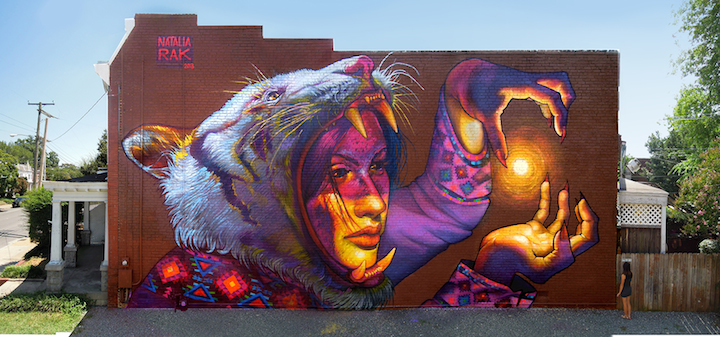
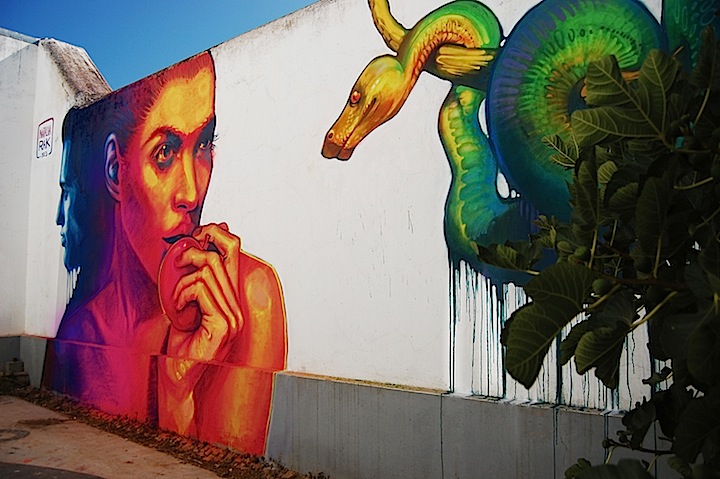
"Natalia Rak"

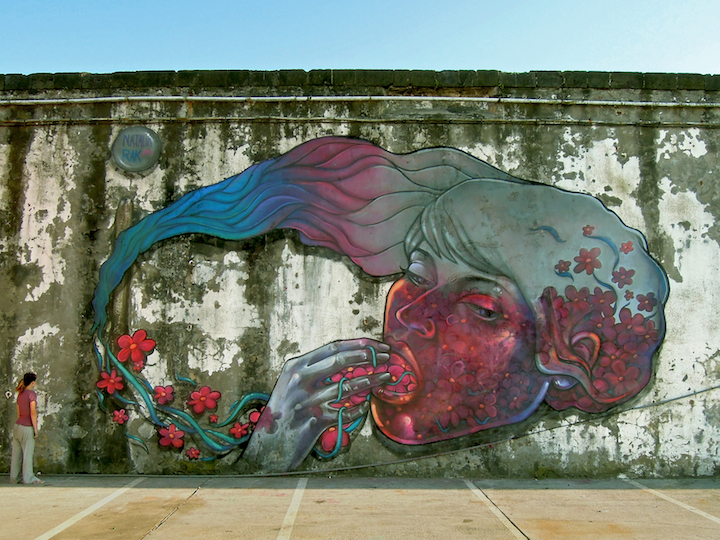
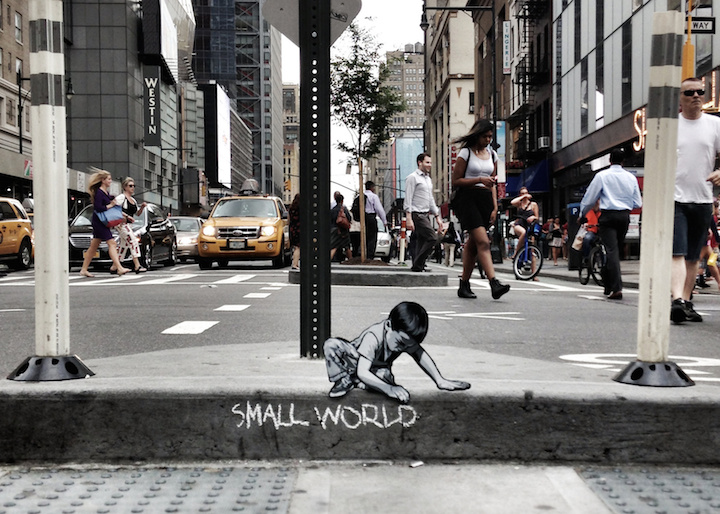
We discovered the wonderfully talented Natalia Rak a number of months back at NYC Art Battles at 5 Bryant Park, where she was painting alongside Chor Boogie, Max Bode and Don Rimx. We instantly fell in love with her vibrant, realistic aesthetic.

When and where did you first get up in a public space?

The first time was four years ago in the small city of Turek, Poland. I only had a few cans of paint, and the walls were small. Some artists start with letters, and some begin with characters. I started with female faces. I just painted one-sided faces. I struggled with the lines!

What inspired you to start painting on walls?

My boyfriend, Bezt, inspired me. I was watching him while he was working with his Etam group in an abandoned place, and he persuaded me to try. It was a frustrating lesson in humility!

"Natalia Rak"

How does your family feel about what you are doing?

My parents do worry when I paint way up high, but they are supportive. They display all my canvases on their walls, even when they don’t understand them. They are proud of my successes, but they are also concerned about my living “the life of an artist.” Their image of the artist is of this struggling person who spends all his money on art supplies, and then when he’s not painting, drinks or uses drugs. And they have a point! There is little money for art in Poland.

Have you any thoughts about the street art / graffiti divide?

Coming from a small town in Poland, I didn’t grow up with graffiti. And I didn’t think much of it. But now that I’m painting on walls, I’ve come to appreciate it. It’s quite different, though, from street art.  Street artists get invited to paint legal murals, while graffiti artists generally work independently. And with graffiti, quantity is as important – if not more so – than quality. Street art is more acceptable.

"Natalia Rak"

How do you feel about the movement of graffiti and street art into galleries?

It’s great. Street art is on the streets, of course, but the artists can also bring their styles and energy to canvases and other media to make their artwork available to people who would love to own it. Galleries are also a way for artists to gain recognition. In Poland there’s hardly any art market. It’s difficult to sell anything here. I’ve had more success selling art outside of my country.

Do you prefer working alone or with others?

I prefer working alone with music. Painting collaboratively seems difficult to me, but I want to have that experience.

"Natalia Rak"

How do you feel about the role of the Internet in all of this?

The Internet invites me to see other cultures. I particularly like Asian cultures. I also enjoy seeing the impact my art has on others – people I don’t even know. I recently saw a photo of a man in Mexico with one of my images tattooed onto his arm. That made me feel so good! Fans push me to create. It’s good to hear opinions about my art too. I have, or try to have, conversations with other artists online.

Are there any particular cultures that influence your aesthetics?

Not a culture but period of art. When I paint, I think of the Secesja, or the Secession period, in Barcelona. The buildings look like plants or nature. When I first started studying the history of art, I was inspired by Jacek Malczewski. Later when I became familiar with Fauvism, I became interested in the combination of colors. Recently, I’ve become interested in Norman Rockwell’s paintings, the way he showed emotion in different situational scenes.

"Natalia Rak"

Do you have a formal arts education?

Yes, I have a degree in Fine Arts from the University of Lodz. I also studied illustration, comic art, package design and silk screening.

Have you any other any other passions or interests?

Playing computer games. I like playing Battlefield 3. I plan to get Battlefield 4 and League of Legends. My black guitar is still waiting for me in my room. I also like cooking in my free time for friends and trying new dishes.

Do you work with a sketch in your hand?

I work with photos using Photoshop. I enjoy realistic works. I have many ideas in my head. And computers make it easier for me to change colors and composition. Normally, I don’t have a sketch.

"Natalia Rak"

Are you generally satisfied with your work?

Hard to say.  When I look at a finished piece, I often find some detail that — I feel — can be changed. But I might be out of energy or already thinking about my next wall. And I always think about how I can do better! I can say, though, that I’m more satisfied now than I was a few years ago. I can see my progress.

How do you feel about the role of the photographer in all this?

I really like it when a photographer focuses on the work. I don’t like having my face shown in photographs. And I think it’s great that the images are out there and that so many young people are getting into this modern art movement.

What’s ahead?

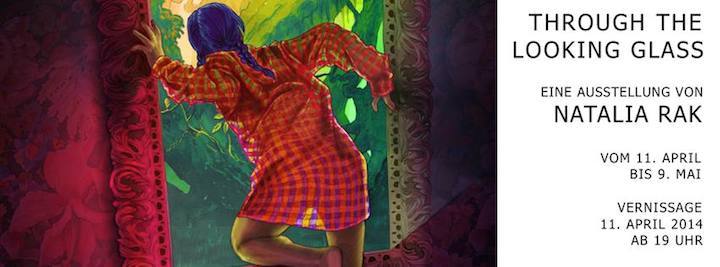
I’ve been very busy these past few months working on my first solo exhibit, Through the Looking Glass. I’m excited and nervous at the same time. It opens Friday, April 11, at Pretty Portal in Dusseldorf, Germany. I finished six new canvases and I’ve prepared three prints. I hope everyone can find something that they like. I am also planning to paint three walls in the months ahead – but we shall see!

"Natalia Rak"

Good luck! It sounds great and we hope you make it back to New York City soon.

Interview conducted by Lenny Collado and edited by Lois Stavsky; all images courtesy of the artist. 

{ 3 comments }
"Belin and King Bee"

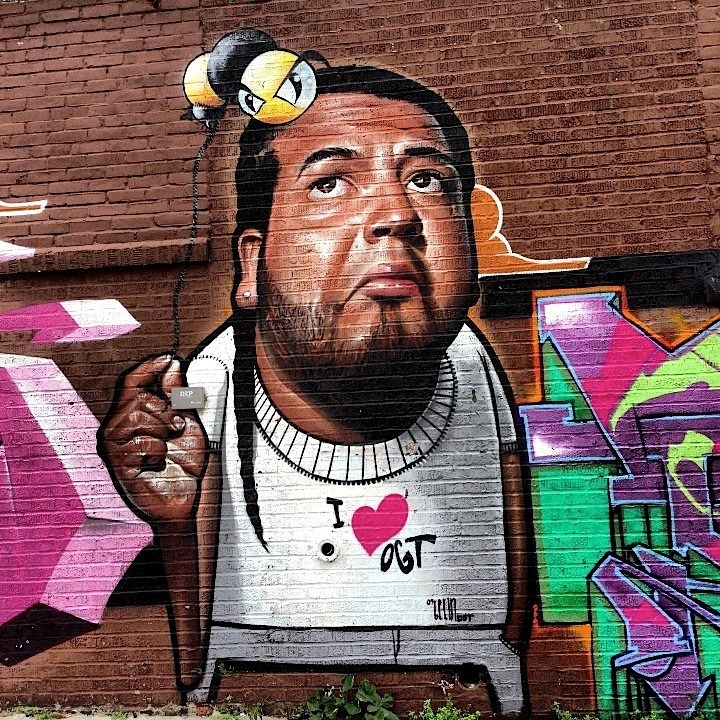
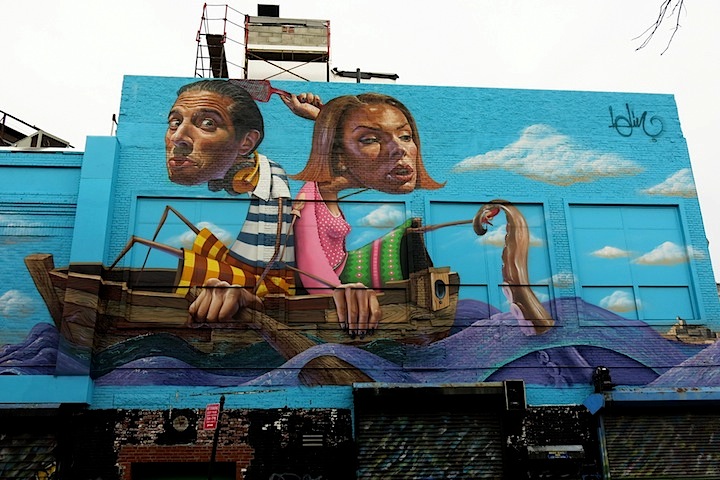
We’ve been huge fans of the Spanish artist Belin since we came upon his collaborative venture with Kingbee up in the Bronx awhile back. More recently, Belin was back in NYC painting in midtown Manhattan. That’s where we caught up with him.

When and where did you start getting up?

I started bombing the southern part of Linares, a small town in Andalusia, Spain in 1995. I was 15 at the time. I first went by the name Slam.

Who or what inspired you at the time?

I was always drawing. But then I discovered a black and white magazine produced at the time called Explicit Graff. It changed my whole mentality. I just wanted to get up in my city!

Belin

What was your first graffiti crew?

My first crew was LR—Linares Rompe. There were about three or four of us.

Do you have any particularly memorable graffiti memories from back then?

Yes. I remember getting a call from Lechu, a graffiti writer from Ubeda, Spain. Someone had told him I did graffiti. We talked, and he then rode on his motorcycle to Linares to paint with me. That was the first of many trips that he took! There was also Frejo, who tagged “Rasta.” He was from my same hood. He introduced me to rap and basketball. That was around 1997.

Belin

What did your family and friends think about what you were doing?

My family thought nothing of it. And the preppie kids I hung out with in my neighborhood took no interest in what I was doing. My friend was Frejo.

How much time of your time is devoted to art these days?

I work on my art all the time. If I’m not doing it, I’m thinking about it.

Belin

What are your thoughts about the graffiti/street art divide?

Graffiti is freehand spray-painted letters. It is a form of street art, but street art is not graffiti. Street artists, like Banksy, often have a political or social agenda. Graffiti is primarily one’s name.

How do you feel about the movement of graffiti and street art going into galleries?

It works for me. It’s art either way. The artist needs to eat, too. Gallerists make money for the artists, as well as for themselves. They know how to talk and sell art. And it’s a lot about knowing how to talk. Unfortunately there are weak artists who sell because someone knows how to talk them up, while others, who are quite good, can’t even get into galleries.

Belin

What inspires you these days?

The urban environment inspires me. New York inspires me.  There is a lot of energy here. And people are always awake.

How do you feel about collaborations?

It depends. I like to work with other writers on murals. But when I’m in the studio, I like to work alone.

Are there any particular cultures that have influenced your aesthetic?

No. Everything influences me. I watch documentaries.  I listen to music. I read the news. I observe people on the streets. It all comes together in my work. My daily life is my inspiration.

Belin

Do you have a formal arts education?

No. I failed school. I liked painting and hanging with my friends more. And I was quite athletic. I played a lot of basketball and even got my black belt in karate. I think that’s why I enjoy graffiti so much. It’s about physical movement and creation and beauty. It’s like dancing.

Do you work with a sketch in hand?

I never used to. My work was mostly freestyle. But these days, I like to plan my work in advance.

Belin

And you generally satisfied with your work?

Yes!

Have you any thoughts on the role of the Internet in all this?

I feel good about it. It helps my art reach people and it’s a great resource.

How do you feel about the bloggers and photographers of this whole movement?

They are important. They help the artists get places.

Interview conducted by Lenny Collado and edited by Lois Stavsky. Photo credits 1.  Lois Stavsky;  2. & 5.  Dani Reyes Mozeson; all others courtesy of the artist

{ 2 comments }
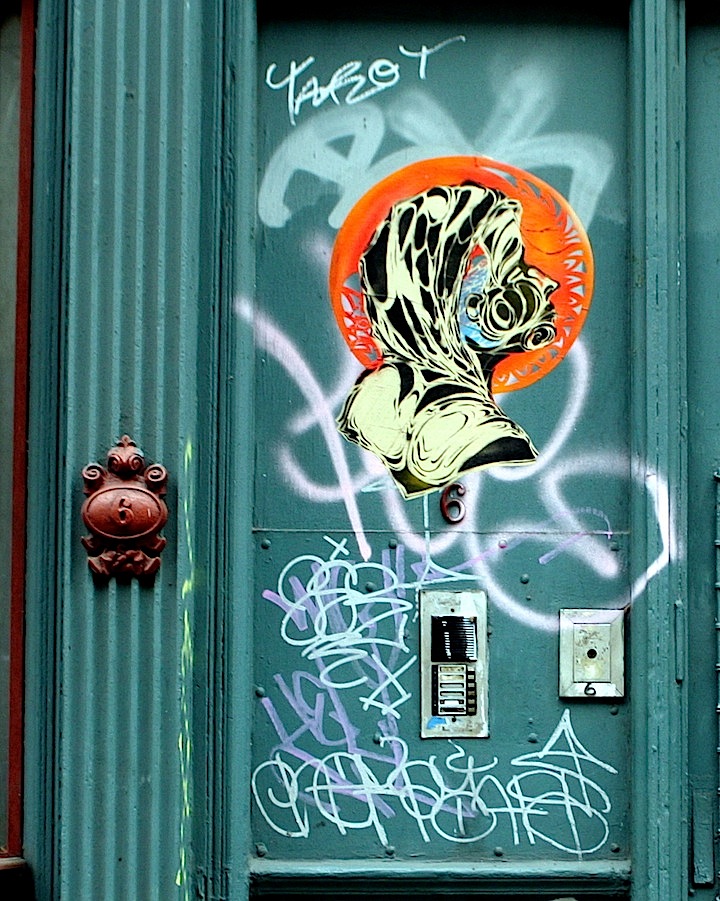
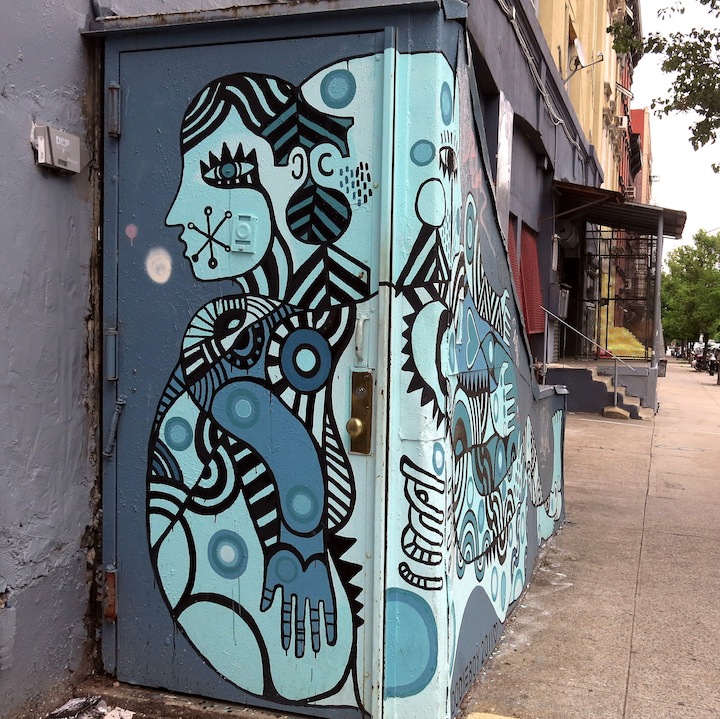
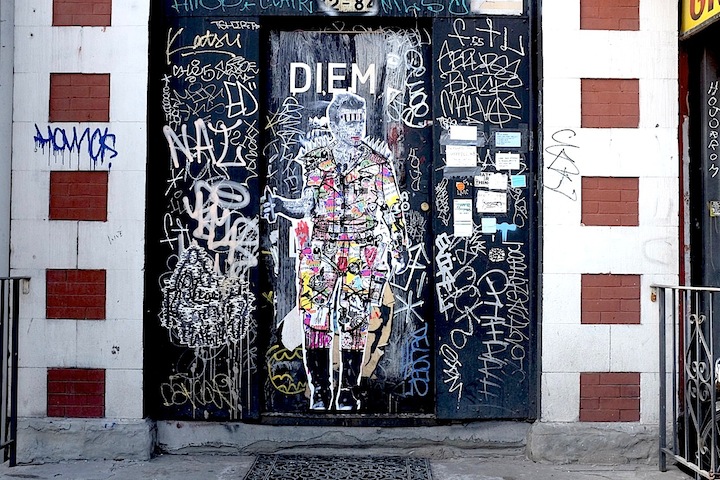
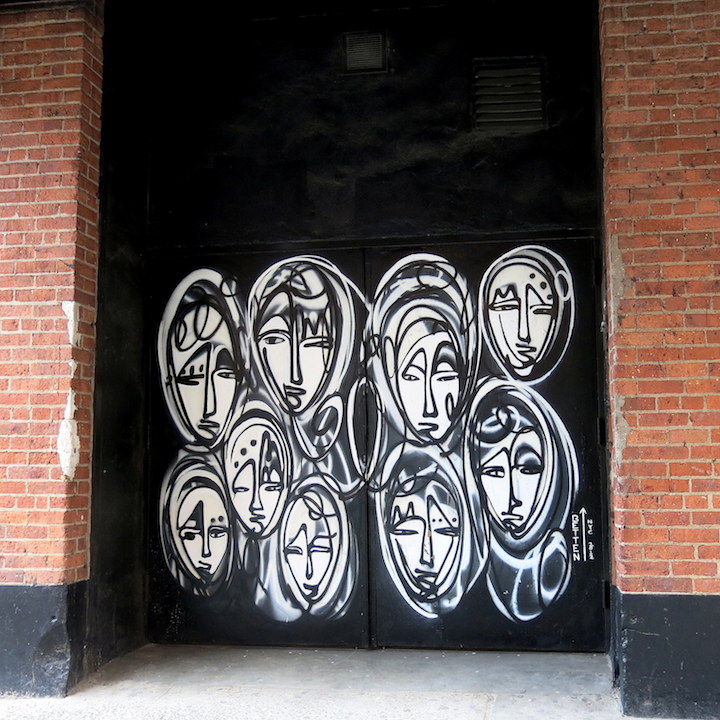
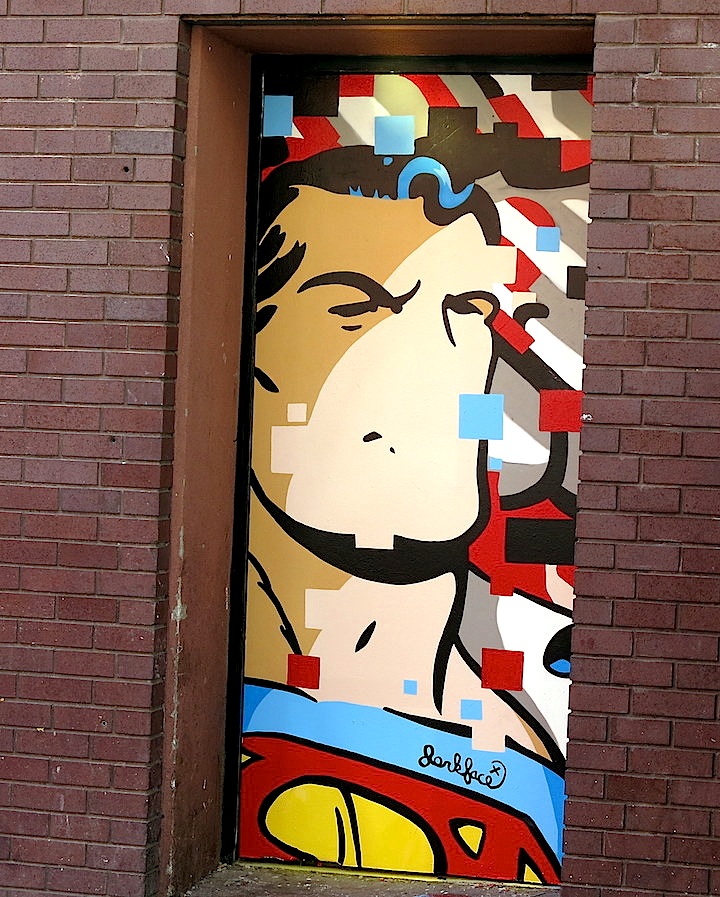
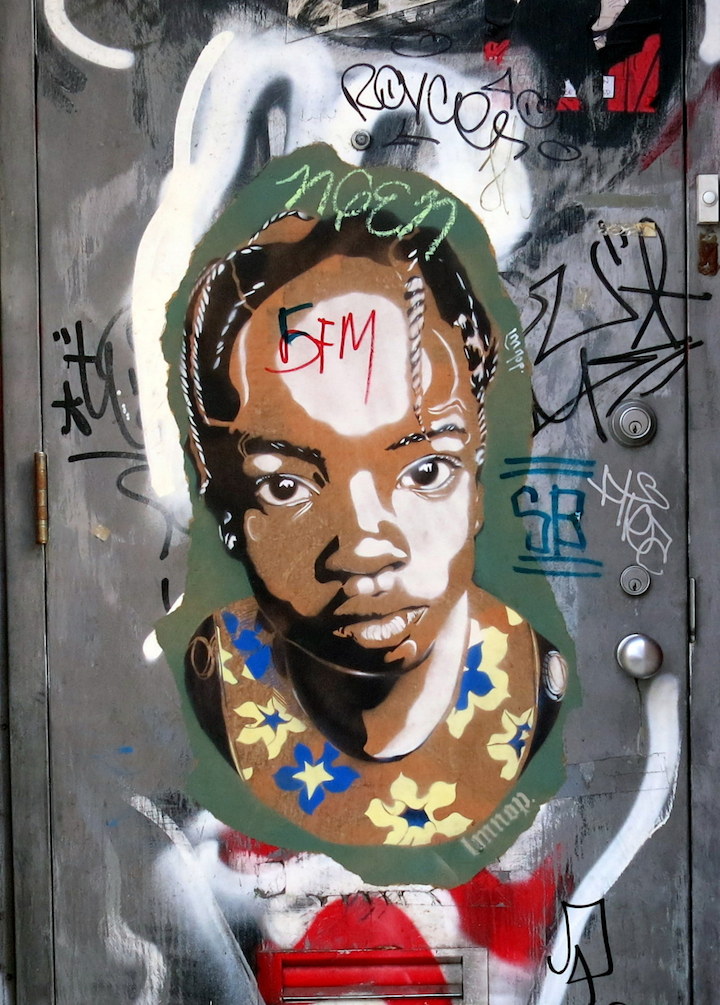
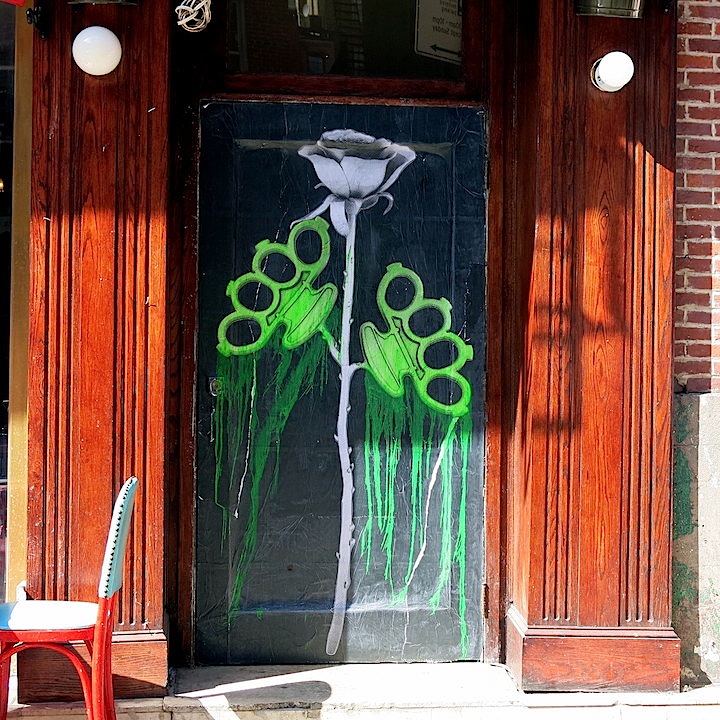
This is the fourth in an occasional series featuring images of New York City’s doors that sport everything from tags and stickers to sophisticated images.

Ewok in Williamsburg, Brooklyn

Ewok

Mor in Downtown Manhattan

Mor

Long-running David Shillinglaw in Williamsburg, Brooklyn

"David Shillinglaw"

Stikki Peaches in Williamsburg, Brooklyn

"stikki peaches"

Jordan Betten in Chelsea

"Jordan Betten"

Alice Mizrachi aka AM in abandoned East Village building

"Alice Mizrachi"

Jerkface in Little Italy

Jerkface

LMNOP in Bushwick, Brooklyn

LMNOP

Ludo in Little Italy

Ludo

Photos of  Mor, Jordan Betten, Alice Mizrachi, Jerkface and Ludo by Dani Reyes Mozeson; of Stikki Peaches by Emily Robertson; of Ewok, David Shillinglaw and LMNOP by Lois Stavsky

{ 0 comments }