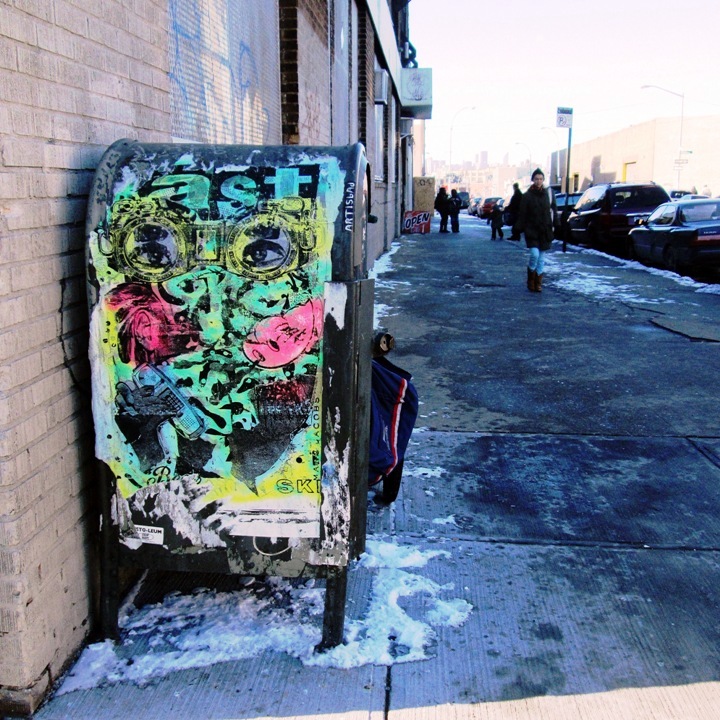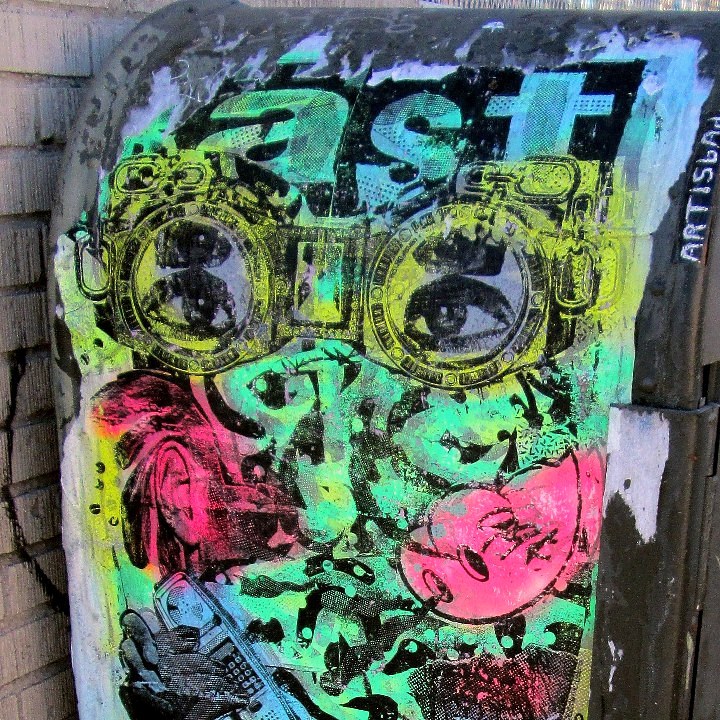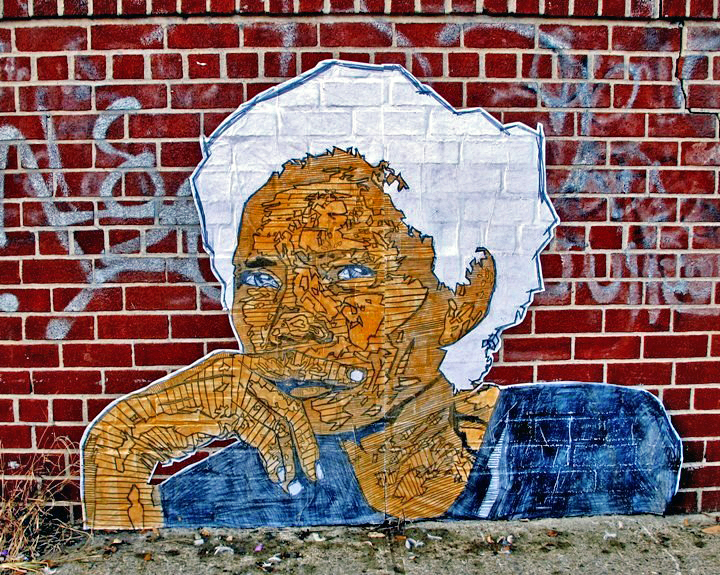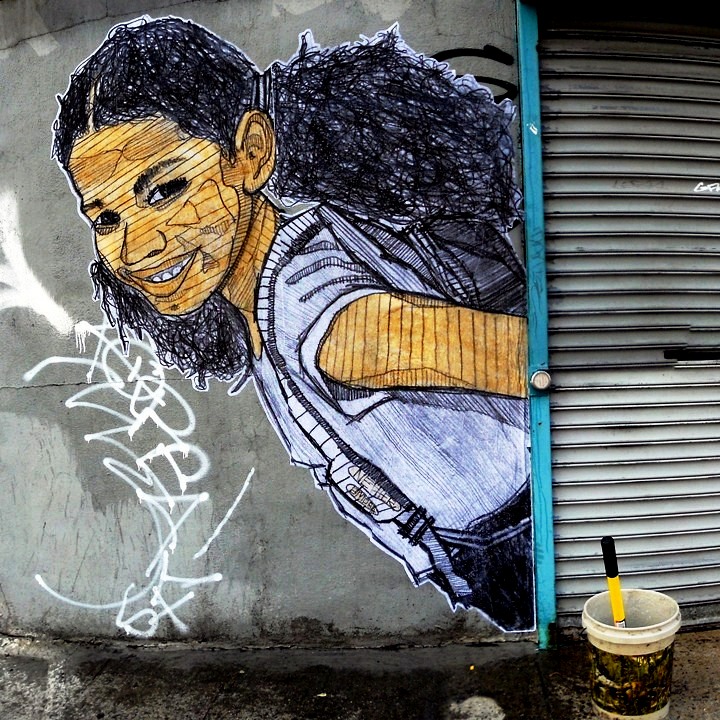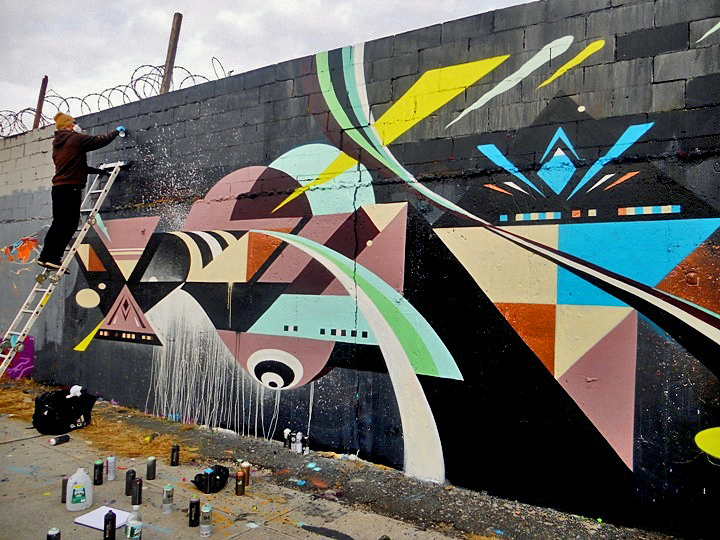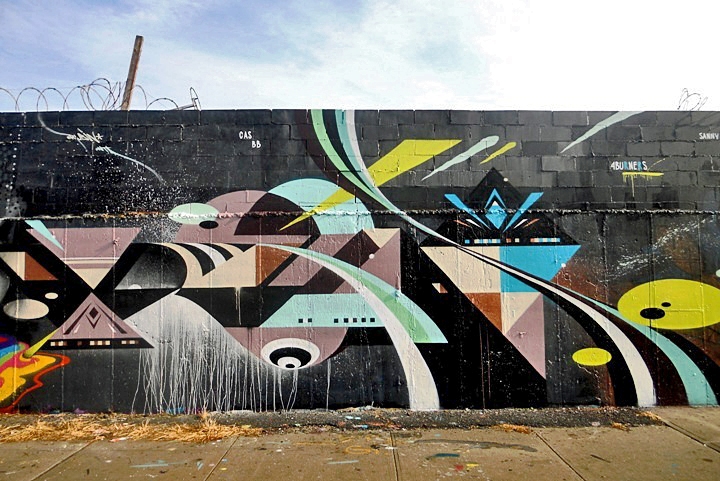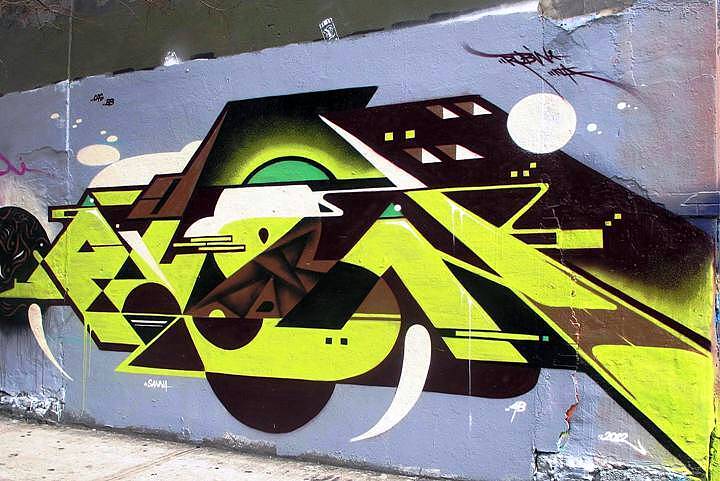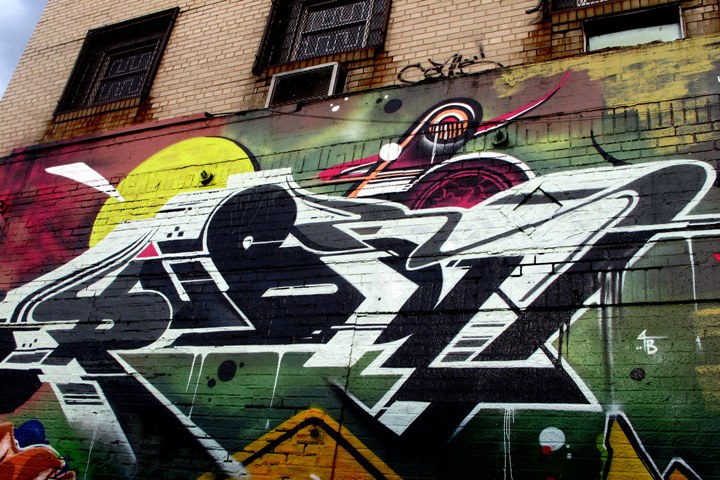
street art

Speaking with Kosby

January 31, 2013

Kosby-in-Brooklyn-NYC-studio

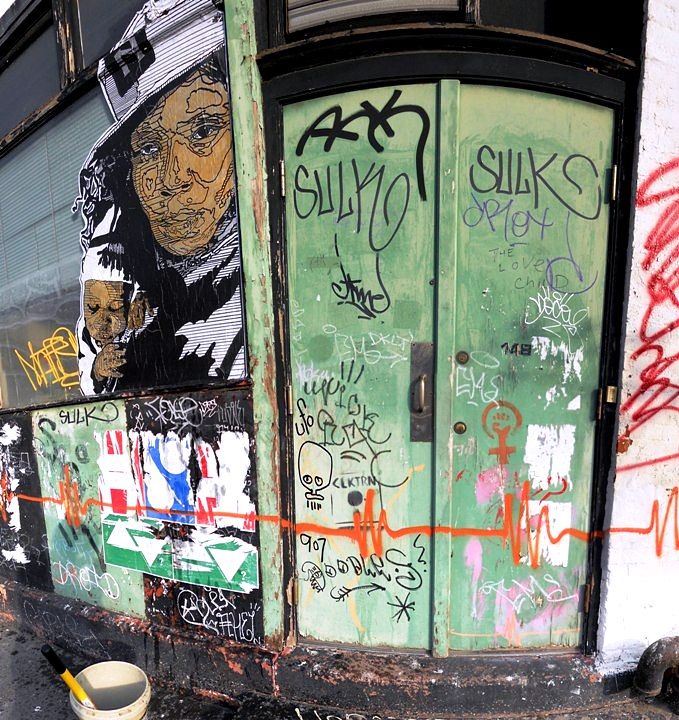
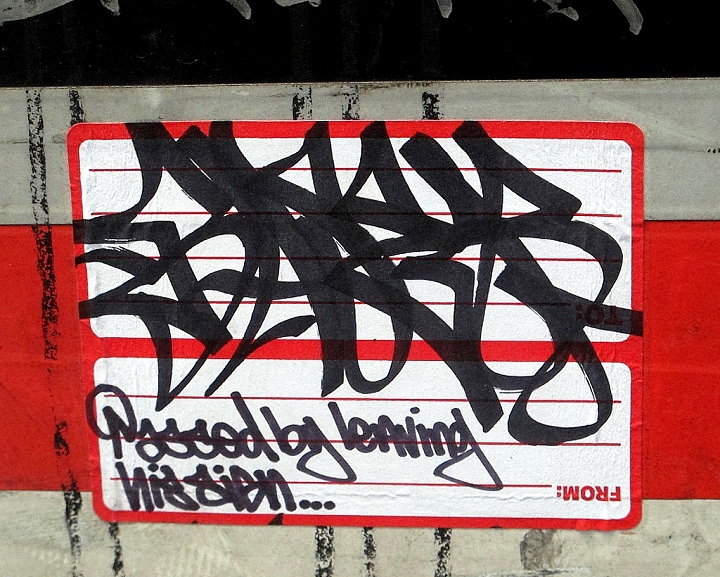
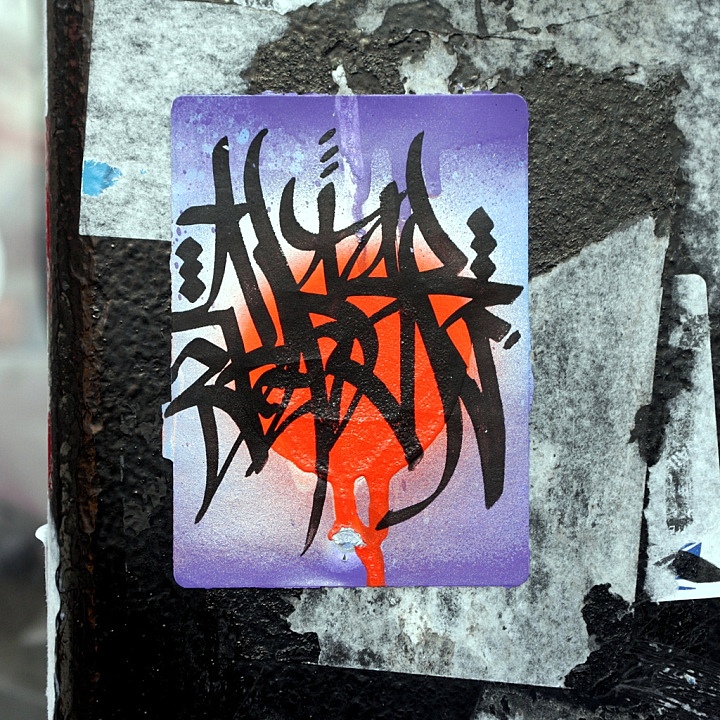
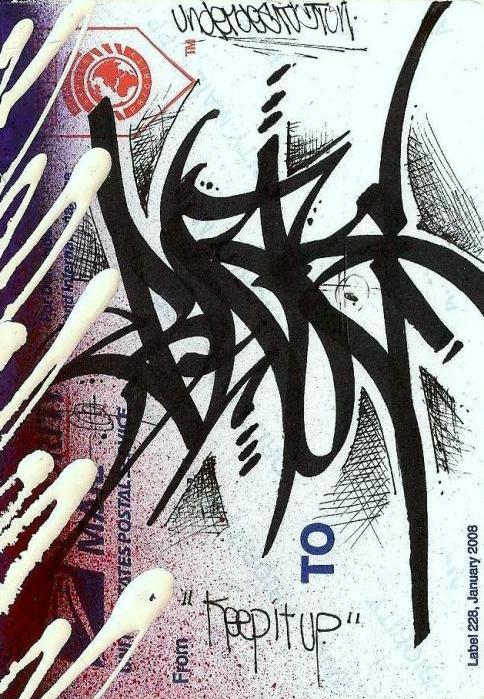
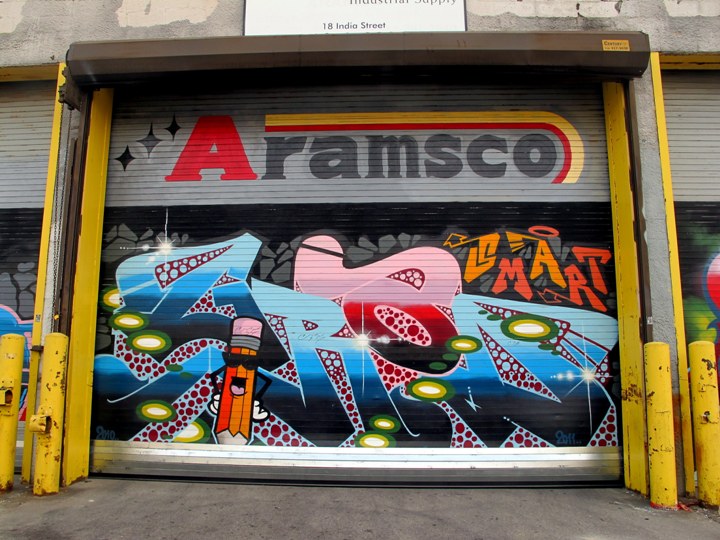
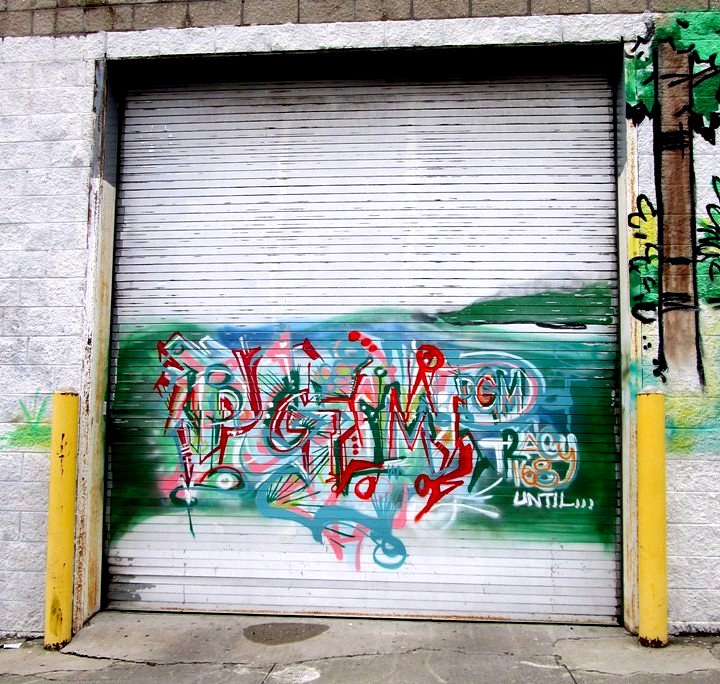
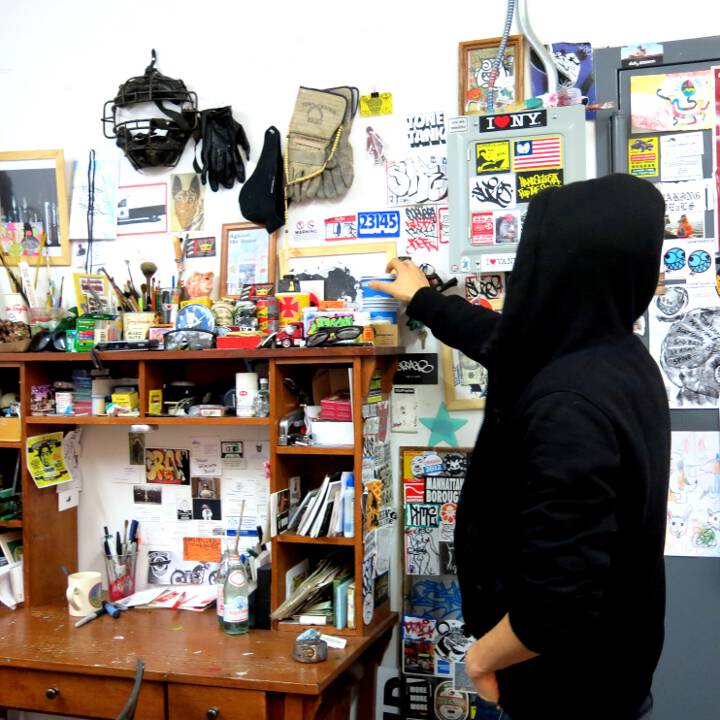
We’ve been huge fans of Kosby since his stickers and paste-ups began gracing NYC’s public spaces a number of years back. Since, his artwork has surfaced in galleries and is currently on view at the Woodward Gallery Project Space.

When did you first become interested in art?

I have been drawing since I was a kid.  I was lucky that my mom loved what I was doing and bought me comic books to encourage me. My mom also taught me to accept people for who they are. I think that shows in my art.

When and where did you first start hitting the streets?

I started in Chicago between 1993 and 1994, and I began bombing buses. Then I met DREL and he introduced me to street bombing.

How did you guys meet?

He sat on a bench – next to me in church — and I was drawing a graffiti character on a piece of paper.  He was intrigued and we kicked it off. He went as Drel of KMD, BTC and MOM Crew. He also got me to do my first fill-in. He said if I did it at a specific spot on Fullerton Avenue – a particularly busy and dangerous one — I would be set, established as a graffiti writer. And I did it.
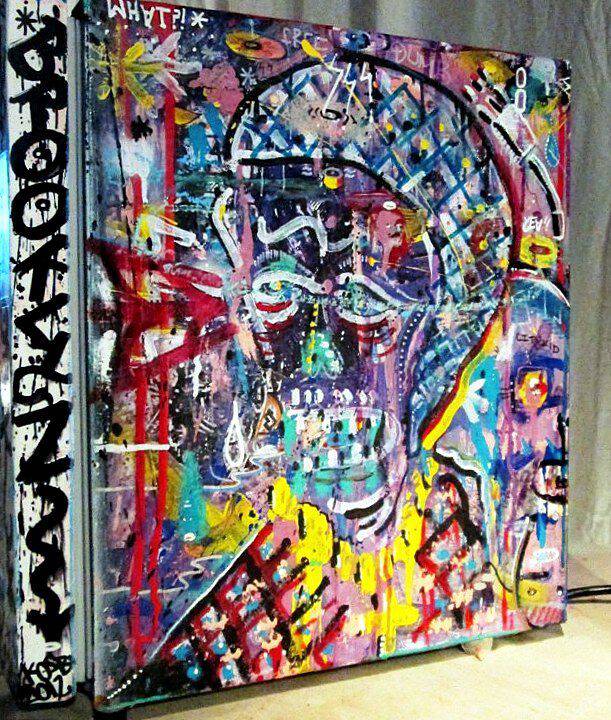
Kosby-red-bull-artwork-winner

How did your family react to the whole graff thing?

I’m sort of the black sheep of my family.  Ironically, though, graffiti saved my life. Logan Square — where I grew up — was gang-infested, and graffiti was a pass. When gang bangers stopped us, we explained what we were up to and they mostly left us alone.

Respect to the writers! Are you trying to get a specific message across with your work?

No specific message, but I like to be brutally honest. When I was younger, I was often isolated and shy because my family moved around a lot. Today, I’m more open. And that’s difficult for graffiti writers, as we usually play the whole smoke and mirrors game. But I like to be honest about who I am. I struggle with that in my art.

From where do you get your ideas?

My head. I have worked with plenty of people like Sure RIP, Overconsumer and Wisher914. Sure inspired me and prodded me to get better. And I’ve always liked what Cost and Revs were doing. Their poetic messages seem spontaneous and off the head. I ran away from home when I was younger to California and that’s when I was exposed to Mike Giant, Twist, Reminisce and Revok.
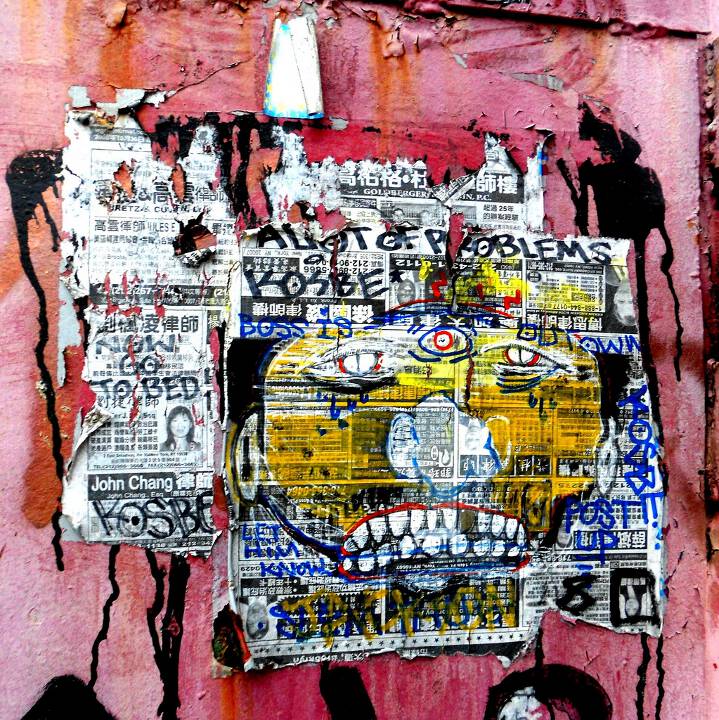
Kosbe-street-art-in-Bushwick-NYC

Have you collaborated with any artists?

I’ve done work lately with Cekis, Zato and Crasty. And I have a ton of homies I would like to collaborate with.

Tell us something about your process.

I care less about how something looks and care more about the act of doing it. I did a tribute piece for Nekst RIP recently on a rooftop.I was thinking about how he would never get a chance to paint again, I didn’t like how the piece was turning out, but it was just about doing it. I like having fun and I hope that translates through the work.

What materials do you like to work with?

Anything…spit. ink. markers, vintage paper, cloth.  The other day I tagged with Montana refill paint, mistaking it for an acrylic paint marker.

Have you any favorite artists?

I am a fan of Abstract Expressionism. Some of my favorite artists include: Robert Rauschenberg, Chuck Close, Espo, EKG, Michael Allen Alien, Dee Doc, Anthony Lister, L’amour Supreme, Suck Lord and Rammellzee.
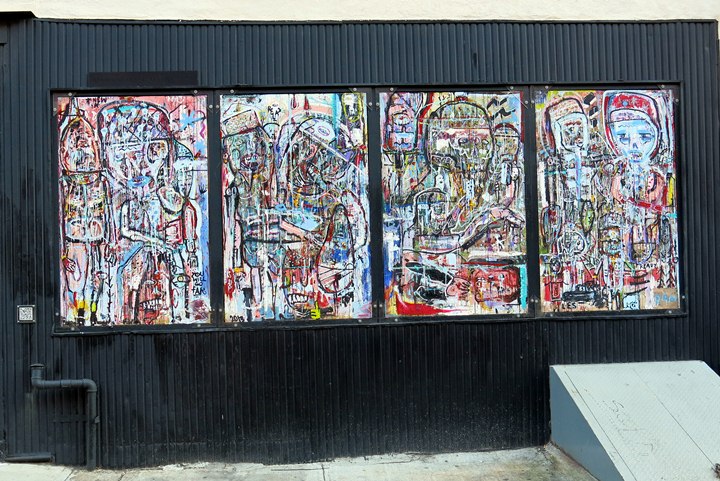
Kosby-street-art-at-Woodward-Gallery-Project Space

Have you ever been arrested?

Yes. I was often bailed out of jail by mom. She always worried about me when I stayed out past my curfew. Even though my disposable cameras – that I stole to shoot my work — were confiscated at the time of my arrest, I always got them back in time to get a flick of my mom bailing me out. ‘sorry, Mom.

What are some of your other interests?

I love photography, spending time with my friends and girlfriend and exploring the city.

How has your work evolved?

I’ve never been a good judge of my work. I am actually dangerous with it because I can’t tell when a particular piece of work is done. I keep drawing on it and drawing on it. I’m more interested in people’s reactions to it. I believe I’ve gotten looser and more chill. I don’t like the trendy. I have been careful not to lose that looseness to my work. It’s really a balance I’m looking for.

What do you think about the graffiti and street art divide?

I don’t think there is a divide. It’s a culture within a culture. I’ve seen street artists going over graffiti not knowing what they were doing. If you’d like to learn the proper etiquette, call me at 1 (800) GRAFFPRO.
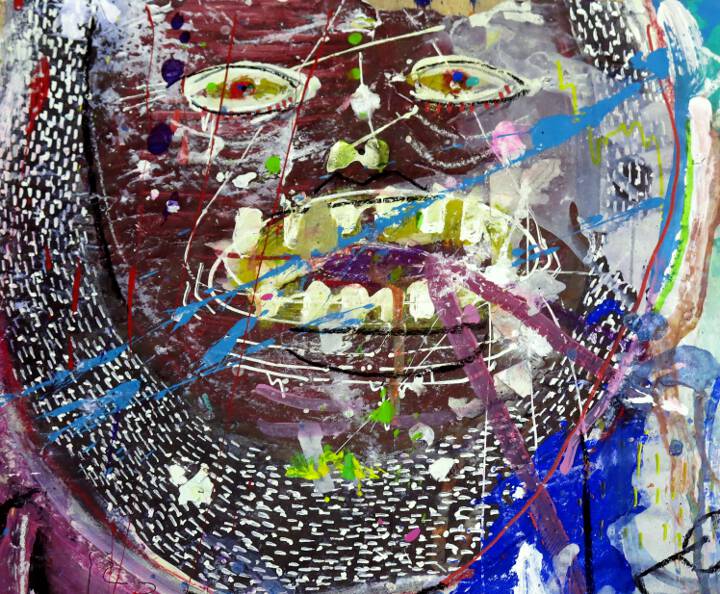
Kosby-portrait-in-studio

What do you think about the Internet in all of this?

It’s good. It’s such a part of our mass culture.

Do you see any danger in Internet oversaturation?

Sure. There should be a “Get off the Internet Day.”  I often put messages like this on my stickers, like “Don’t Use Your Cell Phone Day.” I usually use the Internet in the morning when I check out www.theworldsbestever.com. I’ll be checking out StreetArtNYC.org from now on too. But that’s it.

How do you feel about your work being shown in galleries?

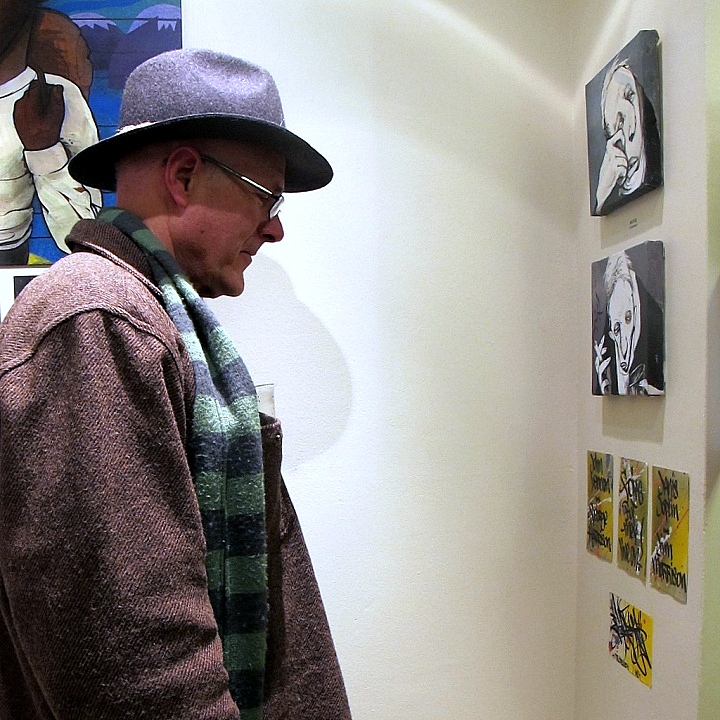
I love to share my art; it makes me happy. I like to stand next to people at galleries as they check out my art. I like getting their honest response to it.

When you’re not getting up on the streets, where do you tend to work?

It’s changed over the years. My mom gave me my first studio. For a while, my kitchen served as my work space, and I had collectors call me wanting to see my work. I said, “Of course, just come to my kitchen.” I’d say I’m in a better space now.
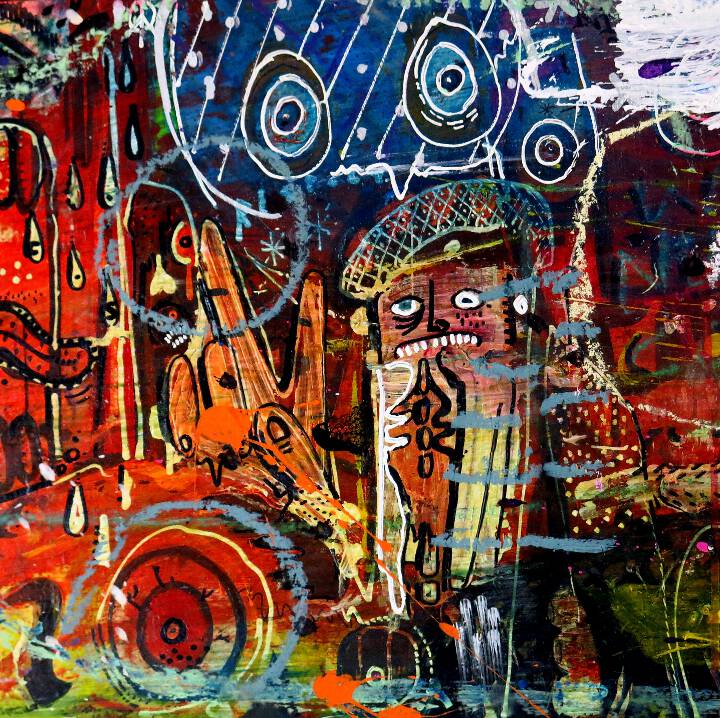
Kosby-studio-artwork

Who do you follow these days?

I’m looking at Lois Stavsky, as well as Martha Cooper, Angelo from Doyle Auction House, Royce Bannon, Brooklyn Street Art, Alex Emmert, SuckLord, who’s a major mentor, and Simeon from Art Hustle.

What do you see yourself doing in the next five years?

Chilling with my family and friends, enjoying a nice glass of wine, while we laugh with some purple kicking it back with my boy, Lenny.

‘sounds cool!

I want to say thank you to StreetArtNYC for being so supportive of NYC artists and to Lois for being so positive. And don’t forget, guys, to check out the StreetArtNYC app!

Interview by Lenny Collado; photos by Dani Mozeson and Lois Stavsky

{ 0 comments }
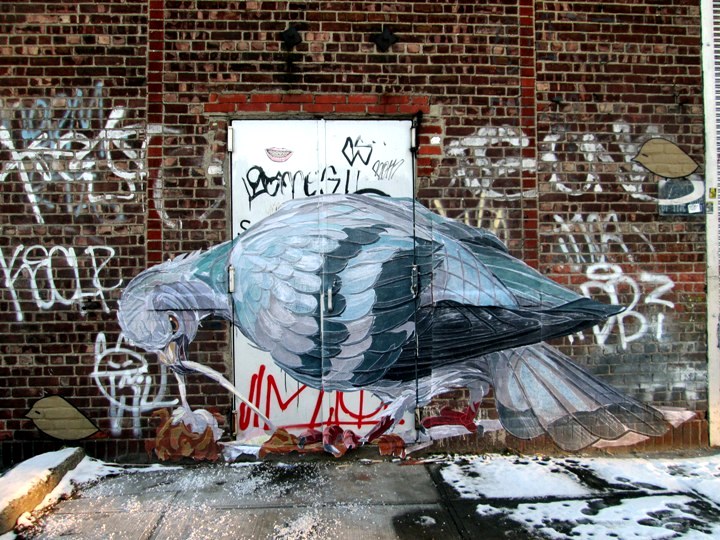
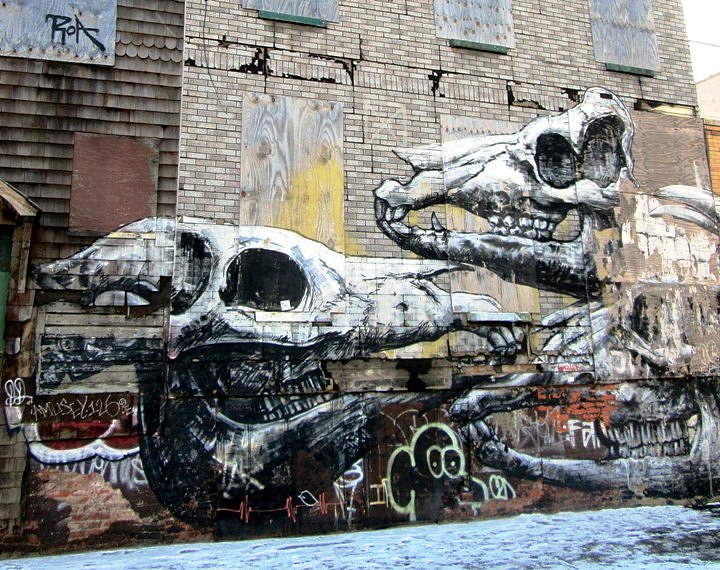
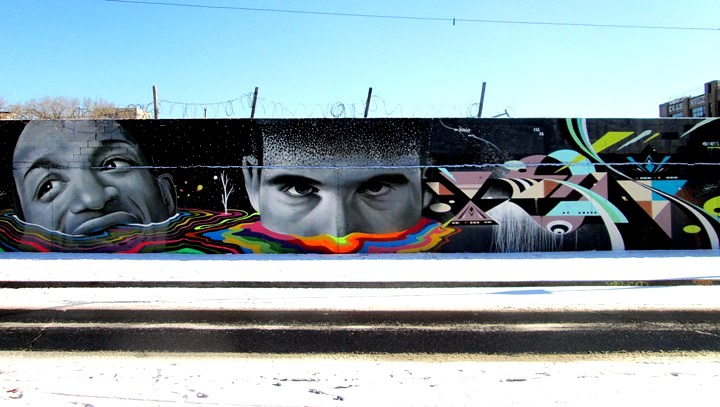
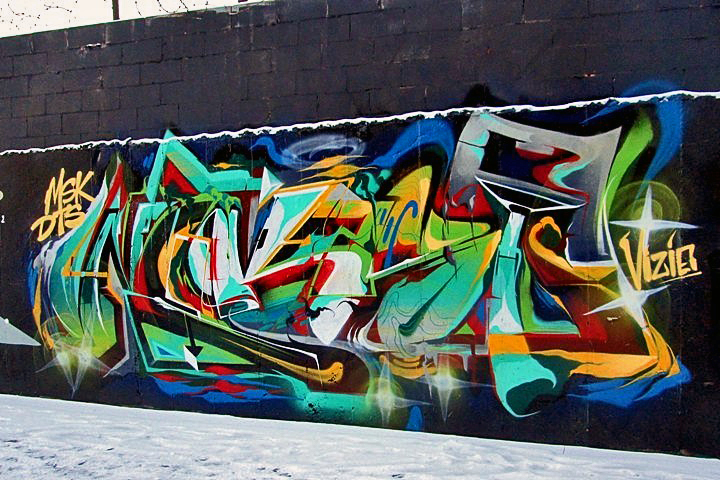
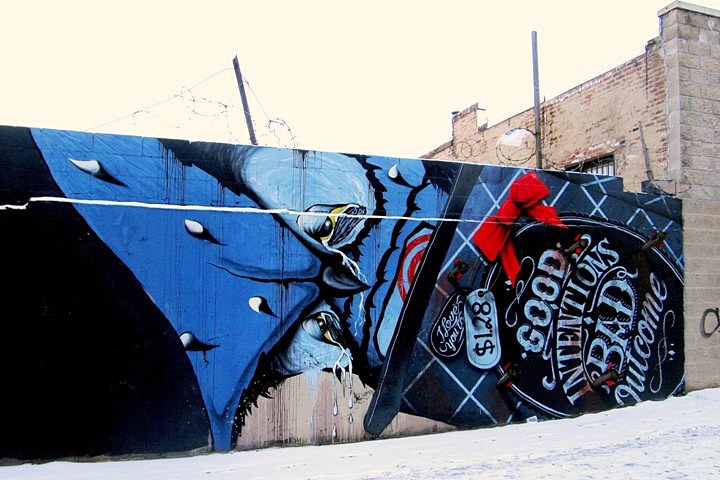
This past weekend — on one of winter’s chilliest days — we hit Bushwick, where we caught some new images and revisited others.

New from Brooklyn-based Elbow Toe with Veng‘s signature birds

Elbow Toe and Veng

Belgian artist Roa

Roa

4BurnersDasic and Rubin with Madrid-based Okuda

Dasic, Rubin and Okuda

Berst tribute to NEKST, RIP

Berst

Brooklyn-based Never

Never

Brooklyn-based Bast

Bast

Bast, close-up

Bast close-up

Photos by Lenny Collado

{ 1 comment }

Speaking with Nether

January 23, 2013

Nether in NYC

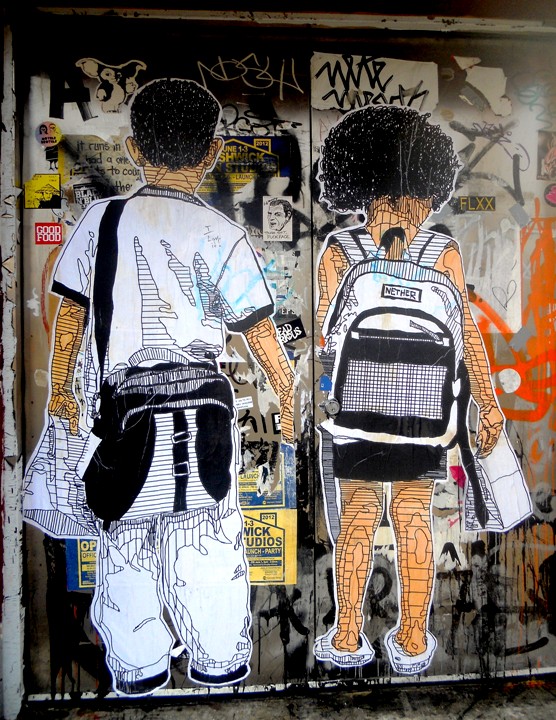
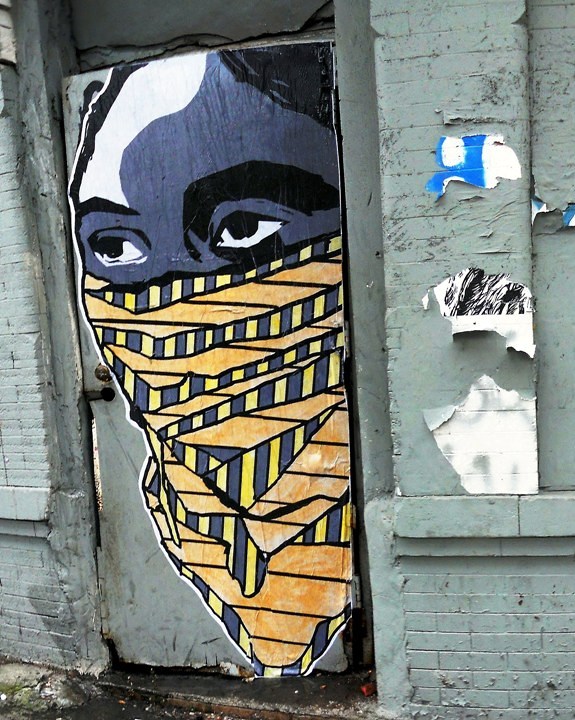
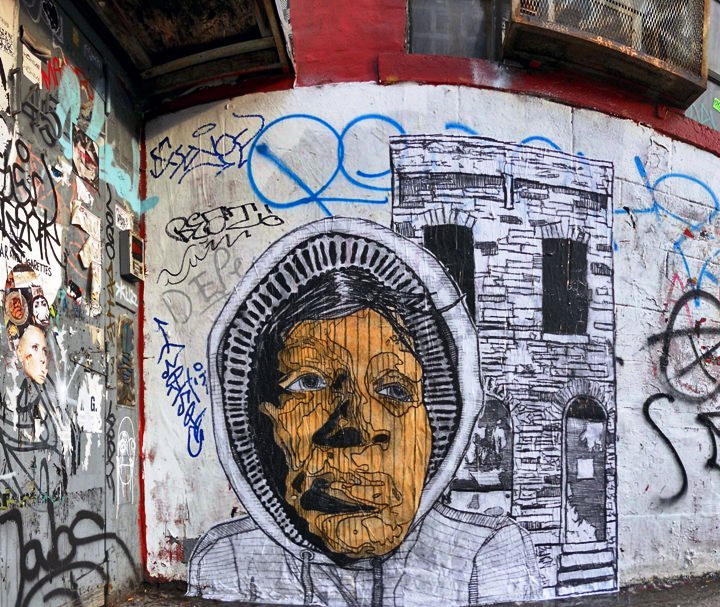
With his hauntingly elegant wheatpastes of everyday folks, Baltimore-based Nether has transformed the visual landscape of his city’s bleakest blocks. Within the past few months, his vision has also made its way to NYC. And opening tomorrow, January 24, at Weldon Arts is Crumbling Cities, a solo exhibit of Nether’s works.

When and why did you first get up?

It all started – sadly – as a rebellious middle schooler trying to be cool.

Did any particular artists inspire you to move in your current direction?

The two artists who really got me going were Gaia and Tefcon.  I was living and sharing a studio space with Tefcon, and just watching his relentless hustle and work inspired me.  And around that time, I got to be friends with Gaia and filmed him at work with Nanook.  I soon became super interested in wheatpaste.  It was like a bomb went off in my head.  It seemed like the perfect bridge between my politics and my art.  And Gaia was super helpful showing me the ropes and sharing his print and other connections with me.

When did you begin getting your wheatpastes up?

Started really going hard about three – four years ago.

Nether-street-art-in-Brooklyn

And what about the risks? What inspired you to take the legal risks?

Seeing what other artists like Cedar, Dume, Ways, and a lot of KSW/NSF writers were doing at the time inspired me. And I see my work on the streets as a way to empower other Baltimoreans.

In the past few years, you’ve made quite a mark. Your work can be seen not only in Baltimore, but in NYC, Philly, DC, Berlin, Shanghai, Paris and London. You seem to be on a mission. Could you tell us something about it?

I see public art as a vehicle for social change. And the artist — by transforming the landscape – is the facilitator of this change. By getting up on the streets, I can reach masses of people at the same time that I am beautifying the environment.

Are there any issues that particularly concern you?

My main focus is the issue of slumlords neglecting their vacant properties in Baltimore.  People just deem these areas hopeless and don’t think to address the issue or find out who is responsible. I am trying to put it in their faces.

Nether-paste-up-on-tagged-Brooklyn-door

Any favorite spots?

Anything vacant. I love vacant doors, electrical boxes and glass.

How do the cops respond to your current ventures?

Generally, if the cops come by, it’s in a non-threatening way.  They always have way more pressing issues on their plates. I just tell them that I’m trying to beautify the neighborhood, and they are usually just curious and confused.  A few times they’ve actually watched my back!  Most of the more intense run-ins with the police have been out-of-town.

What about your parents?

When I first started going hard with it, they were worried.  I remember getting a call from my mom after she drove by one of my pieces on i-83. But now they are totally down and both really dig it.

Nether-street-art-in-Brooklyn-NYC

What was the riskiest thing you ever did?

The riskiest thing I ever did was the dumbest. I was with my buddy Tony trying to put up a piece in daylight on the Amtrak Line.  Two trains passed by, and then one came by super slow and stopped. Three transit cops jumped off and chased me.  I ran off the track clearing, slid off this embankment and fell like 20 feet into the Jones Falls.  Then I swam across and hid under a rock for like 45 minutes till they gave up looking for me.  I got a really nasty cough after that.

What about the role of the Internet in all this? How do you feel about it?

I have mixed feelings about it. On one hand, it kills the experience of simply stumbling upon a piece.  On the other hand, it allows folks all over the world to see the work I’ve created for a specific small community.

Are there any artists who particularly intrigue you these days?

I am really digging Pixel’s recent work and Ludo in Paris.  Swoon has always been my favorite artist, and her new stuff continues to stun me.  On the graf side of things, it’s Kuma and Goal.

Nether-street-art-in-Bushwick-Brooklyn

Have you collaborated with any artists?

I’ve installed work with a bunch of artists from different places.  Shouts to Mata Ruda, Harlequinade, Sorta, Gaia, Tefcon  — and many others.

How do you feel about the branding of street art and graffiti? Are you open to it?

I think it’s sad, but often necessary.  It’s all about who you get the money from and what you do with the money.  On one hand, all this focus on money changes the nature of the underground. But, at the same time, the money allows us to pump funds into the street game.

Nether-street-art-in-Williamsburg-Brooklyn

What’s ahead?

I’m super-psyched about this new project with the Baltimore Slumlord Watch. We are going to wheatpaste artwork onto all of Baltimore’s neglected vacant properties. We will post large QR codes – next to the artwork – directing passersby to the Slumlord Watch website. On the doorways we will list the specific property violations and the contact info to report them.  This project is intended to create awareness and pressure absentee slumlords into fulfilling their responsibilities.  I am also working on a mural project with the Muhammad Ali Center.

It all sounds wonderful! And good luck with your exhibit at Weldon Arts.

Interview by Lois Stavsky; photos by Tara Murray, Lois Stavsky and courtesy of the artist

{ 2 comments }
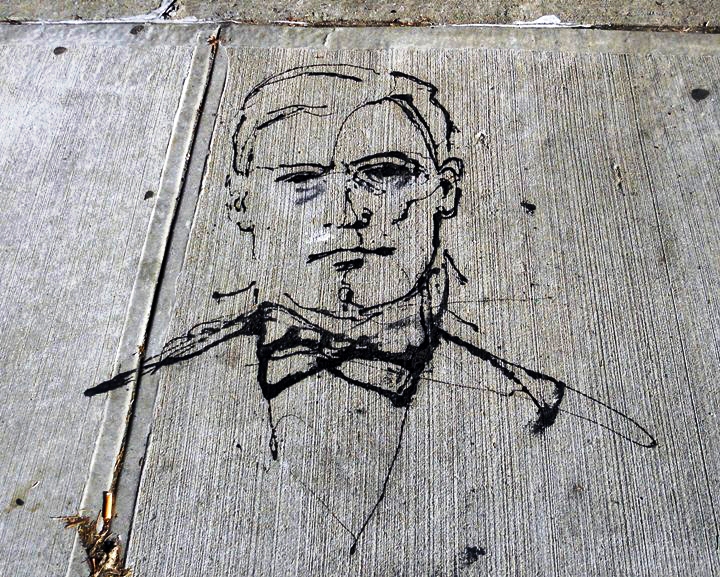
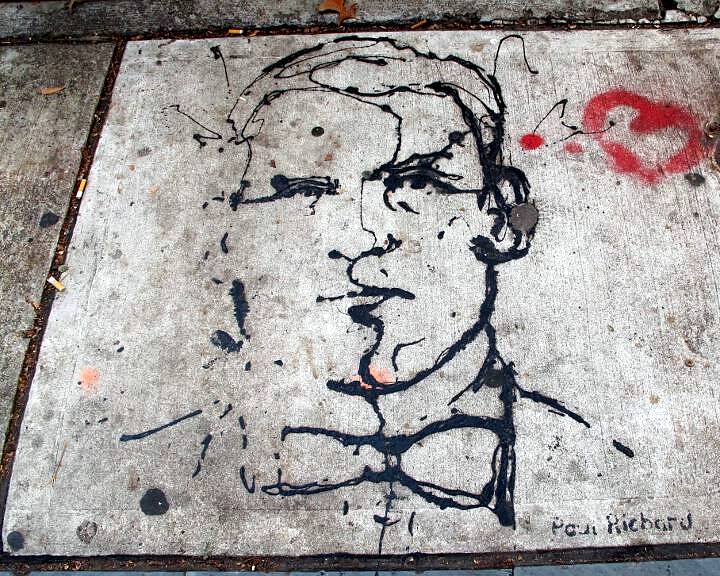
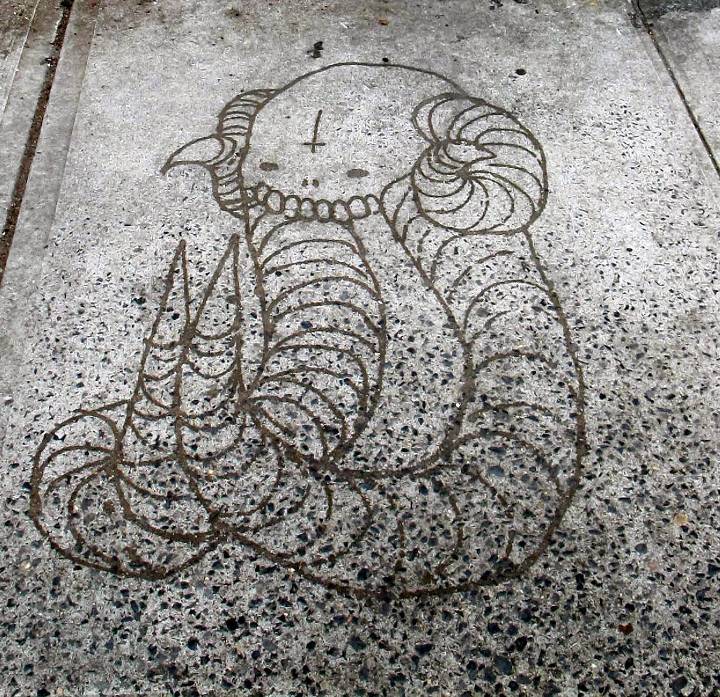
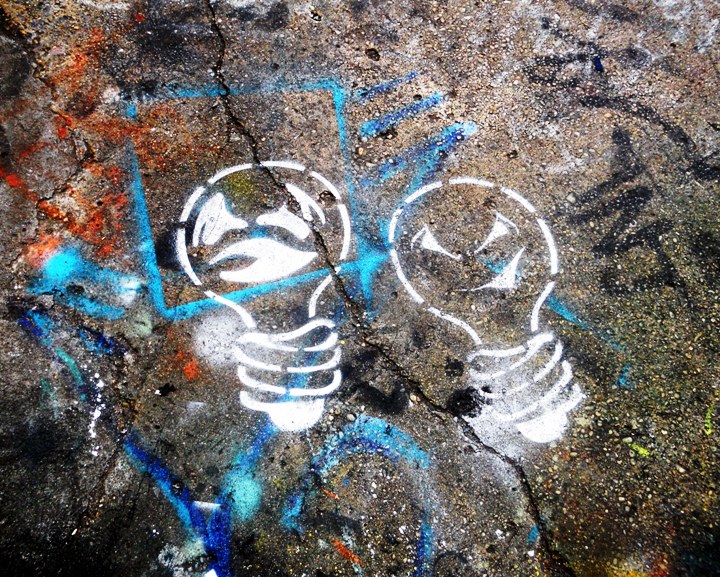
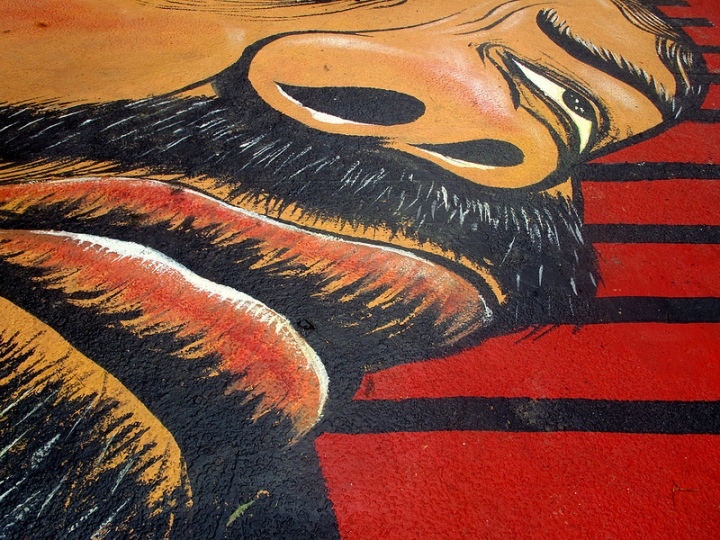
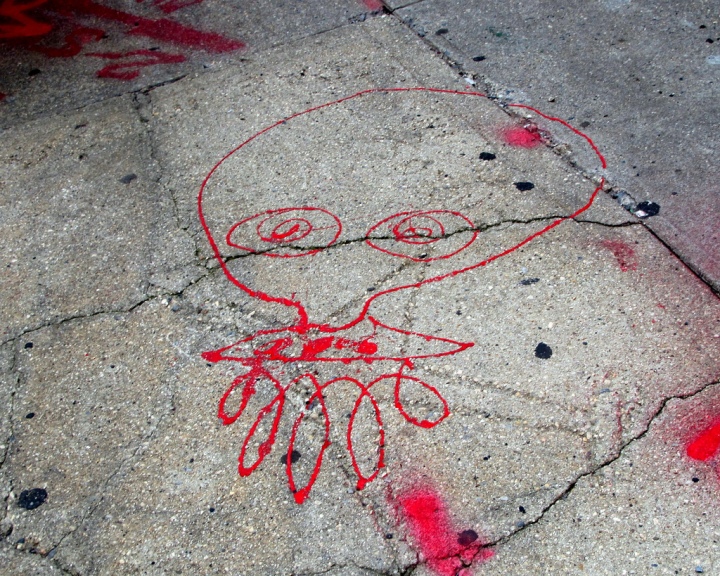
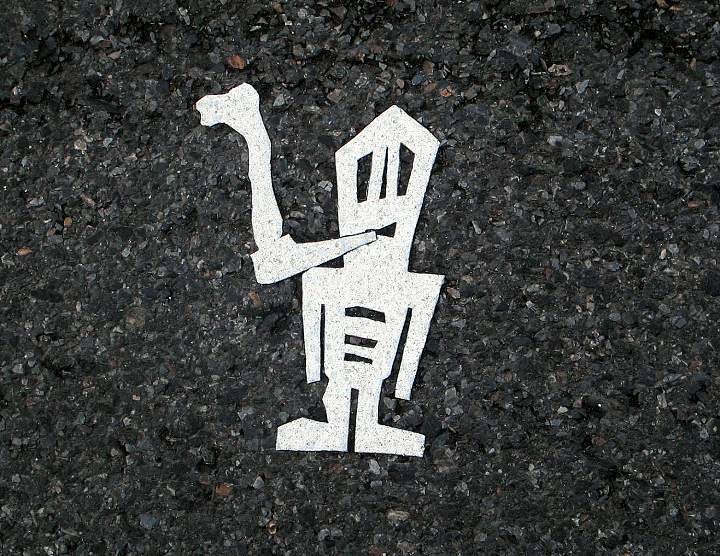
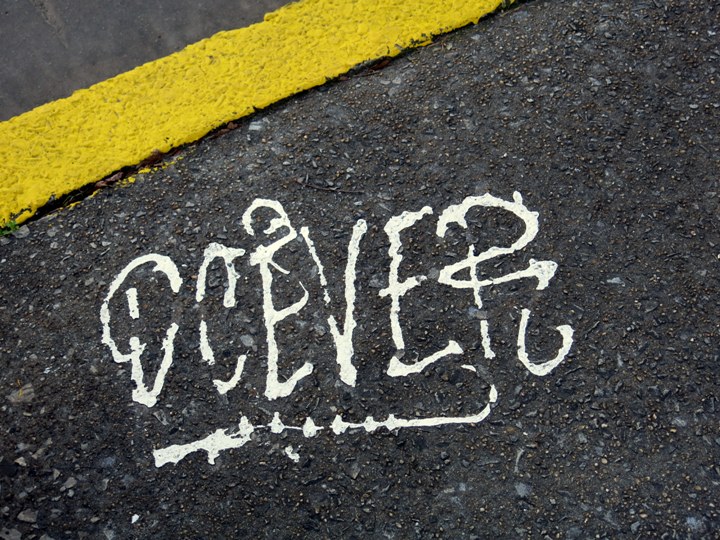
NYC’s Dashing Pavement Art

January 21, 2013

Paul Richard

From Paul Richard’s elegant gentlemen to Dceve’s stylish tags, the images that surface on NYC’s pavement intrigue:

Another one by Paul Richard

Paul Richard

The itinerant Swamp Donkey aka Swampy

Swampy

Meres at 5Pointz

Meres

Close-up of extraordinary piece by the wonderfully talented David Ellis

David Ellis

The iconic UFO

UFO

The elusive stikman

stikman-street-art-on-NYC-pavement

And stylish writing by Dceve of the legendary Smart Crew

DCEVE

 Photos by Dani Mozeson, Tara Murray & Lois Stavsky

{ 2 comments }
Speaking with Rubin

January 16, 2013

Rubin-graffiti-and-street-art-action-in-Bushwick-NYC

Rubin’s exquisite murals surface here regularly in NYC on the streets of Brooklyn and the Bronx.  Each one is a cause for celebration.  We recently had the opportunity to speak with the talented artist.

When and where did you start getting up?

I started tagging in 1985 – age 10.  I was living in Gothenburg, Sweden. I grew up there among the concrete projects. Their walls were my first canvas.

What inspired you?

I watched the movie Beat Street at my friend’s house. That started everything. The movie had a huge impact on me, as did growing up in the projects.

How did your family feel about what you were doing back then?

My mother worried a lot. But she was supportive.

Rubin graffiti

Do you have a formal art education?

No. I never wanted to go to art school. I studied music and played in several bands in my native Gothenburg.

Back in Sweden, did you work alone or with a crew?

I painted with NTA (Night Time Artists) back in Sweden. But I also painted alone.

What about here – in NYC?

I’ve collaborated mostly with 4Burner members:  Sen2, Dasic, Owns, Deem, Gusto and Logek.

Would you rather paint alone or with others?

I like painting alone, but painting with others is important for artistic growth.

Rubin-street-art-and-graffiti-in-NYC

Is there anyone in particular with whom you would like to collaborate?

I would love to collaborate with Futura. That would be something.

Have you any preferred spots and/or surfaces?

I love the concrete walls up in Hunts Point in the South Bronx.

What is the riskiest thing you ever did?

I climbed five or six stories on a drain pipe to get to the top of a building.

Why?

Because it was an impossible spot that no-one had reached before.

Rubin-street-art-and-graffiti-in-Brooklyn-NYC

Your artwork seems to blur the lines between graffiti and street art. How do you feel about the graffiti/street art divide?

We should be on the same side, but we’re not. There is definitely a beef between street art and graffiti. I have always tried to bring these two opposites together in my art. It’s very challenging. There is so much ego in graffiti and street art trends seem to come and go.

How do you feel about the movement of street art and graffiti into galleries?

It’s exciting and interesting. I see it as a natural progression.

Have you exhibited in galleries?

Mostly in Sweden, but I exhibited along with Cope2 two years ago in Nolita.

Rubin-graffiti-action-at-Bushwick-Five-Points

What is your main source of income these days?

My main source of income is photography. I’m also involved with the production of a Swedish/Finnish arts and culture magazine.

How do you feel about the role of the Internet in all this? And do you follow any sites?

I think it’s great. I follow 12ozProphet and StreetArtNYC.

What inspires you these days?

Craftsmanship, Kraftwerk’s minimal electronic music and the contrasts between my two homes: Bushwick, Brooklyn and the gorgeous woods of Lapland, where I spend the summers with my wife.

Are you generally satisfied with your finished pieces?

Never.

Rubin-graffiti-in-Bushwick-NYC

When you look back to what you did two years ago, how do you feel about it?

Two years ago feels like an eternity, especially when living in NYC. I tend to look forward instead of looking back.

How has your artwork evolved through the years?

In the nineties, I was one of the most active writers in Sweden. In the mid-nineties my graffiti took a turn to the geometric. From 1999 to 2008, I took a break and focused on my band, Kingston Air Force. I can’t really describe my usual style. Someone once called it abstract geometry; that’s a pretty good description, but my style is still evolving.

 Of all the cities in which you painted, which is your favorite?

New York City. I love the energy and the mix of people. Nothing beats New York.

 Who are some of your favorite artists?

The Swedish artist Gouge. He’s amazing!  Bates from Denmark, Dondi and Riff 170 from NYC, C215 and Nelio from France, Boaone from Germany and  Sofles and Fecks from Australia.

Rubin-street-art-and-graffiti-with-character-in-NYC

 What advice would you offer young writers and younger artists?

 Work hard. Learn the craftsmanship. Perfect your technique. Practice. Be a good role model to younger writers. Be nice.

 What do you see as the role of the artist in society?

Every artist is an egoist, and I’m no exception to the rule. I interpret what I see and how I feel through my art. I create for myself, but I’m very humbled every time someone appreciates my pieces. It means that they appreciate my take on what’s going on around us. That’s very flattering.

Where do you see yourself in five years?

I don’t even know where I’ll be next week. NYC has taught me how to live right here and now, and I’m really enjoying taking a day at a time.

Interview by Lois Stavsky with Lenny Collado and Tara Murray; photos by Lenny Collado, Dani Mozeson. Tara Murray and Lois Stavsky

{ 2 comments }
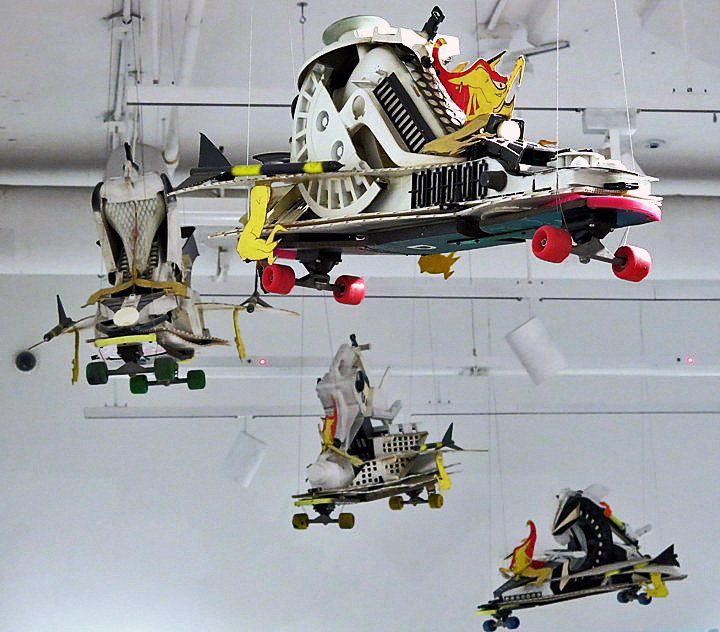
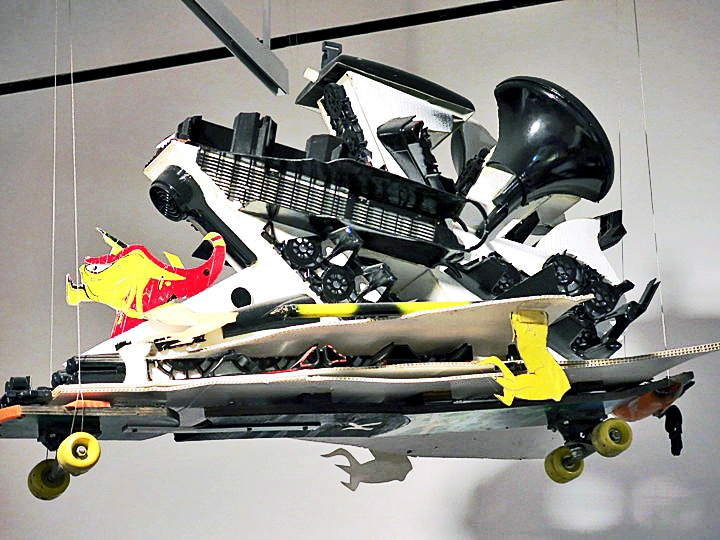
Rammellzee

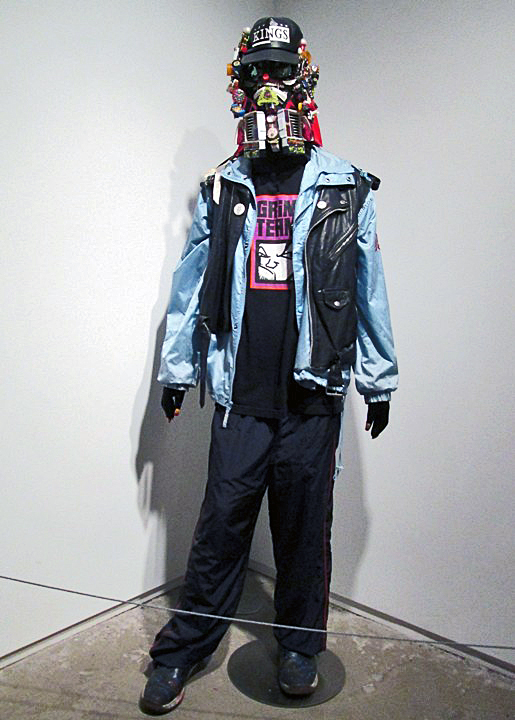
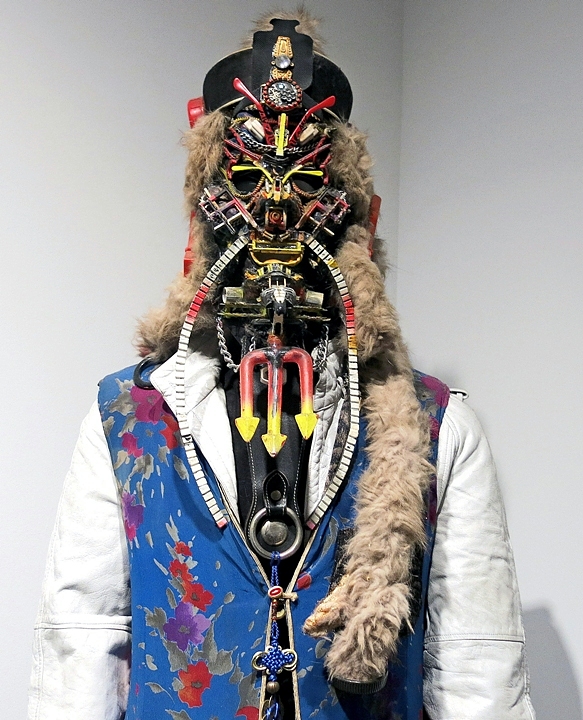
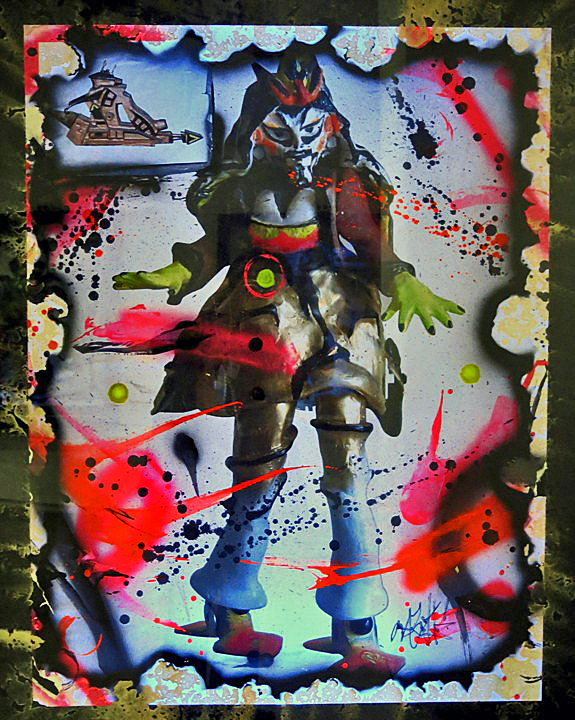
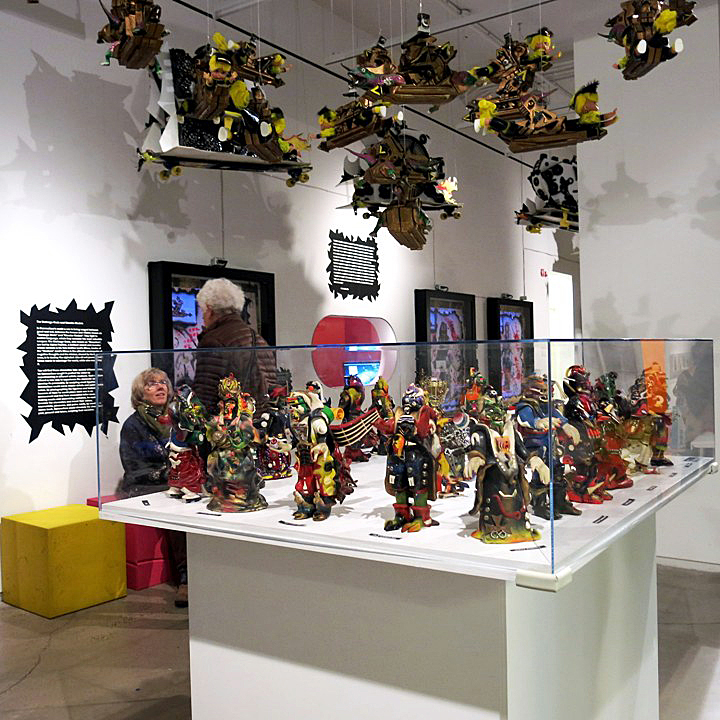
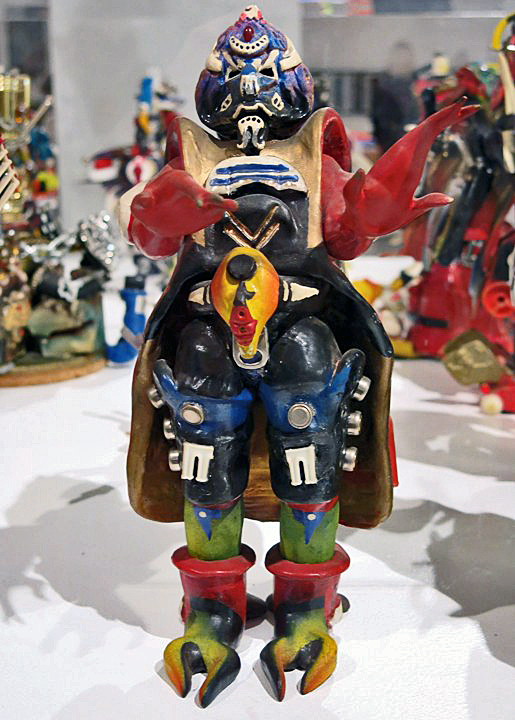
In a Tribeca loft that became known as the “Battle Station,” the legendary graffiti artist and hip hop MC Rammellzee began in the 70’s to create his own mythology. Known as “Gothic Futurism,” it was a world that he would continue to develop — often with objects he found on the streets — for 30 years. The most comprehensive collection of Rammellzee’s works to-date is on view through February 3 at the Children’s Museum of the Arts at 103 Charlton Street in the South Village.  Among the items included in the RAMMELLZEE Galaxseum are: large-scale paintings, figurines, Rammellzee’s legendary letter racers and full-body life-sized costumes. Here are a few more images that we captured while visiting last week:

Rammellzee

Figurine, close-up

Rammellzee

Letter-racers representing letters of the alphabet — transformed into war machines — seeking to “break free”

Rammellzee letter racers

Letter-racer, close-up

Rammellzee letter racer

Life-sized costumed figure

Rammellzee life-sized costumed figure

Close-up from a second life-sized costumed figure

Rammellzee costumed figure

Curated by Prescott Trudeau, The RAMMELLZEE Galaxseum at CMA is certainly as appealing to us adults as it is to children!

Photos by Lenny Collado and Lois Stavsky

{ 1 comment }

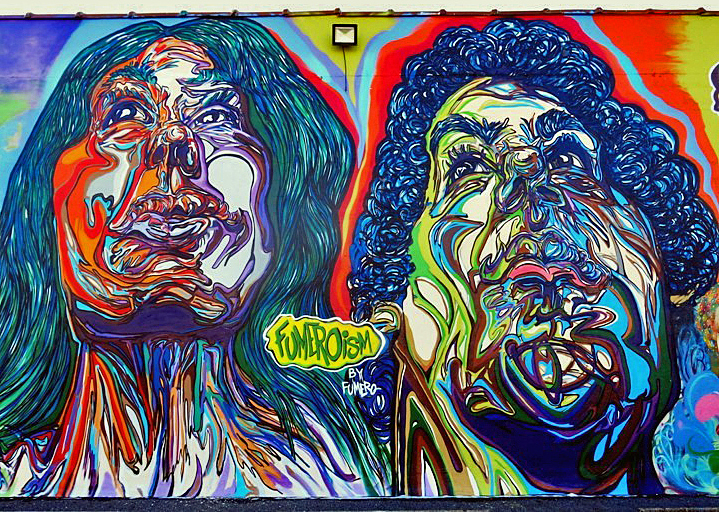
Fumero street art

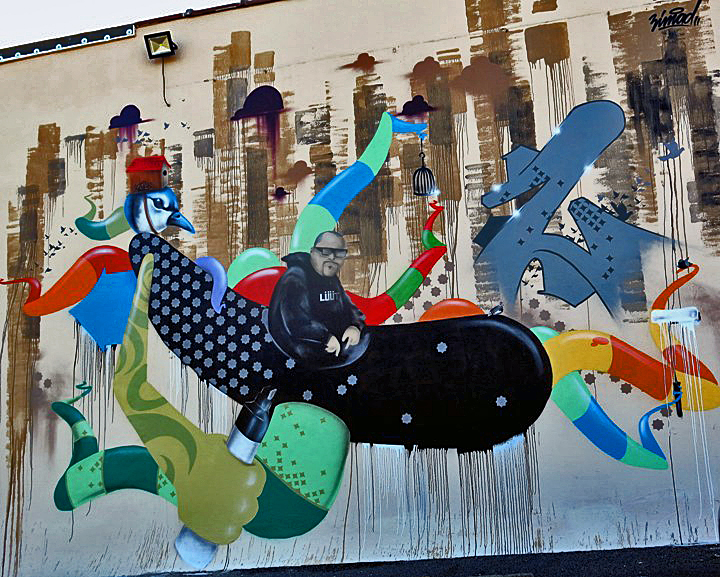
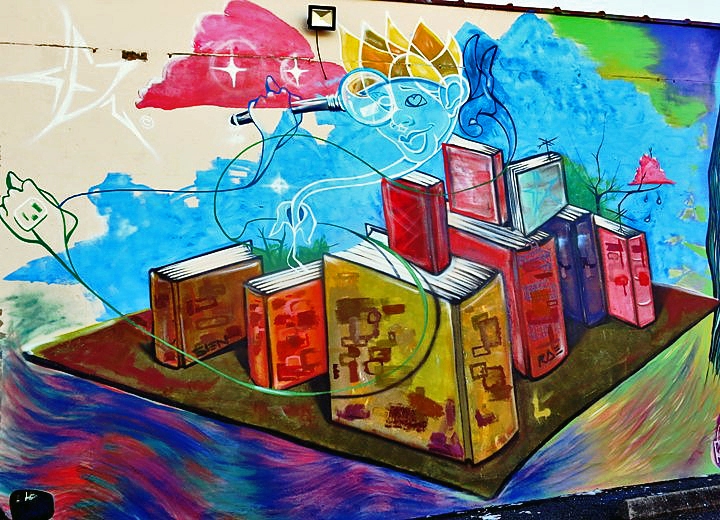
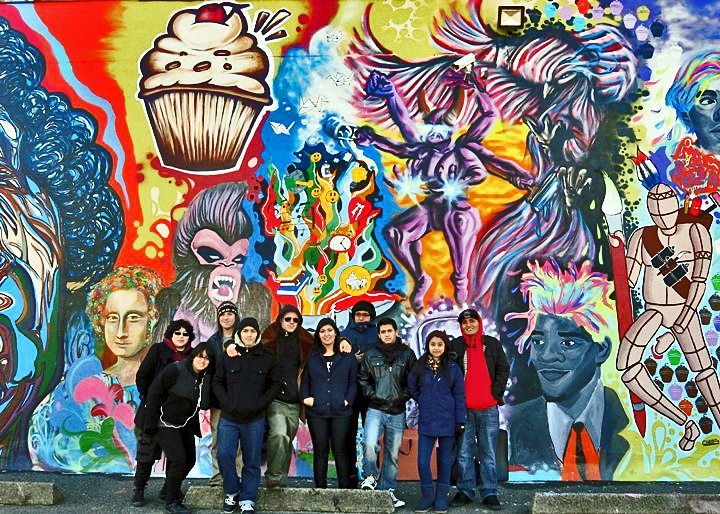
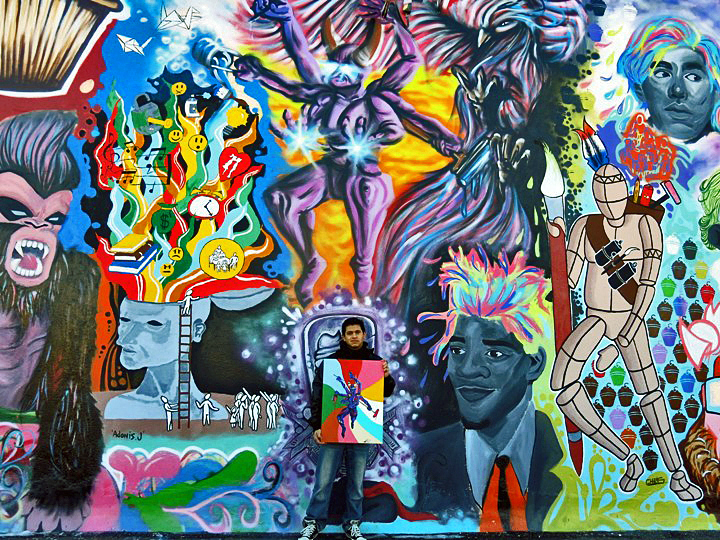
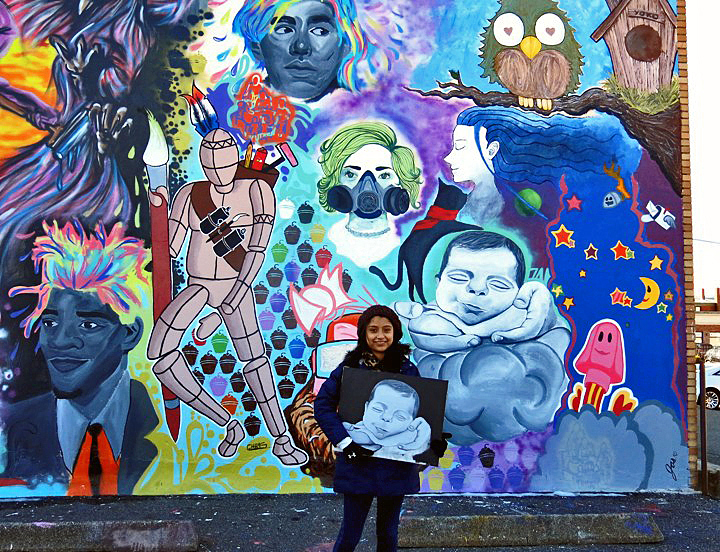
The new Nohble in Passaic, New Jersey sports not only cool urban apparel and footwear, but also the most vibrant mural in the county.  Here are a few more images recently captured from its exterior wall that was transformed last month from bleak concrete into a vibrant mural.

Zimad

Zimad

Sien

Sien

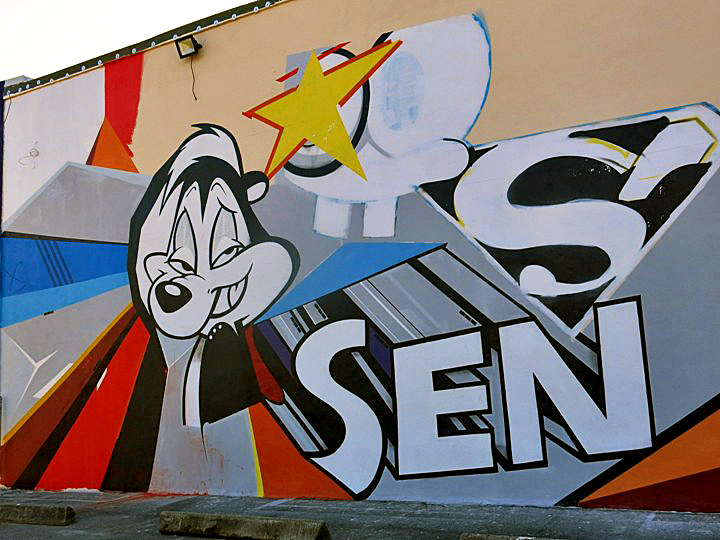
Sen2, in progress

Sen2

Fumero and student artists

Fumero with students

The young artists bristled with pride as they spoke about sharing their talents in a public space.

Anthony Ojeda

Anthony Ojeda

Alexandra Ramos

Alexandra Ramos

Christine Noh, Nohble‘s owner, is delighted with the mural and the “amazing kids” who worked on it, alongside the established artists. She promises that this wall is the first in a series.

Photos by Tara Murray & Lois Stavsky

{ 1 comment }

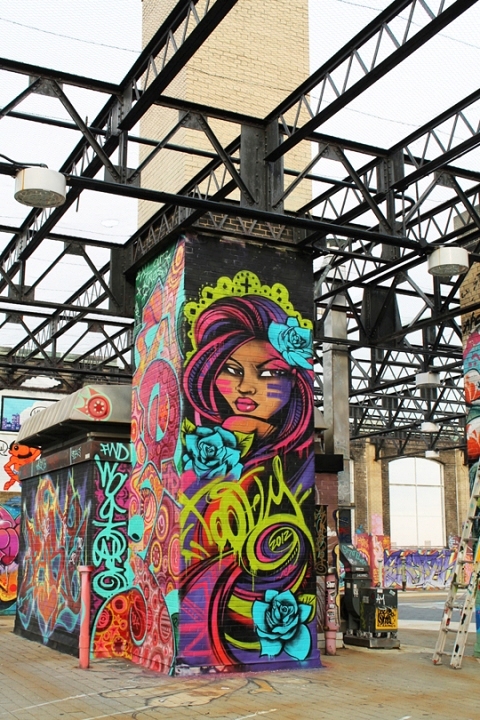
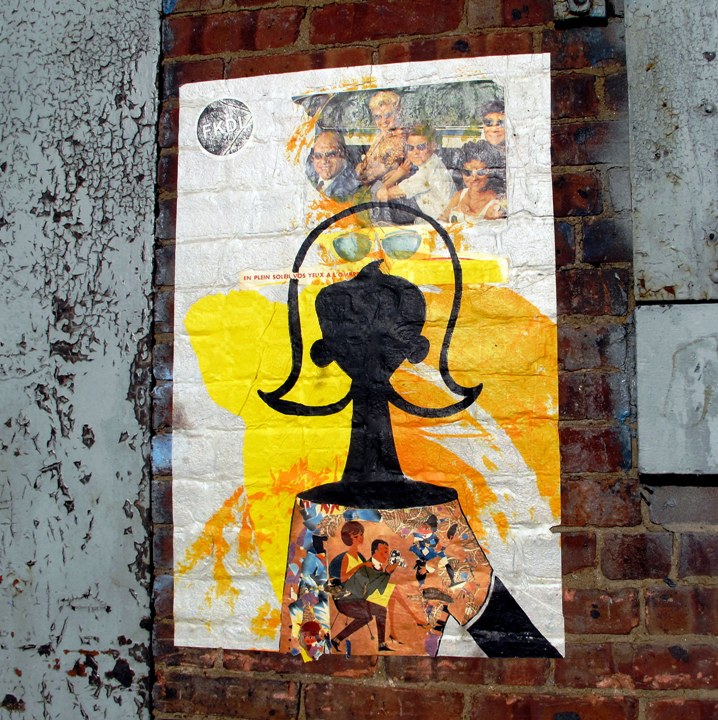
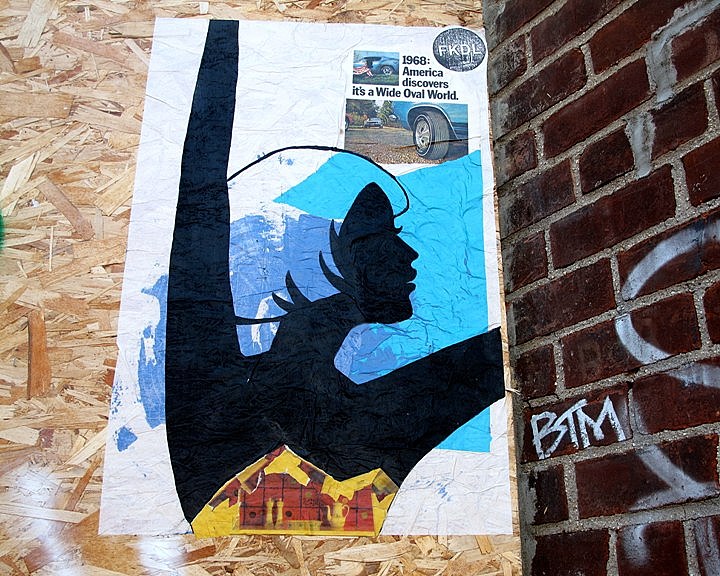
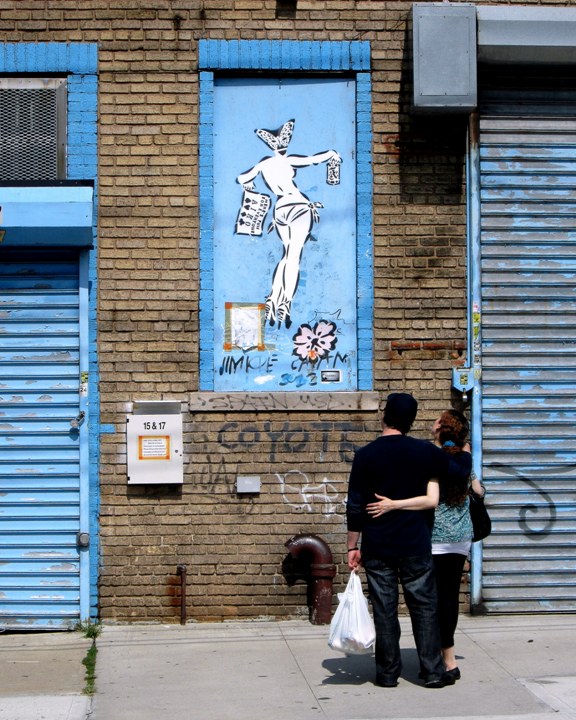
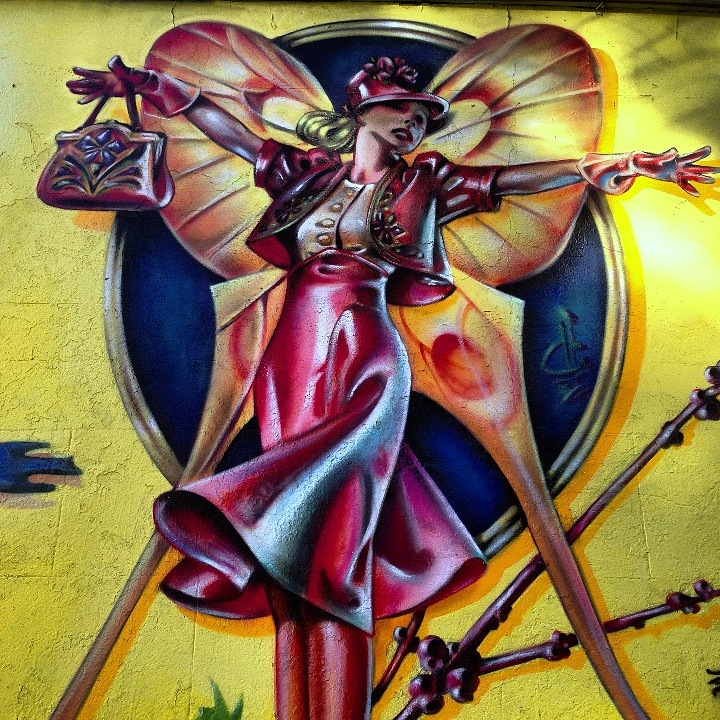
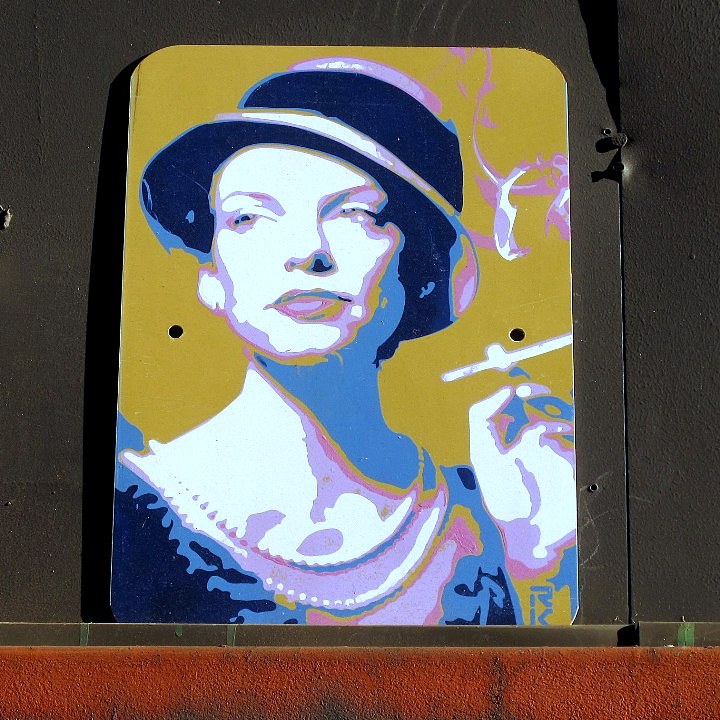
This is the seventh in a series of posts featuring images of girls — and women — who grace New York City’s public spaces:

Toofly on Manhattan’s Lower East Side

Toofly

 French artist Frank Duval aka FKDL in Brooklyn

FKDL

FKDL

Lady Aiko in Bushwick, Brooklyn

Lady Aiko

Hef in Williamsburg, Brooklyn

Hef

 Russell King on the Lower East Side

Russell King

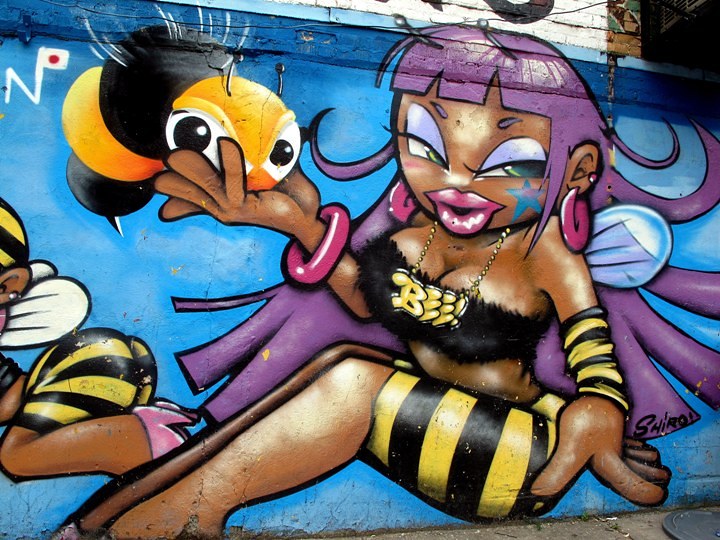
Shiro and King Bee in the Bronx

Shiro and King Bee

 Photos by Lenny Collado, Tara Murray and Lois Stavsky; Toofly image courtesy of the artist

{ 2 comments }
Speaking with Baser

December 31, 2012

Baser’s masterful handstyle can be seen on sundry stickers on a range of public surfaces throughout Manhattan. We recently had the opportunity to pose some questions to him. 

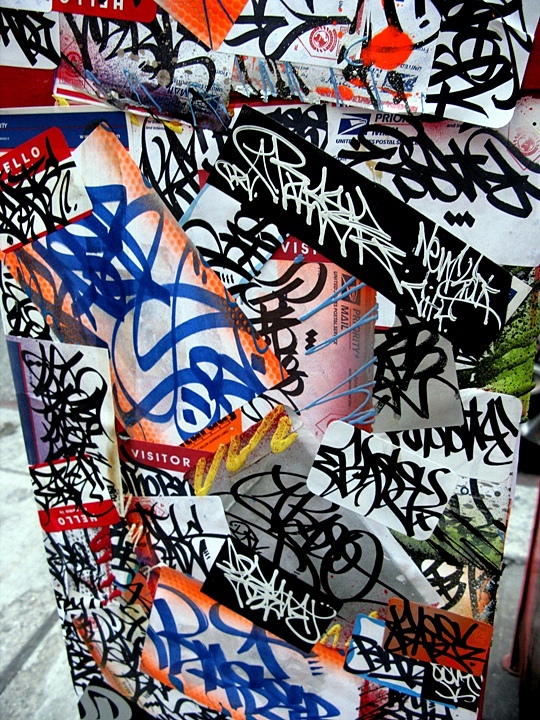
Baser sticker collage

When was Baser born?

I started writing Base in 1986 in Pittsburgh. It mutated to Baser in 1999 when I began using stickers as my primary means of getting up. By then I was living in Brooklyn where I had originally been exposed to graff and where it had seeped into my brain.

Why did you choose that name?

The letter combination. I know that its connotation is drug-related. But that had nothing to do with it. Many people have suggested I change it, but I’m stubborn. Besides, after the Godfather dropped a signature in my black-book to that name, I felt it was official. So that’s it!

Any formal art training?

No. Just the desire to rock my name with style. But for all the kids out there: Go to school, master your craft and get paid!

Baser

What made you go postal?

I’d been getting up with labels since ’99. Not postals or name-badges. But my supply of free labels dried up about the same time a number of books came out on the subject. And except for a few clipped tags, Baser was nowhere to be found. Burn! It became evident at that point that I needed to broaden the palette. So I started using a variety of labels, developed my style and put in the work. This way, book or not, the streets would know and I’d be certain I put in my best effort.

What made you want to share your style?

I didn’t necessarily want to ‘share’ my style. Maybe more like competing for style. I’d put stickers up to entertain myself while walking the city. I certainly liked comparing various hand-styles and wanted to see how I fit in. The quality of style a few years back drove me to take stickers seriously. So I could look at my work and be proud.

Any favorite writers?

There are so many amazing writers today. And with the specialty paints and caps, it’s even easier to produce quality work. But personally, I would go back to the cats I grew up admiring and the pioneers before them. Dudes like RTW Crew, Dondi, TFP Crew, Seen (UA), T-Kid, Phase 2, Billy 167 and Fuzz. The list goes on.     

Baser

 What about handstyles? Are there any handstyles you admire?

I’ve always been a fan of many hands coming out of New York City. But to be specific, Zephyr, Revolt, Haze and Trike were the first to do it. Brooklyn and Manhattan styles, for me, unquestionably kill it. Later on the stickers of Sure and Faust, Twist and others of the late ‘90s and early 2000s lit a fire in me to skill up.  I might add, though, that it’s a pleasure to see anyone from anywhere who’s doing it well.

How has your style evolved?

It’s constantly evolving because I always strive to do better. Well, I hope it’s gotten better and more pleasing to the eye. Balance, composition and flow are three ingredients I try to ingrain in the muscle memory. The less my hand needs direction the more room there is for improvisation. Then more of my soul pours out and people feel it. Anyway, that’s the theory and, hopefully, the evolution is evident.

Any past collabs?

Not really. I stick to myself mostly. I did some work with Sabeth718 on the zine Stuck #1. I, also, worked on the zine Bad Things Come in Two’s with Feecees from Miami, produced by TrustNoOne. And I did a few personal ones with Chris RWK and Paecher from Colorado. That’s it. I like to keep it limited because the reality is I’m out there alone. It keeps it simple. Besides, I got more fingers on one hand than I have friends.

Baser

Do you work with anyone these days?

Currently I’m doing some work with KA and MTK76. We’ve been hitting the same spots for years, and we hold a mutual respect for each other’s work. It just made sense to hook up. They’re definitely two cool and talented people. As for anyone else, it remains to be seen.

Have you any thoughts about the current graffiti and street art scene?

I miss everything about the pre-Giuliani New York, especially the graff scene. I’m not too hip to all these street artists. They do what they do, and some of it is really cool. But for me it’s always been about writing, and these days, limited to stickers. So I’m not sure I can judge the current scene. As long as they don’t go over me!  Like Mare 139 said, “We may have lost the trains but we’ve gained the world.”

How do you feel about people peeling off your stickers?

I hope they last on the streets, no doubt. But I give away so many to the city that it balances out the fact that I sell sticker packs. I’ve always said, “If you don’t want to prop the dough on a pack from me, then start peelin’ and stealin’.” I don’t get mad; I just go in with more. Ha!

Baser

What’s your most memorable graffiti moment?

I could hit you with a few clean train chase stories. But the most memorable was back in 1989. A couple of so-called friends came in from out of town. I took them on a flick mission to different spots around the city. I knew Vulcan worked at the old Forbidden Planet near Union Square. So we decided to go down there and see if he would drop a tag in our books.      

Did he?

When we got there, we went downstairs and there were these two cats there — one dude at the register and a dude with a Kangol hat. No Vulcan. It turned out he was off that day. But the guy with the Kangol was looking for him too.

“You don’t write, do you?”  he asked us.

“Yes!” I replied, nodding toward my book.

He quickly glanced through it and handed it back, telling us he was Phase 2.

Wow! The Godfather!

He asked if we knew who he was. No doubt because of our age, we looked ignorant. But of course I did. I had subscribed to the 1980’s zine IGT he did with Schmidlap. Also I was an early collector of books on graff, so I had seen a photo or two of him and definitely his work.

“If you have time, we’ll head over to Union Square and I’ll do something in your books,” he said.

We headed over.

And what began as seemingly random lines all over the page turned out to be a masterpiece. I hadn’t seen anything like it. He did one for each of us, but mine seemed more complex. All the while, he schooled us on the history of writing and the birth of Hip Hop. It was a great oral history lesson. I will never forget that day and will always be grateful to him.

Have you exhibited your work?

Yes! Everywhere from 8th Street stir up to 80th Street! As far as galleries go, I had a few stickers exhibited at NYU’s Bronfman Center. I also recently donated a collage for the Sandy Relief Auction at Trumbull Studios. There might still be some of my work displayed at the Bomit Pop Up shop in California. But that’s it.

Henry Chalfant

How did you start selling your work?

Early on I’d give them away or trade. But that didn’t work out too well. So as interest went up, I put a price on sticker packs and some of the larger pieces. I’m not making a living at it, nor is it why I do it in the first place. But I’m not one to turn away cash. Who is?

What do you see as the future of stickers on the streets?

Not sure. It’s looking pretty dim. There’s only a few of us left doing quality work. I miss the news boxes with their collages of first-rate handstyles that were all over the city a few years back. I was recently looking at some flicks from just a couple years back, and styles were great. Part of the reason I started doing collages on the boxes is because they were too vacant or sporting just a few stickers that were plain garbage. I guess we’ll see.

How do you feel about the role of the Internet in all this?

The Internet, with its entire social media, opened up a worldwide stage for us. It’s part of the game now. But nothing beats actually walking the streets or riding the trains and experiencing graff as it was meant to be seen. I still get that rush when I turn the corner and Bam! there’s a dope tag, fill-in or piece.

What’s ahead?

I don’t know. What are the choices?

Interviewed by Lenny Collado; photos by Dani Mozeson, Lois Stavsky and courtesy of the artist. Final image features noted photographer Henry Chalfant — checking out Baser’s stickers on exhibit at NYU’s Bronfman Center

{ 4 comments }
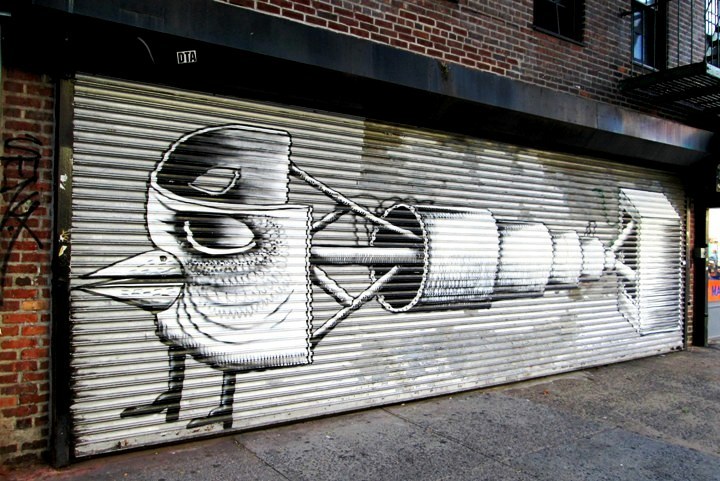
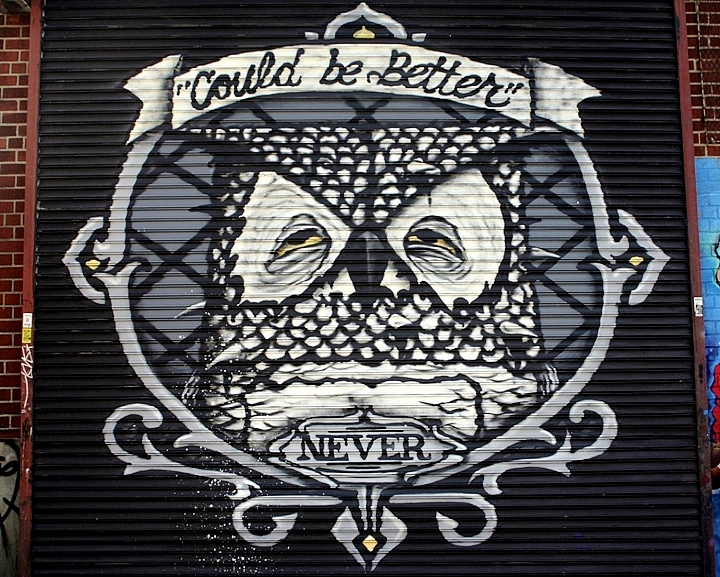
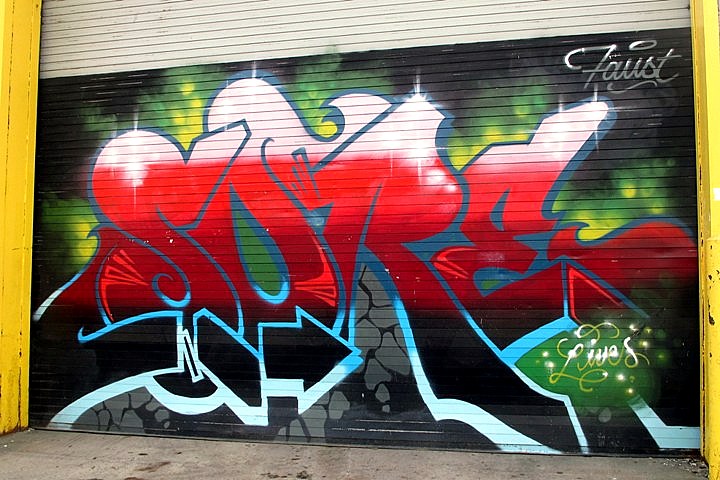
This is the third in an occasional series of artwork on NYC shutters by both local artists and those visiting from abroad:

Phlegm — in from Sheffield, UK — in the East Village

Phlegm

Brooklyn-based Never in Astoria, Queens

Never street art

NYC-based Faust’s tribute to Sure RIP in Greenpoint, Brooklyn

Faust graffiti

Meres at 5Pointz in Long Island City, Queens

Meres

Germany’s Most and Flying Fortress at Welling Court in Astoria, Queens

Most and Flying Fortress

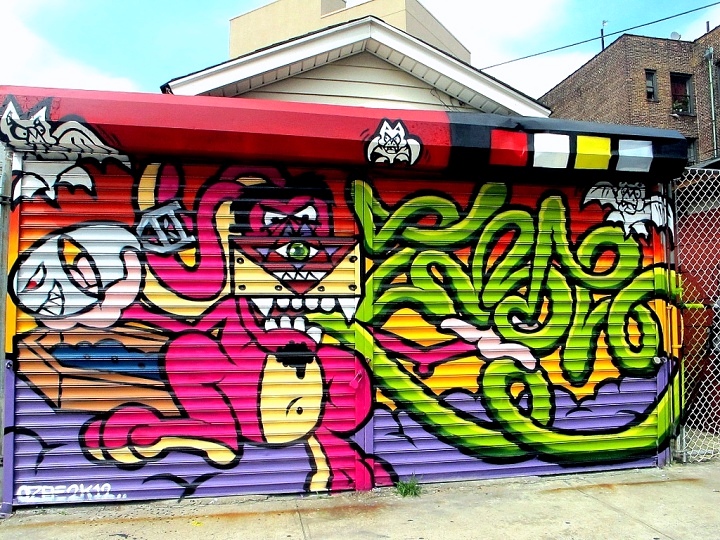
NYC’s Ozbe at Welling Court in Astoria, Queens

Ozbe

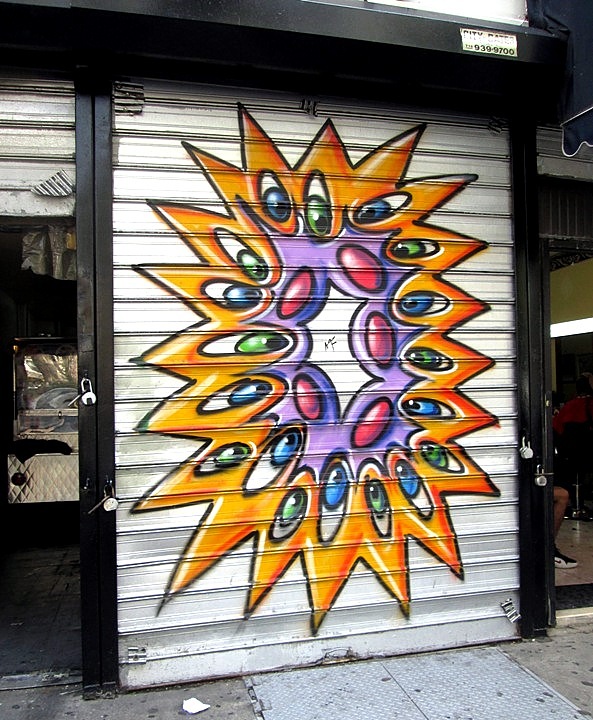
Veteran artist Kenny Scharf on the Lower East Side

Kenny Scharf

Grad of Smart Crew in Greenpoint, Brooklyn

Smart Crew

The legendary Tracy168 at West Farms in the Bronx

Tracy168

Photos by Lenny Collado, Dani Mozeson, Tara Murray and Lois Stavsky

{ 0 comments }