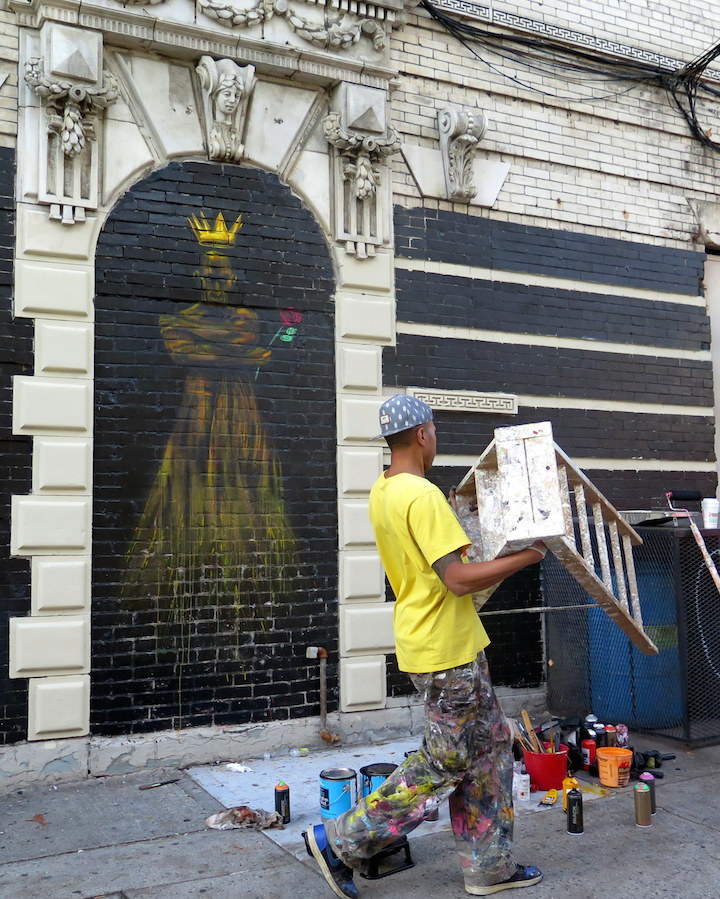
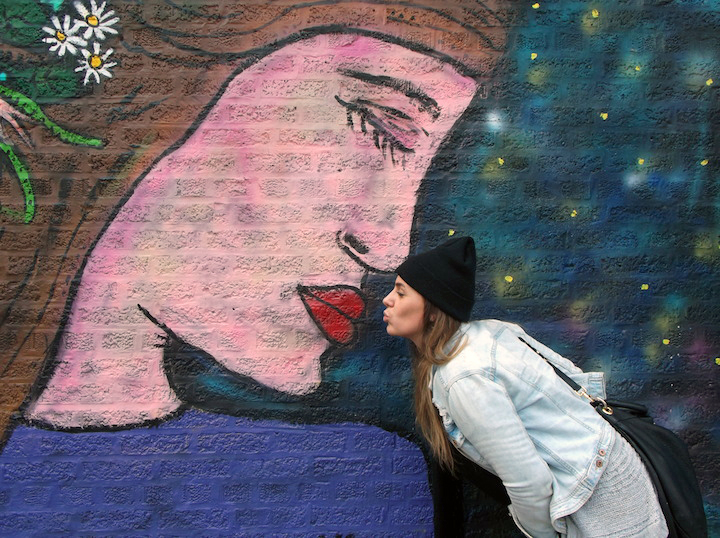
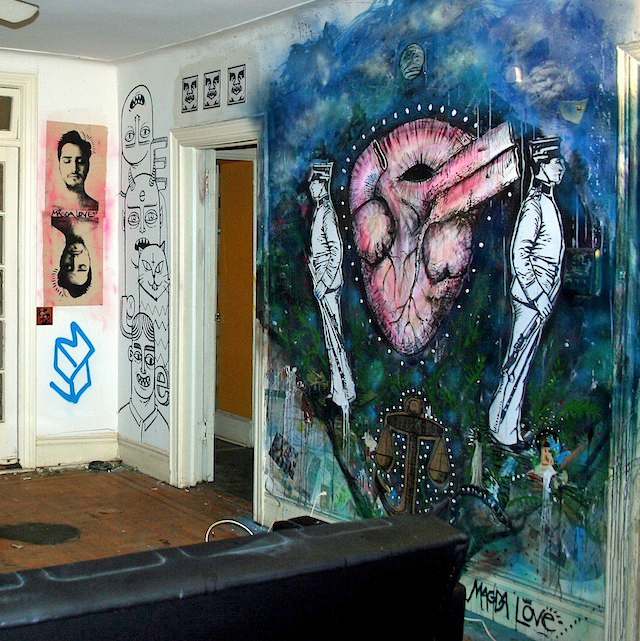
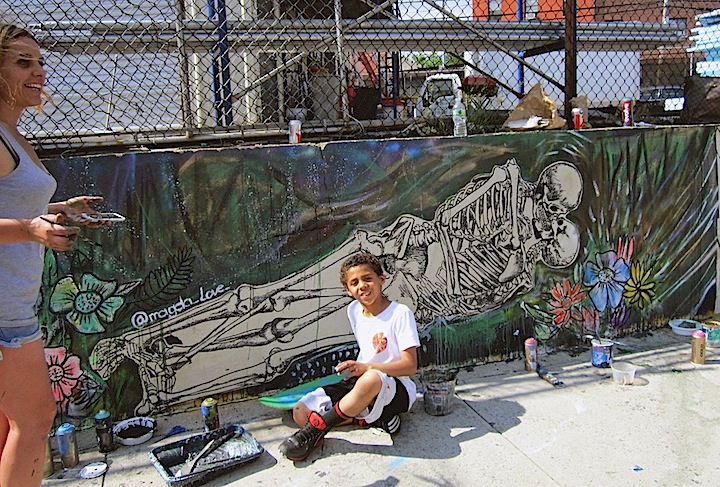
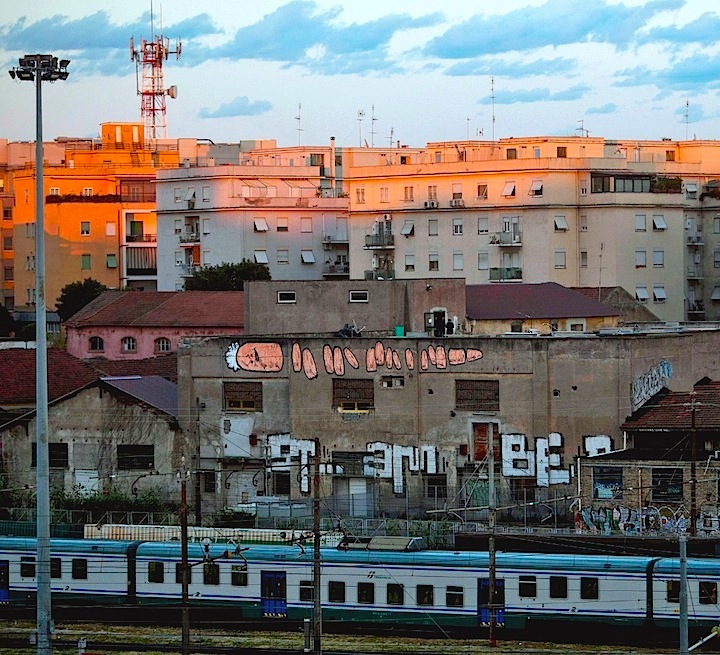
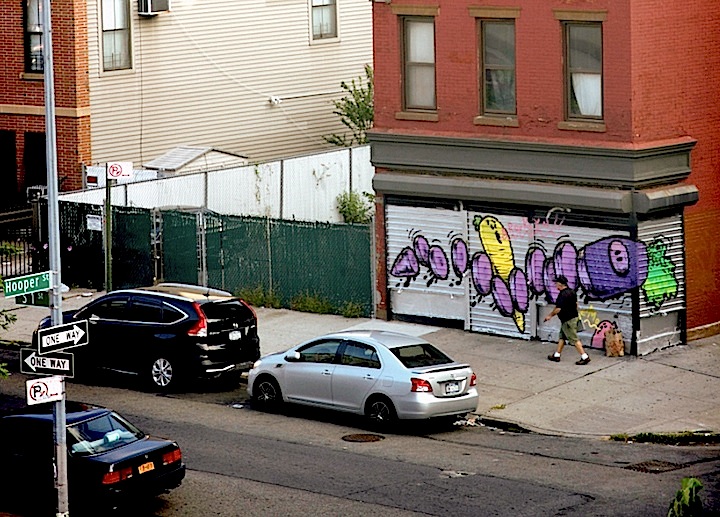
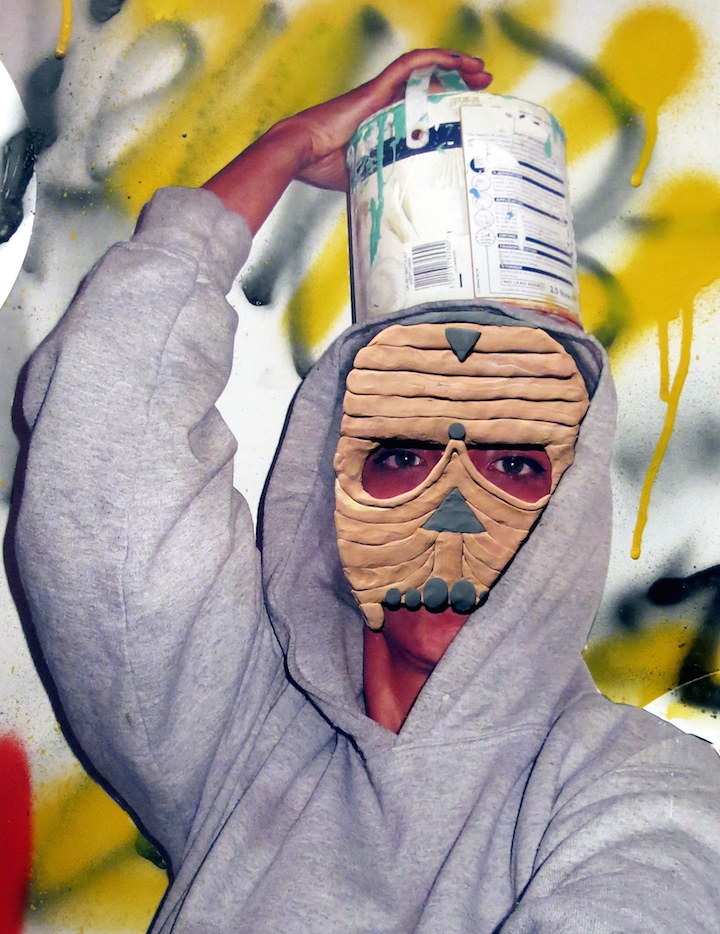
interview

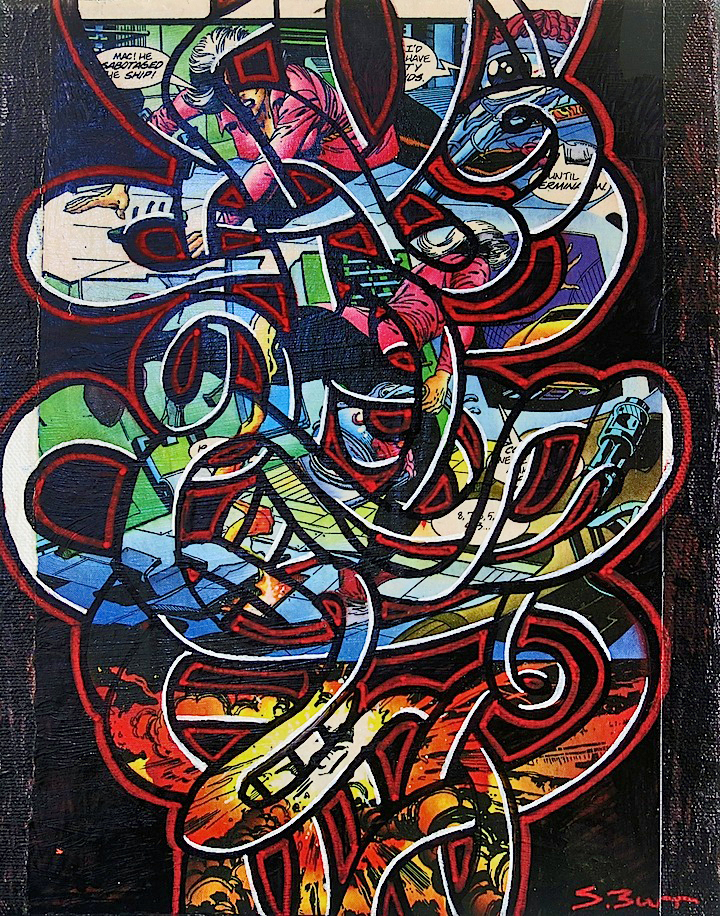
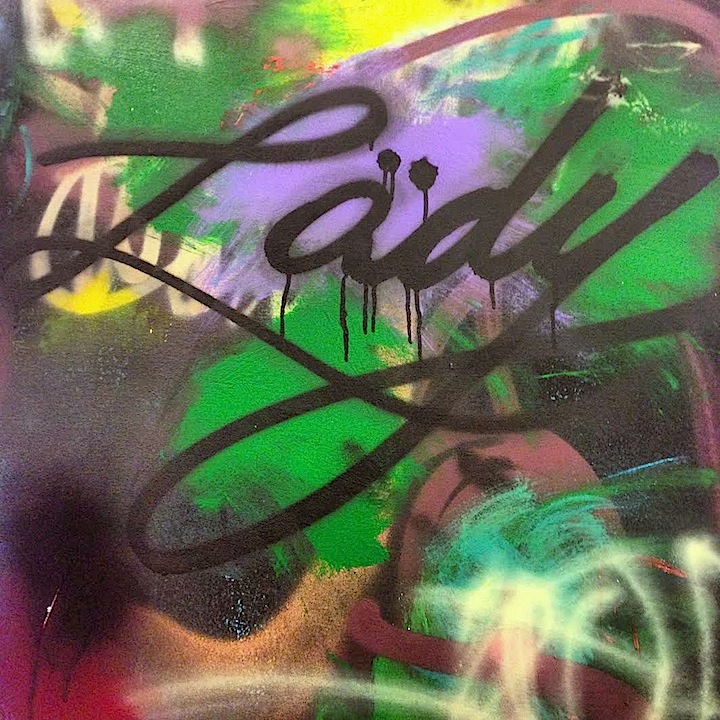
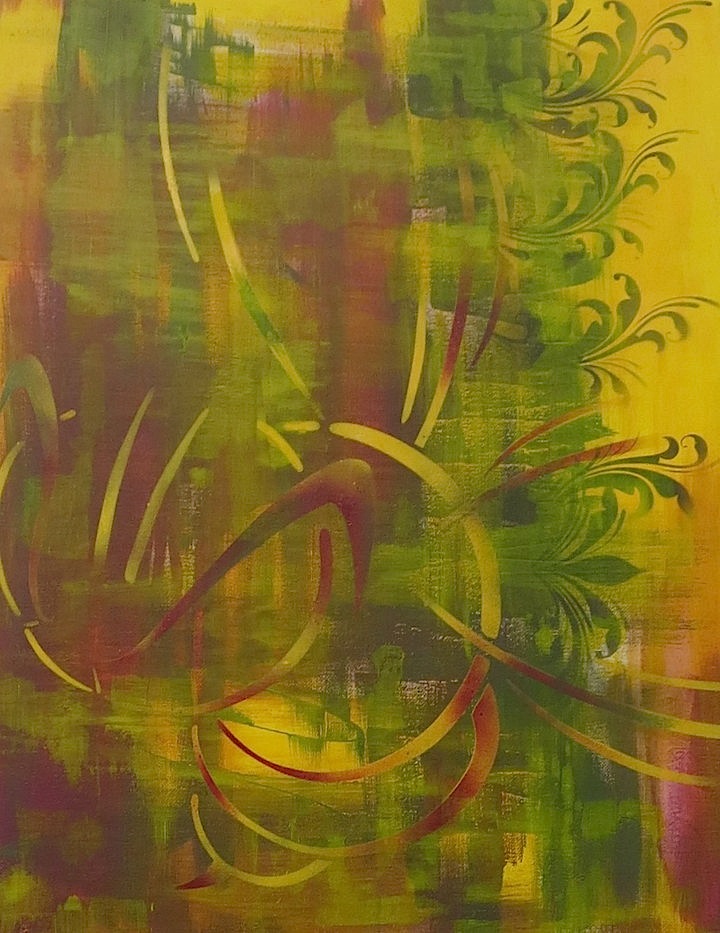
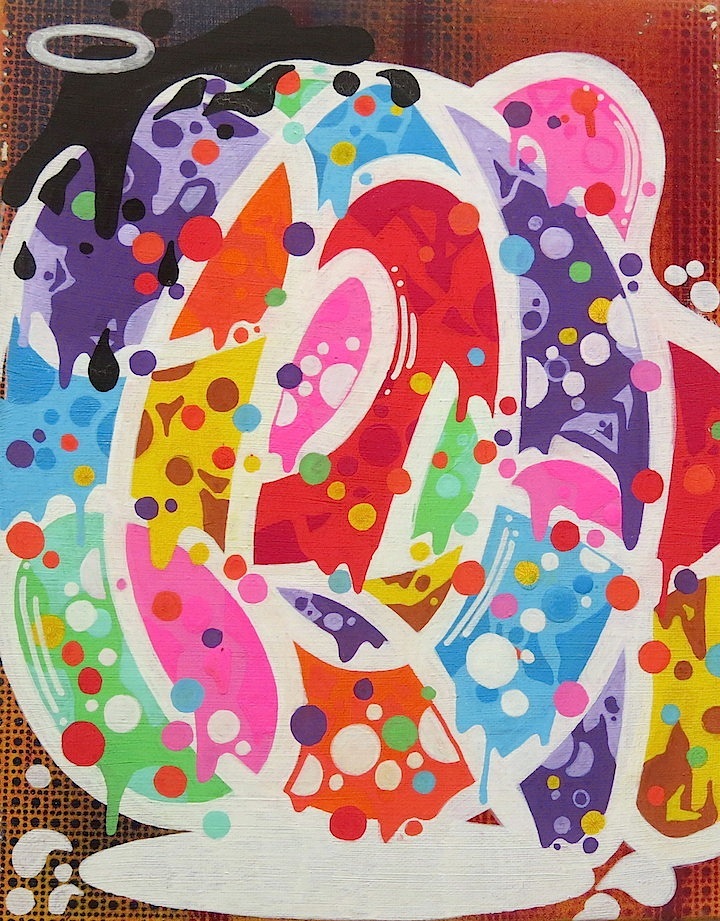
Fusing elements of graffiti, painting, drawing and graphic design, N Carlos J creates masterful, atmospheric works both on and off the streets. He is particularly interested in the unconscious as it reflects our inmost emotions. We recently met up with the Brooklyn-based artist and had the opportunity to speak to him.
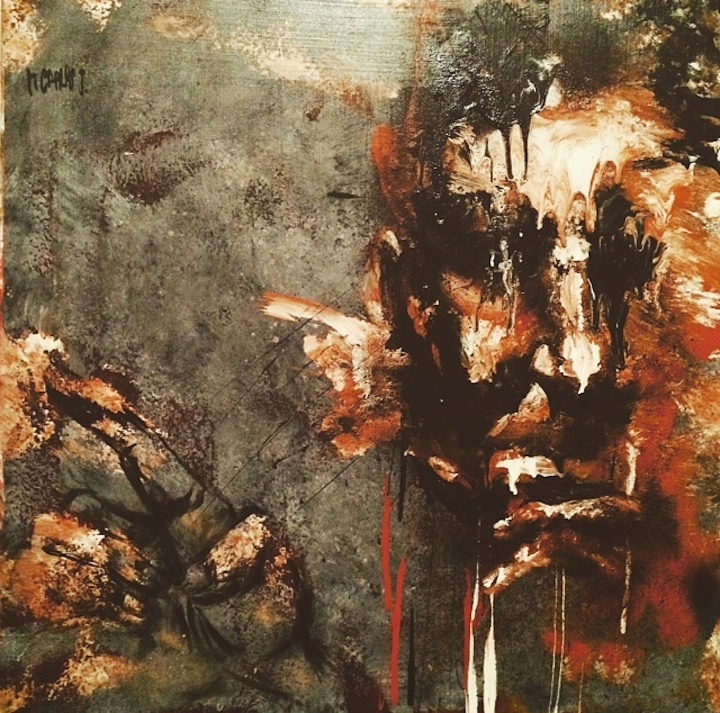
N-Carlos-J-Untitled-enamel and acrylic on canvas

You have quite a presence in Bushwick and beyond these days — painting murals, organizing projects and now curating. Can you tell us something about your background?

I attended Art & Design in the 80’s, and I was around graff heads all the time back then. Like just about everyone else there, I got up when I could.

Do any early graffiti-related memories stand out?

The first time I tried to spray my name, I ended up covering my entire hand with Krylon paint. It was impossible for me to wash it off, and I knew I had better before my mother would see it.

I suppose your mom wasn’t too happy about what you were doing!

She wasn’t. She thought I was crazy!
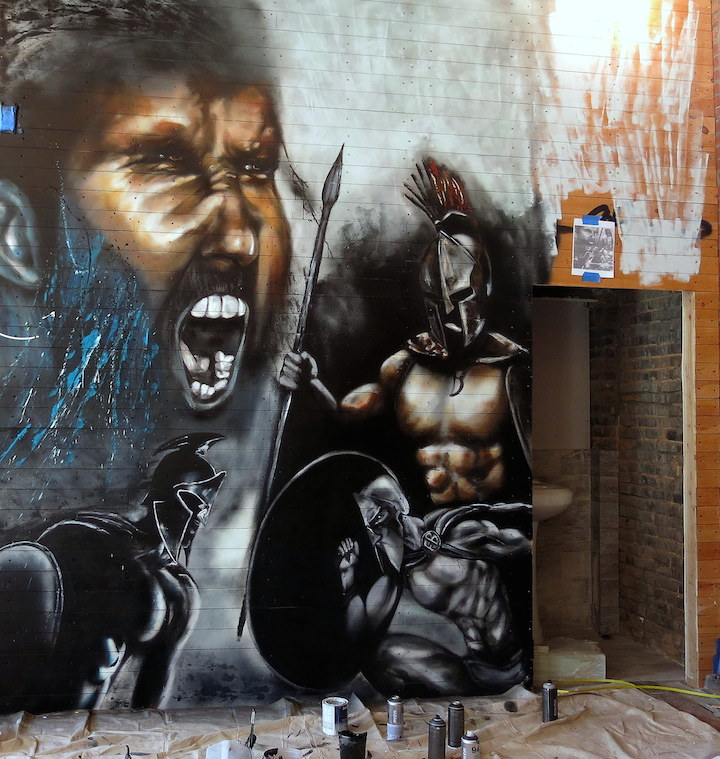
N-Carlos-J-mural-Brooklyn

Did you continue to study art in a formal setting?

Yes. I attended F.I.T., where I earned a Bachelors Degree in Fine Arts.  But soon after, I took a 15-year break from art.

Why was that?

I was married, and I felt pressured to earn money.

But these days you are back into it.

Yes, 100% of my time now is devoted to art.  When I’m not doing my own art, I am organizing projects, working on commissions or teaching art. And I am busy now curating an exhibit to open next Friday.
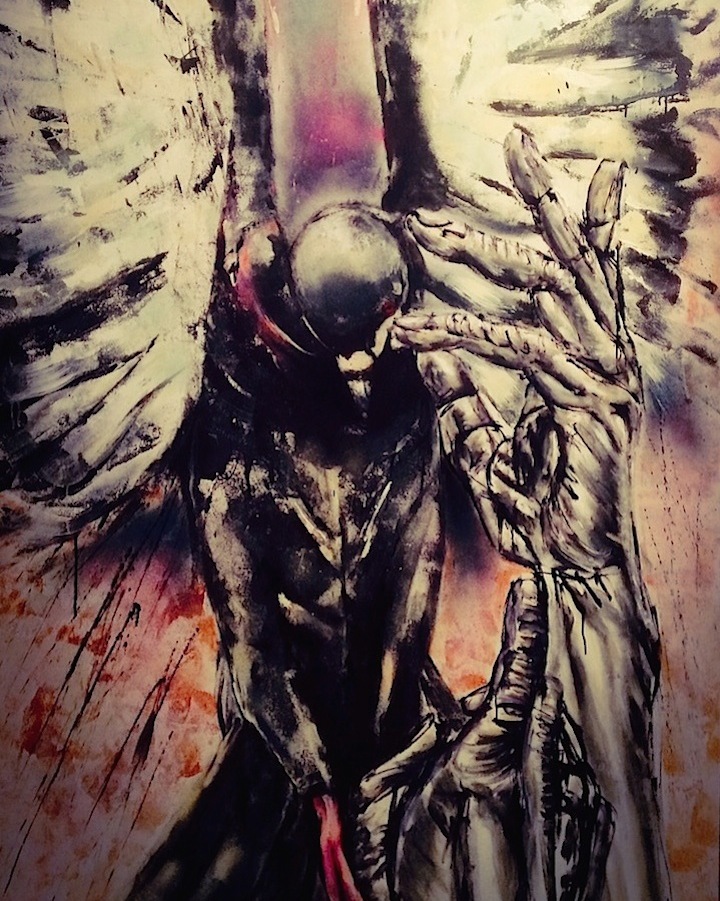
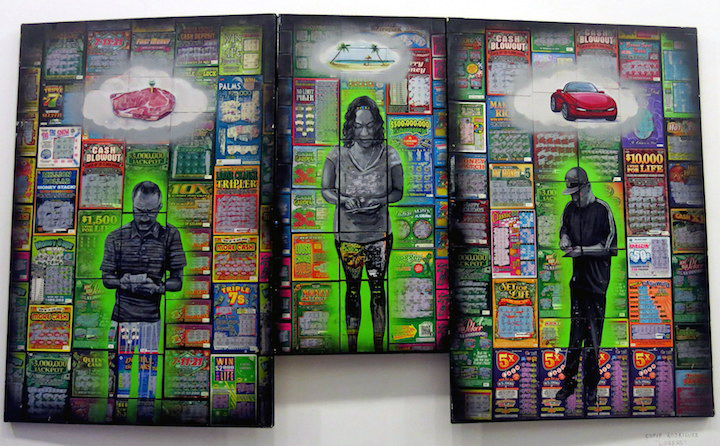
N-Carlos-J-panel-

Now that art is playing such a central role in your life, do you feel that your formal art education was worthwhile?

Absolutely. It taught me discipline, and it helped me master technique and color theory.

Any thoughts on the graffiti/ street art divide?

I feel that they must coexist. It is a conversation that we must have.

What do you see as the future of street art?

Street artists are going to continue to treat themselves more like businessmen.
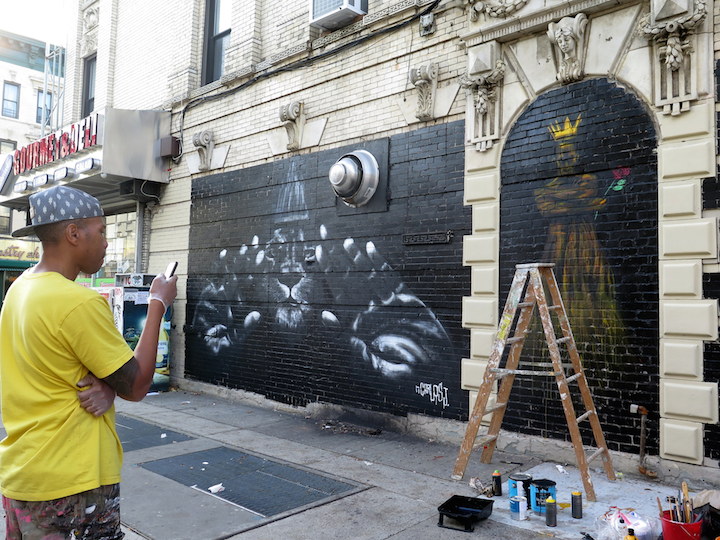
N-carlos-J-Bushwick-progress

N-Carlos-J-at-work

Yes, I can see that happening. But that’s a whole other conversation! How do you feel about the movement of graffiti and street art into galleries?

I love it!

Have you shown in galleries?

I’ve participated in many group shows and I’m working on two solo exhibitions for fall, 2015.

What about the corporate world’s engagement with graffiti and street art? How do you feel about that?

If it pays well enough, I have no problem with it.
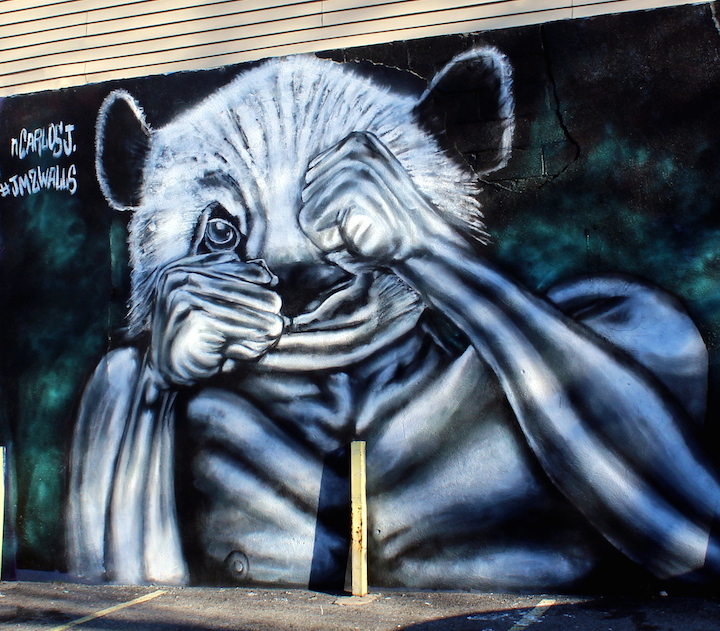
N-Carlos-J-street-art-NYC

What about the role of the Internet in this scene?

It is a blessing and a curse.  It gives us exposure, and that is, of course, a good thing. But it makes it too easy for others to steal styles and ideas from us.

How would you describe your ideal working environment?

Painting outside on a summer day with hip-hop music blasting.

What inspires you these days?

Listening to music by Kendrick Lamar or CyHi the Prynce inspires me. And reading excerpts from books like A Tale of Two Cities or The House of Rothschild gets me in the right space.
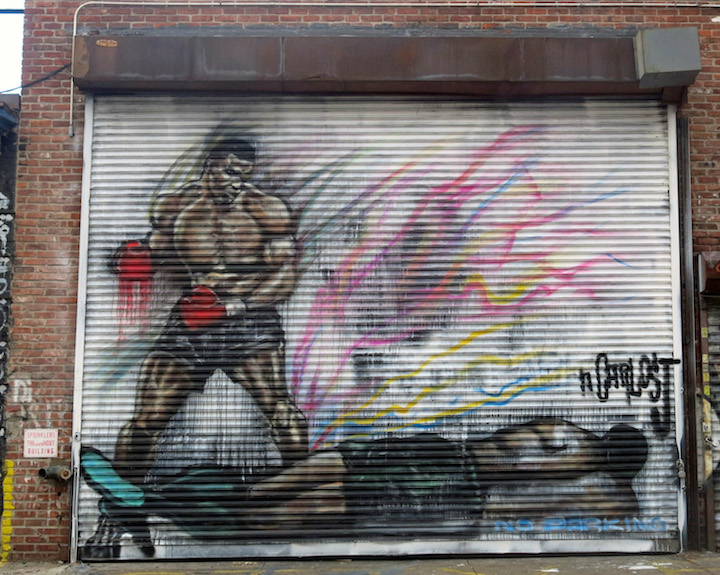
N-carlos-J-shutter-street-art-NYC

Are there any particular cultures that you feel have influenced your aesthetic?

American pop culture, but Renaissance and post-impressionist painting have also influenced me.

What about artists? Who are some of your favorite artists?

Among those I particularly love are: Borondo, Connor Harrington and Alexis Diaz

Do you work with a sketch in your hand or do you let it flow?

Sometimes I work with a sketch, and sometimes I don’t.
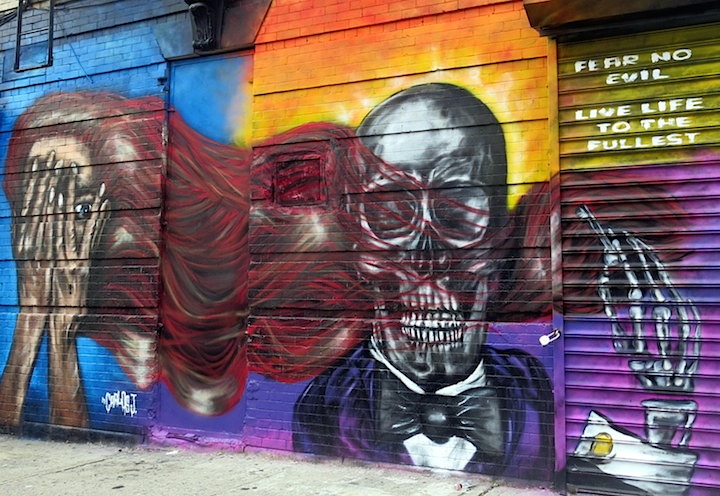
N-Carlos-J-street-art-Bushwick-NYC

Are you generally satisfied with your work?

No! I am a perfectionist.

How has your work evolved in the past few years?

I tend to more freely fuse figurative and expressionistic elements.

What do you see as the role of the artist in society?

The artist is the keeper of the flame. We are what moves this planet.
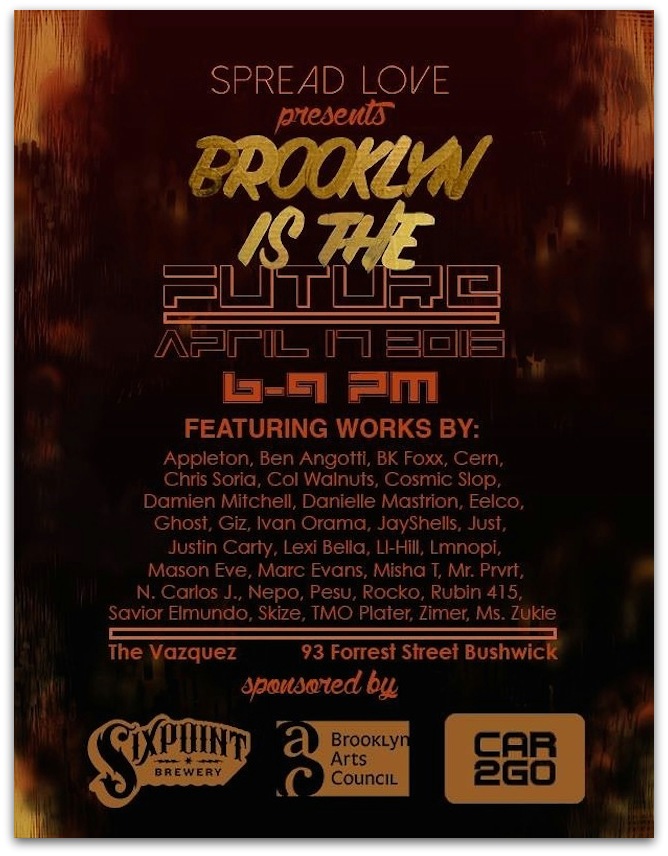
Brooklyn-is-the-future-exhibit

What’s ahead?

I’m currently curating, Brooklyn is the Future, a huge, two-weekend long exhibit and charity event to open next Friday, April 17, at the Vazquez at 93 Forrest Street in Bushwick.  Among the three dozen participating artists are: Damien Mitchell, Eelco, Ghost, Li-Hill, Mr. Prvrt, Rocko and Rubin. The artists are asked to envision the future of Brooklyn metaphorically or literally.  I am also curating a show called Good Times Bushwick for Bushwick Open Studios opening on Friday, June 5 at Express Yourself Barista. It will include a gallery show, outdoor murals, along with a day party and a barbecue.

Wow! It sounds great! Good luck with it all!

Interview by Lois Stavsky with Houda Lazrak

Photos: 1 and 3 (close-up of panel for Brooklyn is the Future) courtesy of the artist; 2, 7 & 8 Lois Stavsky; 4 & 5 Dani Reyes Mozeson and 6 Tara Murray

{ 0 comments }
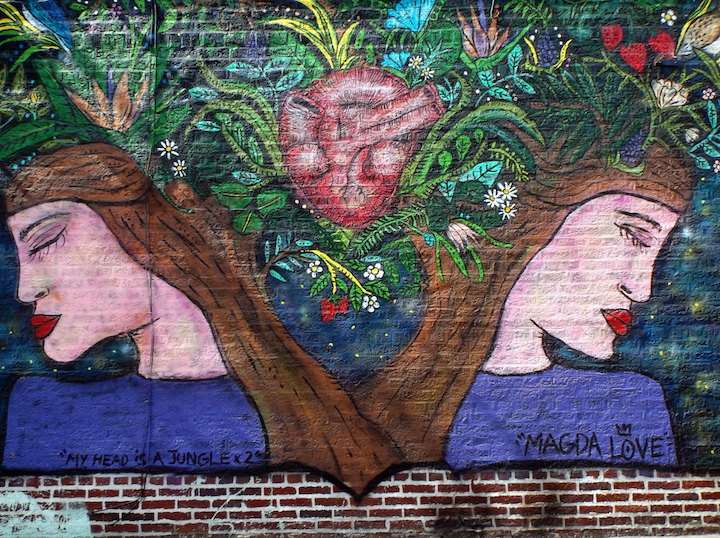
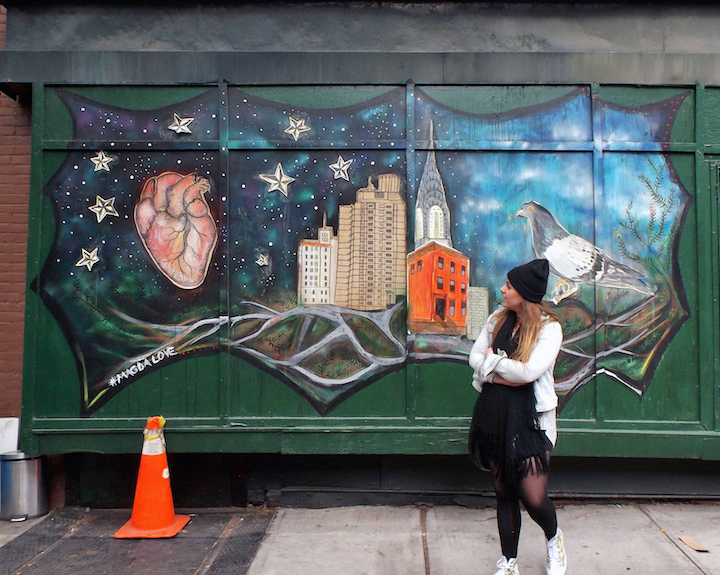
Argentine artist Magdalena Marcenaro aka Magda Love shares with us some of her early experiences and impressions of NYC in this second in our series of interviews with artists born abroad who have made NYC home.

Magda-Love-street-art-Brooklyn-NYC

When did you first visit New York City?

I first came here in 2000 with a bag and $300. My uncle had paid for my ticket.

What was your initial impression of this city?

I wasn’t impressed! I was raised in Buenos Aires, a similarly large city. And large cities don’t move me that much. I’m far more impressed by nature.  And I always thought of Europe as far cooler than the United States, as Europeans seem to value culture more than Americans do. London seemed like the ideal place to live because I was into fashion at the time.

Magda-Love-street-art-NYC-close-up

Why, then, did you decide to stay in NYC?

Just about everyone was telling me that NYC is the place to be, and then four months later, I was married.

How did your family feel about your move?

My mother was very supportive. She raised me to be independent. She, herself, is very adventurous.

Magda-Love-art-exhibit

What were some of the challenges you faced when you first came here –before you were married?

My biggest challenge was finding a place to live.  When I first arrived, I called a friend I’d met in Argentina and I spent my first two weeks in her place on Roosevelt Island. There was a huge snowstorm at the time. I can’t forget that! I had never seen snow in Buenos Aires. I then worked in a hostel on 106th Street and Central Park West in exchange for a place to sleep. After that, I just crashed in lots of different spaces, wherever anyone had a spare bed.

That must have been difficult.

Yes, I remember spending an entire night on a computer in Times Square checking for possible rentals.  For a while I ended up renting a room in Alphabet City. It was in the Projects on Avenue D. I didn’t even know what the Projects were. And there I was — walking around in a fur coat! And as my Spanish is so different from that of the people living in the Projects, I could barely communicate with anyone. And, of course, dealing with paper work that any newcomer to the US has to deal with is always a challenge.

magda-love-art-at-welling-court

How did you meet your basic expenses early on?

I first worked in a coffee shop, and then I worked as a bartender. I also sold some clothes I’d made to Patricia Field. Back in Buenos Aires, I designed fashion.

Have you encountered any prejudice here?

Not here in NYC. Living in this city is like living in a bubble. But when I’m with my son  – who is biracial – outside of NYC, I do feel prejudice.

Magda-Love-Cobble-Hill-street-art-NYC

How has your artwork evolved or changed since you moved here?

It changes all the time. I feel that I’ve grown tremendously. Being around so many talented artists – especially those who paint on the streets  — exposed me to so much. It has helped me develop different techniques.

Have New Yorkers been receptive to your artwork?

Yes. I’ve been fortunate.

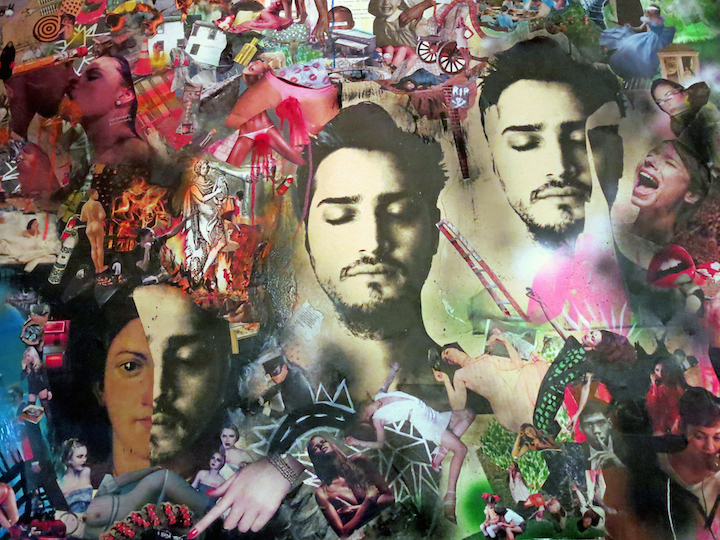
Magda-love-close-up-collate-at-Nu-Hotel-NYC

What would you like to accomplish here?

I’m eager to paint a huge wall. I want to collaborate with some of my favorite artists. And I’d love to have a solo show. Actually, my goal is to conquer the world!

What do you miss most about your native country?

I miss seeing my brother’s kids grow up and I miss the countryside.

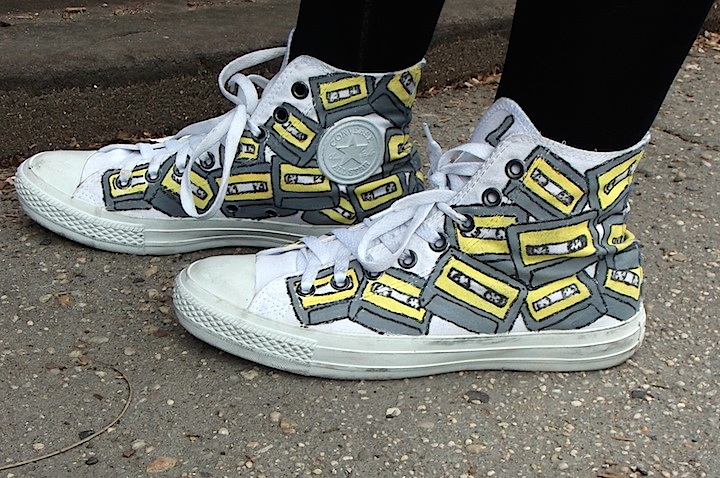
Magda-sneaker-art

Do you see yourself living here on a permanent basis or returning to your country?

I’m here to stay!

Interview conducted by Lois Stavsky and City-as-School intern Zachariah Messaoud; photo credits: 1, 2, 5 & 7 Zachariah Messaoud; 3 Dani Reyes Mozeson; 4 Tara Murray & 6 Lois Stavsky

{ 0 comments }
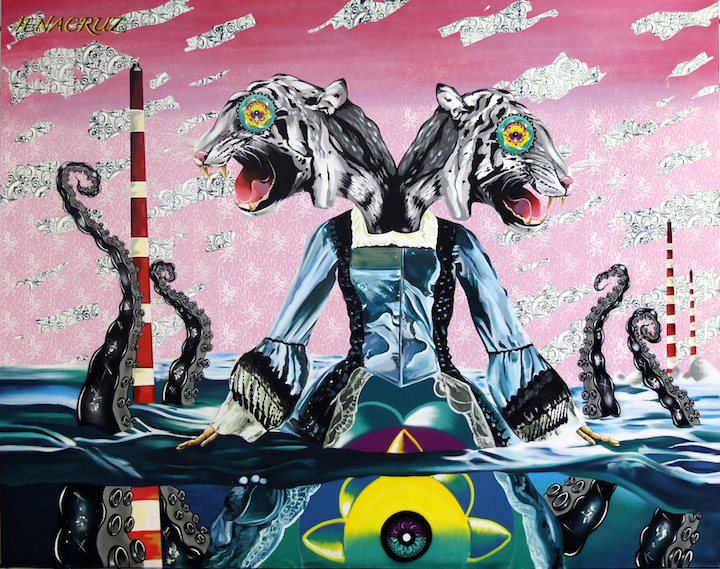
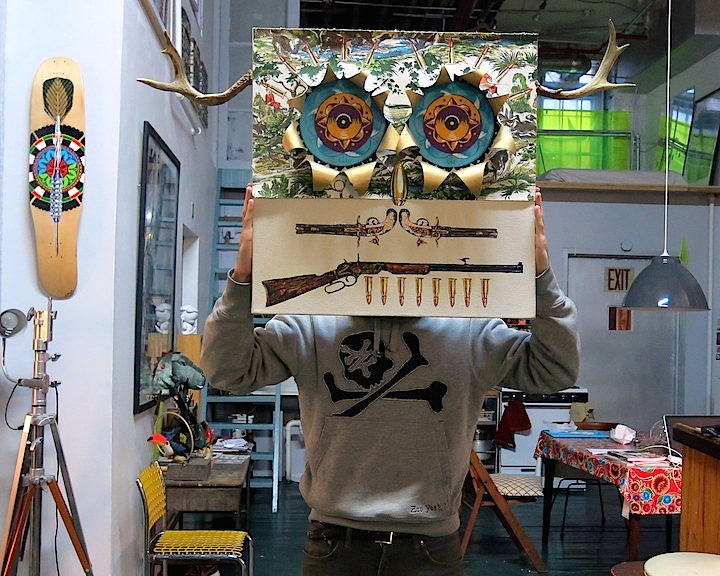
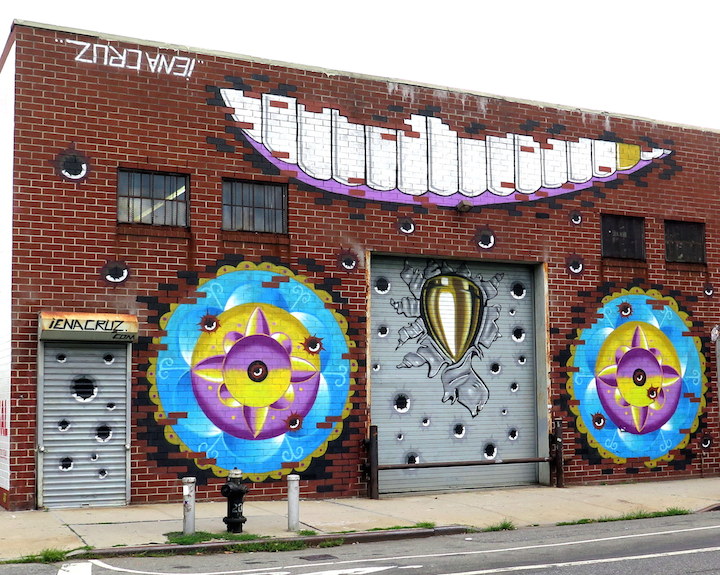
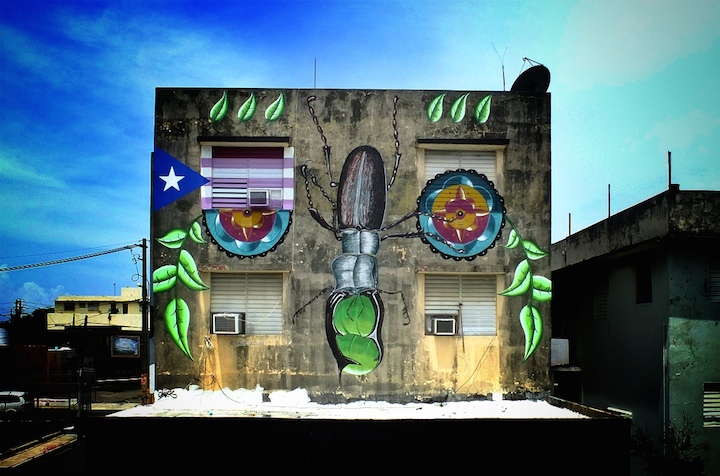
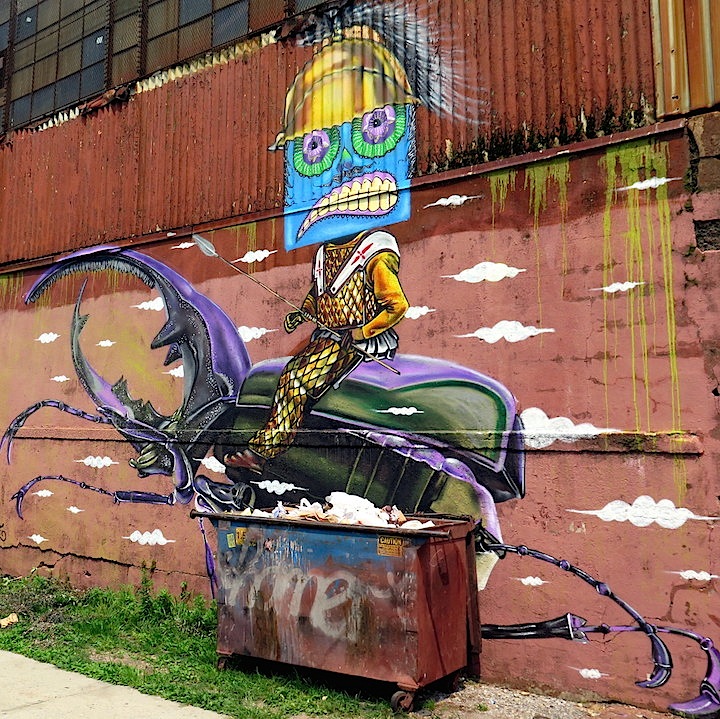
Living and working as a full-time artist in Williamsburg, Brooklyn, Milan native Federico Massa aka Iena Cruz first visited NYC in 2008. He has since moved here, enhancing NYC and beyond with his strikingly stylish aesthetic. This post is the first in a new series of interviews with artists born abroad who have decided to make NYC home.

"Iena Cruz" "Federico Massa"

When did you first visit NYC?

It was the summer of 2008. I stayed here for a month.  At the time, I didn’t know anyone in NYC.

What brought you here? Why NYC?

I was on vacation, and I was interested in exploring other cities. I had begun to feel that Milan is too small for me.  NYC seemed like a logical place to visit.

Iena-Cruz-in-studio

What was your first impression of NYC?

I fell in love with it at once.  I didn’t understand it, but I loved it. I felt inspired by the chance to be connected to so many different cultures. I thought everything about NYC is great!

What was your image of NYC back in Milan?

It was out of focus. The only image I had of it came from what I saw in movies and music videos. I really had no idea what to expect.

Iena-Cruz-street-art-williamsburg-NYC

When did you decide to return here? 

I knew soon after my first visit that I needed to come back.

How did your family feel about you leaving Milan for NYC?

They were supportive. They know how difficult life is for an artist in Milan. Back home no artist is taken seriously until after he is past 50.

iena-cruz-puerto-rico-street-art

What were some of the challenges you faced once you decided to make NYC home?

I had to learn a new language. I had to find work to meet basic living expenses. I constantly had to concern myself with visa requirements and paper work. And in order to do all this, I had to put aside my painting. There was a general sense of instability.

Your current living situation is ideal – as your home is also your studio. How did you get so lucky?

I discovered this place on craigslist. When I contacted the owner, he asked me to show him a sample of my artwork! As soon as he saw it, he took me on as a tenant. At the time there were two other artists living here, both Mexican.

Iena-Cruz-bushwick -street-art

What was that like – sharing the space with these other artists?

It was wonderful at the time! And they’ve had a tremendous influence on my aesthetic. Through them, I discovered Mexican culture, and I’ve since adapted elements of it into my artworks.

Now that the space is all yours, how do you meet all your expenses?

Largely through a variety of commissioned projects. I also sell artworks and do set design.

iena-cruz-street-art-NYC

Do any particular projects stand out?

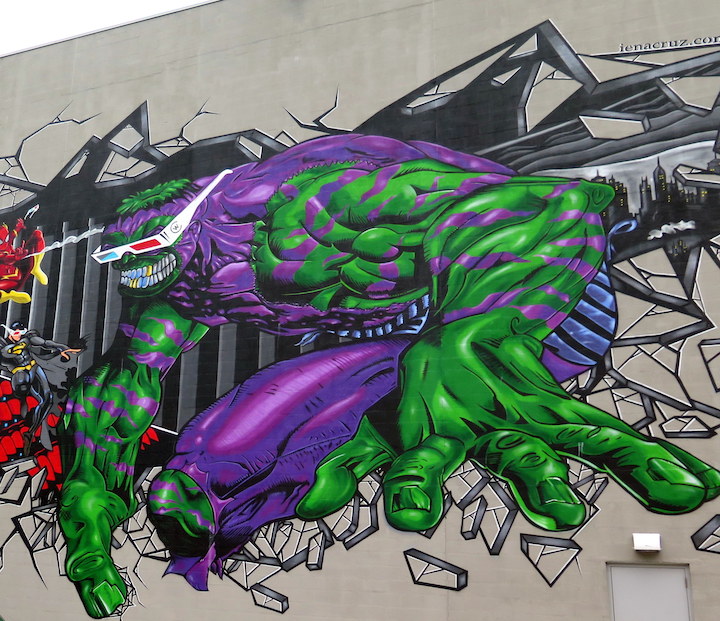
The huge mural I did for the Williamsburg Cinemas on the corner of Grand and Driggs was an experience! It was unlike anything I had done before – both aesthetically and in terms of the people with whom I interacted while painting it.  And last month, I had the opportunity to participate in FAAM, Fine Art Auction Miami in Wynwood.

How has your artwork evolved or changed since you came here?

My current works feature and fuse elements of Italy, Mexico and NYC.  And as I’m inspired to push myself here, my art is certain to continue to evolve and develop.

Cruz-close-up-street-art-Williamsburg-nyc

How receptive have New Yorkers been to your artwork? To you?

It’s been so positive. My sense is that folks here admire my work, and they’ve been so welcoming.

What’s ahead?

Now that I have my green card, I just want to keep painting murals and exhibiting my artwork.

Interview by Lois Stavsky with City-as-School intern Zachariah Messaoud  

Photos: 1. In Miami for the FAAM MAJOR STREET ART AUCTION and 4. In Puerto Rico, courtesy of the artist; 2. In the artist’s studio, Lois Stavsky; and 3, 5-7, In NYC, Dani Reyes Mozeson

{ 0 comments }
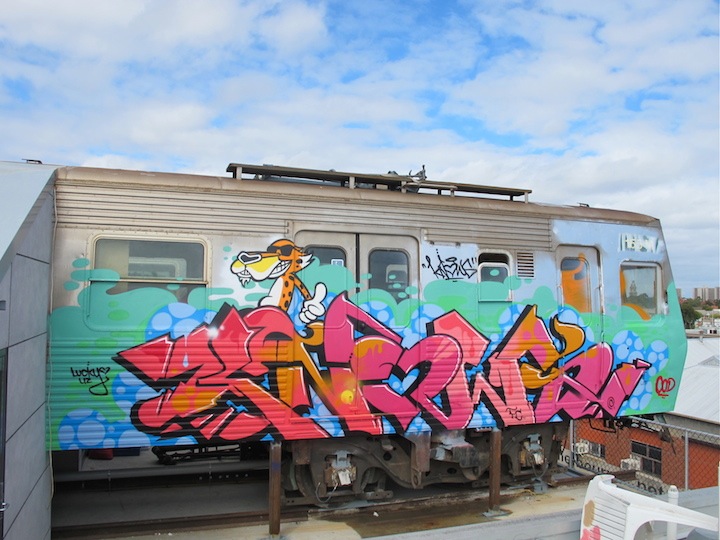
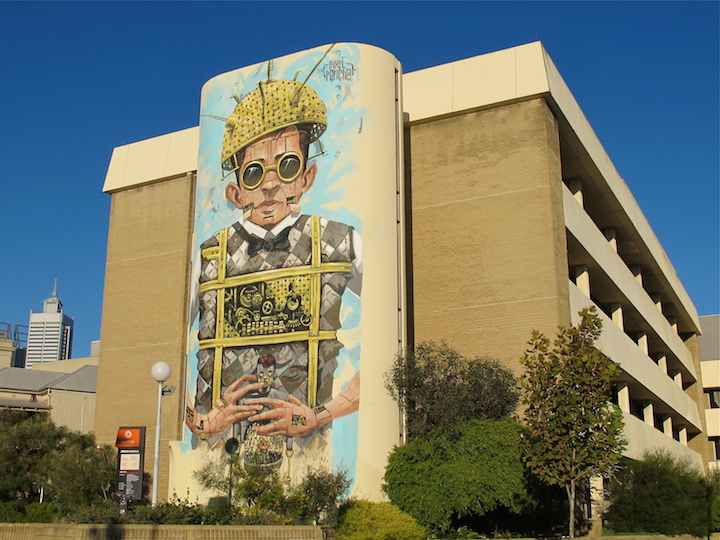
shida-vexta-street-art- melbourne-dean-sunshine

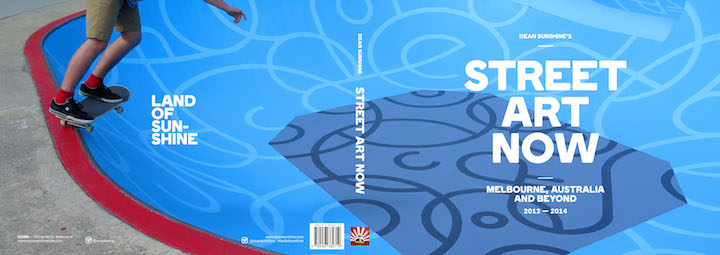
With his keen eye and infinite passion, Melbourne-based photographer Dean Sunshine avidly documents the graffiti and street art he encounters in his hometown and beyond. His second, newly-released book, Street Art Now, is a first-rate chronicle of the art that has been surfacing  — not only on the streets of Melbourne — but in other cities across the globe that Dean has recently visited. I met up with him when he was in NYC this past fall. Soon after, his stunning second book Street Art Now made its way into print. 

STREET ART NOW-Cover-FINAL

Have you any early memories of Melbourne graffiti and street art? When did you begin to photograph it?

Graffiti and hip-hop sprouted in Melbourne in the 80’s with VHS copies of Style Wars being handed around, educating the kids here about these subcultures thriving in NYC. My first piece of graffiti art was a present for my 21st birthday in the mid eighties — a basketball backboard spray painted by Merda and Ransom – two of the stars of the Melbourne scene. Decades later this piece still hangs at my home and many of the writers who are now mates are surprised and envious of this original piece. I started taking photos in the early 2000’s.

Wane-COD-graffiti- melbourne-Dean-Sunshine

What motivated you to do so?

I loved snapping all this amazing art seen on the streets, but it was actually my partner at the time who told me I was a fool to have thousands of images on a hard drive that nobody else could enjoy. She said, “You should start a blog,” and the Land Of Sunshine was born.

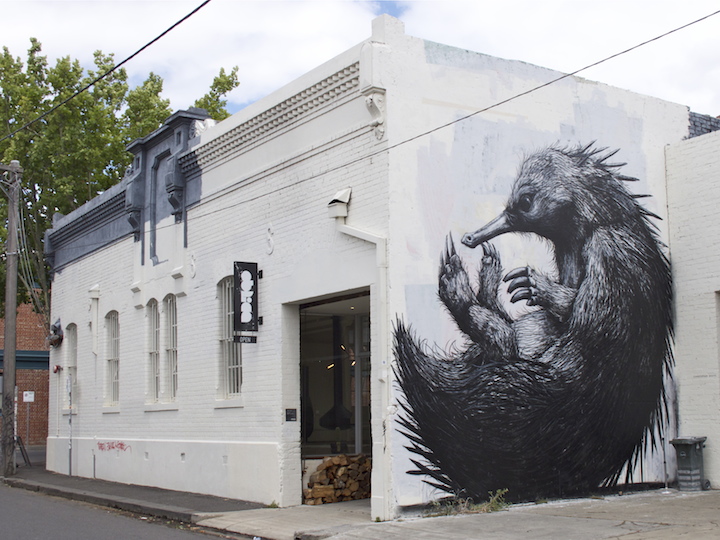
Roa-street-art-melbourne-Dean-Sunshine

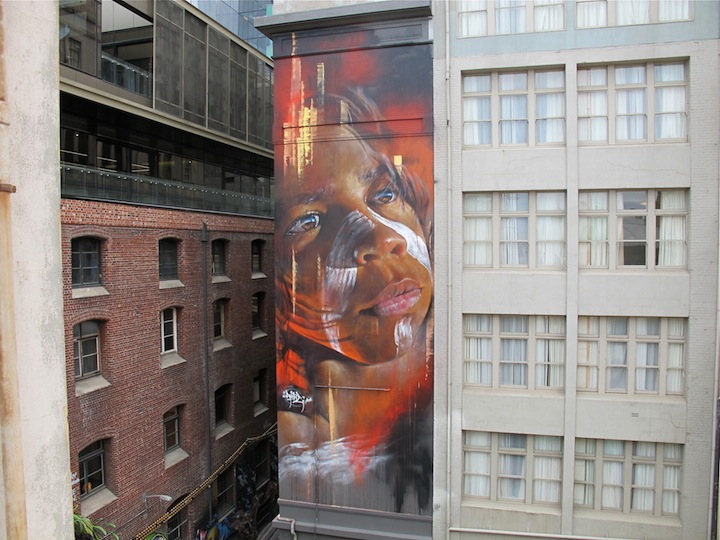
Adnate-street-art Melbourne-Dean-Sunshine

How do you find the time while working at a day job to photograph so many great pieces of street art, blog regularly and publish two books?

I find time during my daily grind in the rag trade driving around to appointments across the suburbs of Melbourne visiting textile factories. On these travels I often stumble over graffiti and street art, and I pull over and take a quick shot. On the weekends I often hunt out abandoned factories, get down into the drains, and search new lane-ways — always on the lookout for new work.

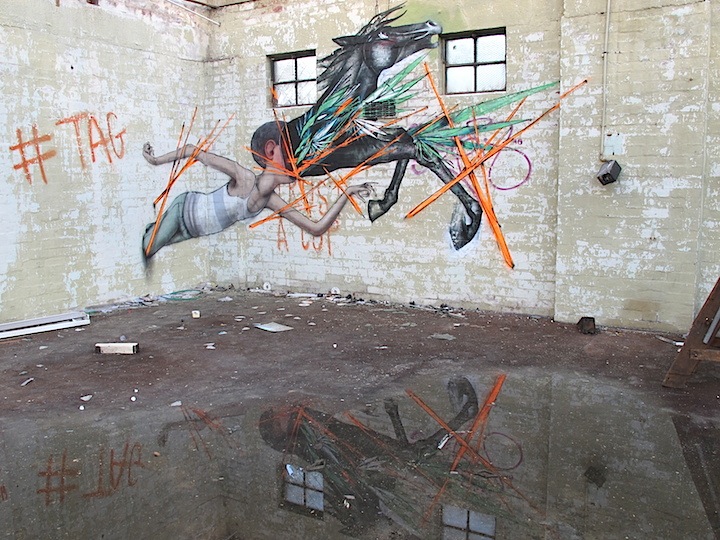
shida-seth- globe-painter-street-art-melbourne-dean-sunshine

Do any particular moments stand out in your street-art hunting expeditions?

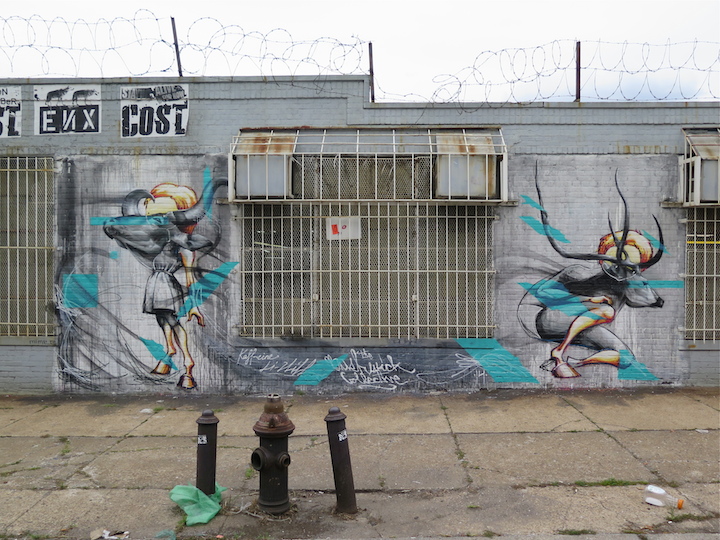
There are so many highlights throughout my time documenting. I have met, hung out and I’ve been privileged to watch so many incredible artists in action including: ROA, Kid Zoom, Herakut, Hush, D*Face, Stormie Mills, Rone, Makatron, Adnate, SlicerLi-HillShida, Smug, WANE, Sofles, Kaff-eine, DEB, Heesco, Meggs, Reka, Phibs, Bailer, DVATE, Does, Twoone, Mysterious Al, Dscreet, Vexta, 2501, Faith47, DALeast, Pixel Pancho, Phlegm, Insa, Sirum, The Yok, Sheryo, Gaia, Alexis Diaz, Maya Hayuk, Crash, Daze and ELK. But the times I have spent with Futura, Henry Chalfant and Martha Cooper stand out the most, as these three are the pioneers of this scene in which we find ourselves submerged. I got to take each of them around the streets and lanes of Melbourne, proudly showing them my favorite spots in my own hometown. Such absolute legends, all with a passion that has lasted decades. I wish I will be as passionate 25 years on!

Pixel-Pancho-street-art-perth-australia-Dean-Sunshine

What brought you to NYC?

I came to New York this past September to keep my wife company who was shooting fashion week. (Yes, she is also a photographer!) As she went uptown each morning to the shows, I got on my pushbike and rode all over, snapping as I went.

kaffeine-li-hill -street-art-NYC-dean-sunshine

What other cities have you visited?

Over the last years, I’ve been lucky to have travelled to Los Angeles, Hawaii, Berlin, Paris, Italy, Mexico, Buenos Aires, Rio De Janeiro, and even Perth. It’s funny how these days it’s a priority when I’m on holidays to track down and snap all the local art I find. My recent book, Street Art Now, documents some of these findings.

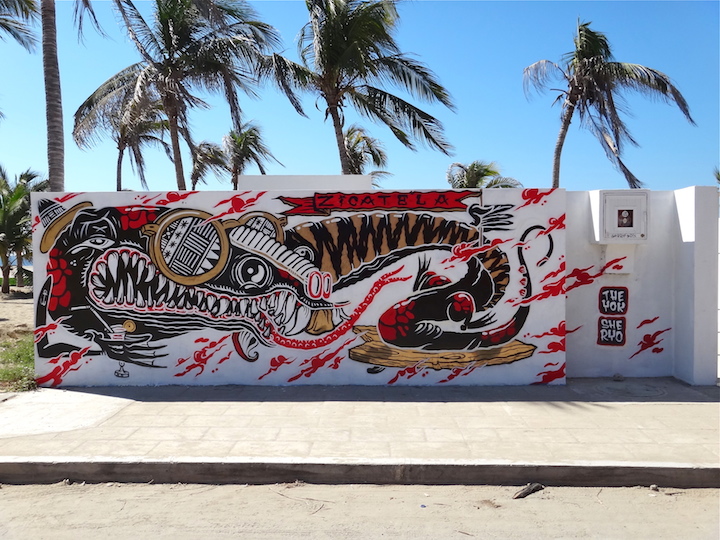
yok-sheryo-street-art-zicatela-mexico-Dean-Sunshine

What’s ahead?

Well, I am soon to become a father so my priorities will change — although I will probably be doing the same, just with the little guy on my back.

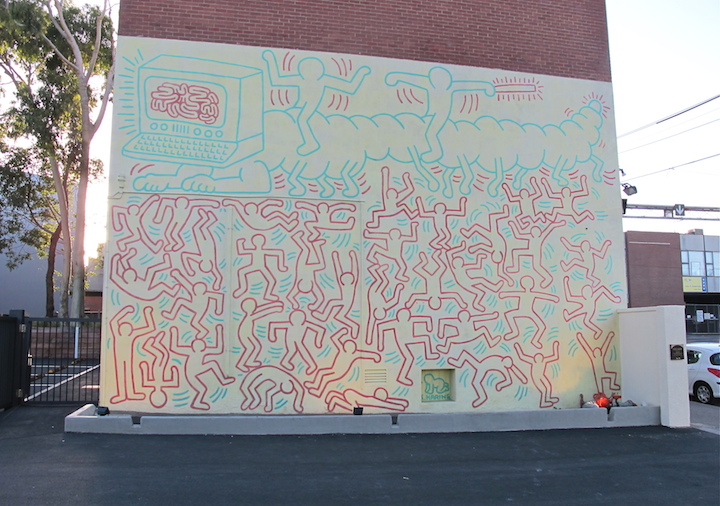
KEITH HARING- mural-1984 -Dean Sunshine- Melbourne

Congratulations! I am quite certain you will.

Note: You can check out some local coverage that Dean’s recent book, Street Art Now, received here, along with a guided tour of the Melbourne scene by Dean here.

Photos of above artworks in Street Art Now:

1. Vexta and Shida in Melbourne

3. WANE in Melbourne

4. ROA in Melbourne

5. Adnate in Melbourne

6. Seth GlobePainterShida and TwoOne in Melbourne

7. Pixel Pancho in Perth

8. Li-Hill and Kaff-eine in New York City

9. The Yok and Sheryo in Zicatela, Mexico

10. Keith Haring in Melbourne, 1984

{ 0 comments }
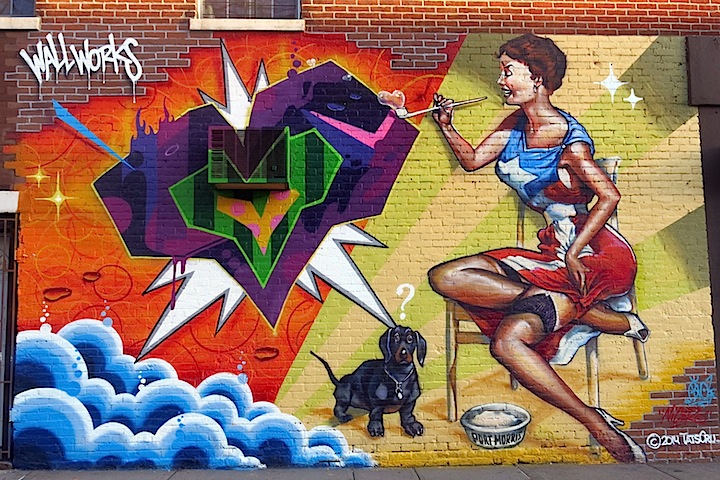
"Tats Cru"

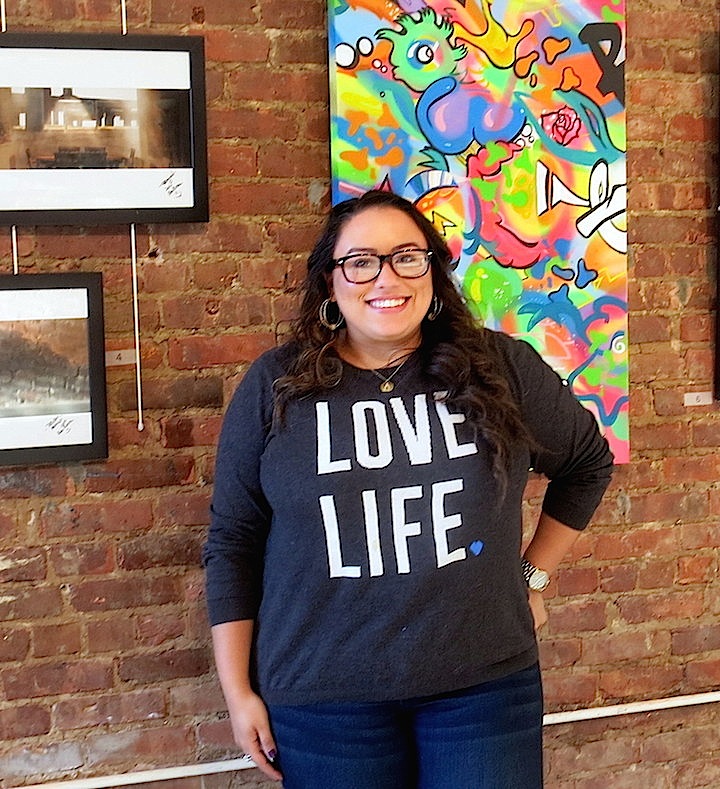
Founded by John Matos aka Crash and Robert Kantor and directed by Anna Matos, WallWorks NY is a wonderful new gallery space at 39 Bruckner Boulevard in the South Bronx. While visiting its current  — and final — unofficial exhibit, Open Gallery, we had the opportunity to speak to Anna.

"anna matos"

When did WallWorks NY open?

We had our first “unofficial” opening exhibition, First Taste, on September 12.  Its focus was on promoting street art and graffiti as a viable art form within galleries and museums. Among the many local and international artists whose works were featured were: Daze, Futura, Nick Walker, Stash and TATS CRU members: Bio, Nicer and BG 183. This was followed by Point. Focus. Click. featuring photos – that had never been exhibited before — by such photographers as Henry Chalfant, Martha Cooper, Joe Conzo, David Gonzalez, Lisa Kahane, Francisco Reyes II and Ricky Flores.

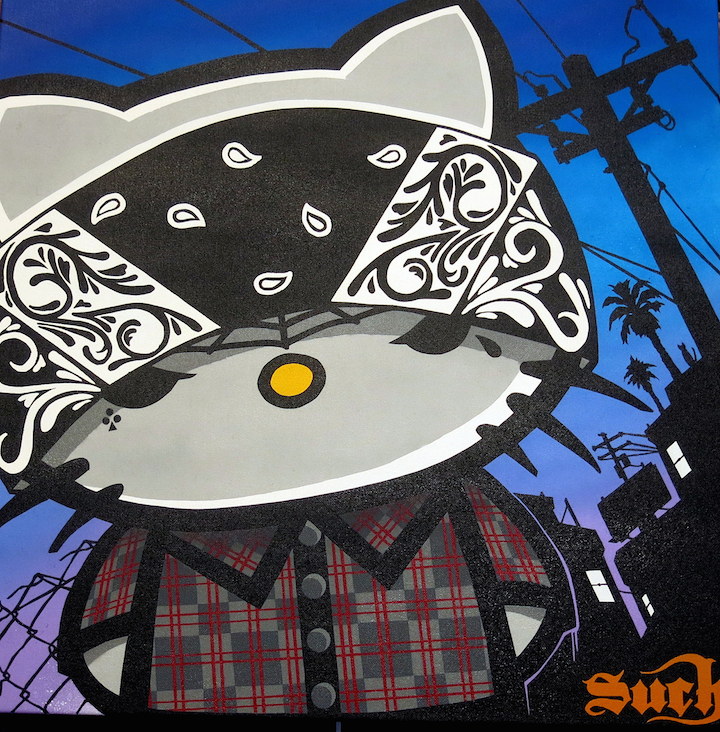
Such

This current exhibit, Open Gallery, introduces us to many new artists.

Yes. It’s our final show before our official opening next month.  Along with works by emerging local artists in Open Gallery, are artworks in various media by artists from around the country – many of whom had never exhibited their works in a gallery setting before.

Buz163

How have these “unofficial” openings gone?

The response has been great. And the success that we’ve achieved so far is more than we could have imagined!

Why did you choose to open a gallery in the South Bronx?

Why not the South Bronx? Its history is so rich, and hopefully we will encourage people to visit it.

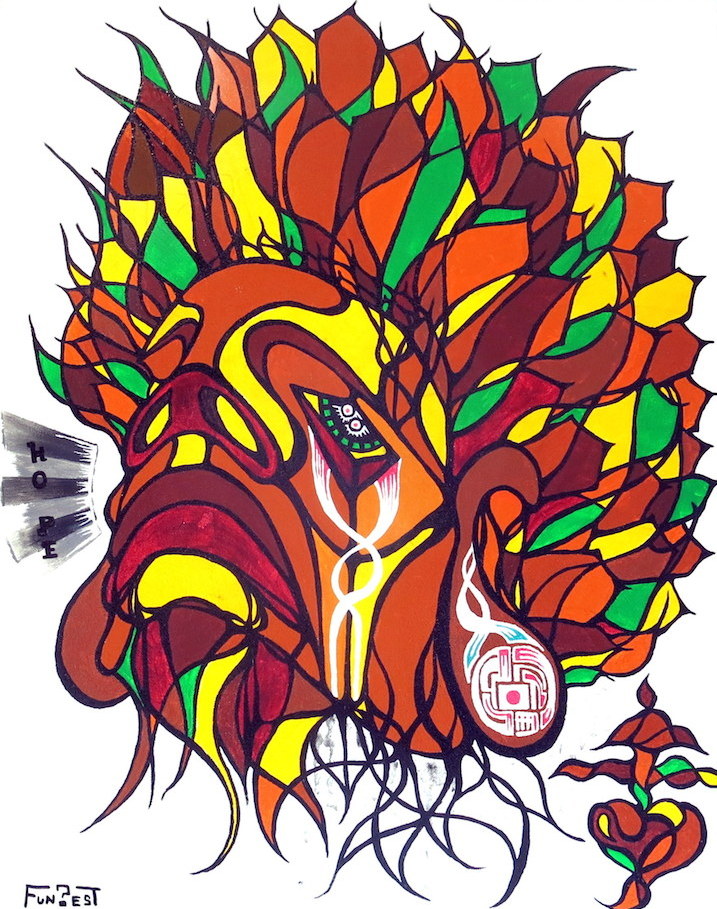
Funest

What is WallWork’s NY’s mission?

In the experimental and explorative vein of Fashion MODA, we want to exhibit new and exciting work from both emerging and established artists.

How did this space come to be?

My father, Crash, had dreamed for a long time of opening a gallery, and I loved the idea of directing one. On our trips into the city, we repeatedly passed this empty space on Bruckner Boulevard – that we saw as a potential site for a gallery.  After discussing it with an art dealer in Paris last summer, my father said, “Let’s do it!” And then a partnership with entrepreneur Robert Kantor made it possible for my father to realize his dream.

"John Paul O'Grodnick"

What experiences and skills do you bring to your position as gallery director?

I grew up around art. As a child, I regularly accompanied by father to his studio – where I would sit and draw. For a long time, in fact, I thought I would be an artist. But as a senior in high school, I discovered that I was more interested in the concepts behind the art than in creating art. I then majored in Art History with a double minor of Philosophy and Black Studies at Fairfield University, and after graduating from college, I studied Art Business at FIT.  And in addition to several internships, including one as Special Project Manager the Jonathan LeVine Gallery, I served as a liaison for my father, assisting him in everything from creating a strong social media presence to installing and selling art. I see myself as someone who is committed to each artist’s personal development and financial success — as well as to the success of the gallery.

"Stephanie Burr"

What’s ahead?

Our official launch takes place on next Saturday, January 10, with Ikonoklasts, featuring never-before-seen works by three legendary NYC artists: A-One, Dondi White and Rammallzee. Following Ikonoklasts will be our first solo show featuring works on canvas by Nicer of TATS CRU.

That sounds wonderful! We are looking forward!

Interview conducted by City-as-School intern Zachariah Messaoud and edited by Lois Stavsky; photos by Lois Stavsky

Photos

1. TATS CRU

2. Anna Matos, gallery director

3. Such Styles

4. Buz163

5. Funqest

6. John Paul O’Grodnick

7. Stephanie Burr

Note: Open Gallery continues until January 7 at 39 Bruckner Boulevard in the Bronx.

{ 1 comment }

Nemo

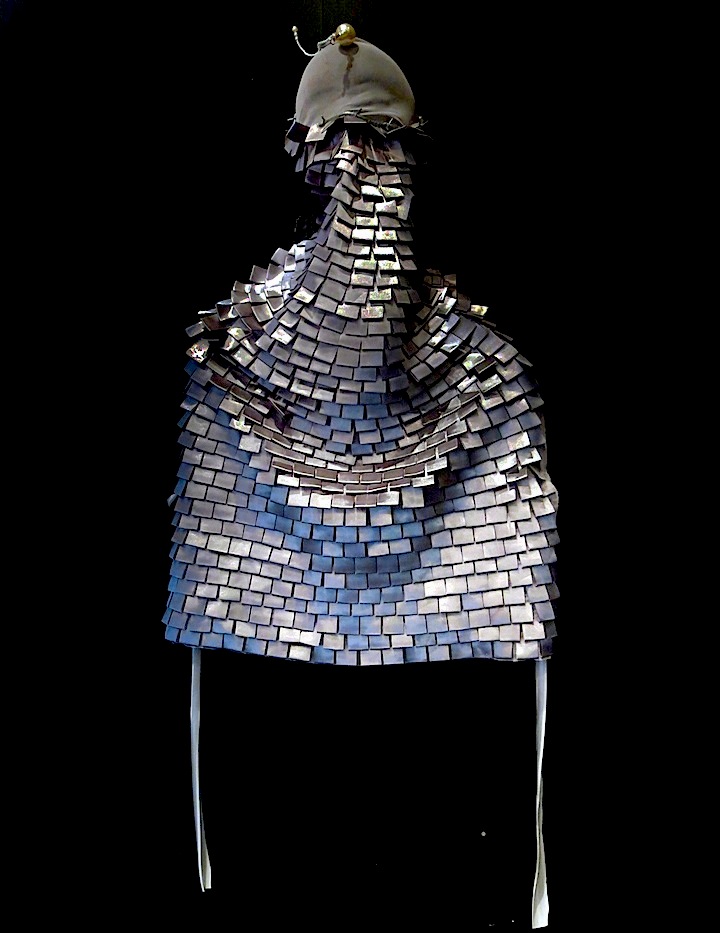
Back in September, a huge orange carrot surfaced on the streets of Williamsburg. We soon discovered it was the work of the Italian artist Nemo Tibi Amat, whose distinctly curious aesthetic was on view at Exit Room NYC at the time. Eager to find out more about it all, we posed some questions to her.

Why a carrot? What does the carrot represent?

Because it makes me smile, and it makes other people smile. I think of it as a kind of Carrot Therapy. Also, the carrot fits wonderfully into our urban architecture. It can be vertical or horizontal; it can be whole or chopped. There will always be a place for it.

When was your carrot first born?

Everything was born some years ago. At the beginning, I used to paint a fat radish instead of the letter O when I wrote my name. Then when I began doing rollers, I replaced the letters with the carrot.  Even a child who can’t read can recognize a carrot.

"Nimo Tibi Amat"

What about the carrot on a cross that I saw over at Exit Room? What does that represent?

It’s the sacrifice.  Anyone who aims to change the world by fighting against the system — with his or her own powers — is a Jesus on Earth. He wasn’t the only one crossed, as so many were, are and continue to be in many other ways. He’s just the most famous, because apparently his father was a god! The real crucified carrots that I use represent the inevitable decay of the body. After death, there is no resurrection.

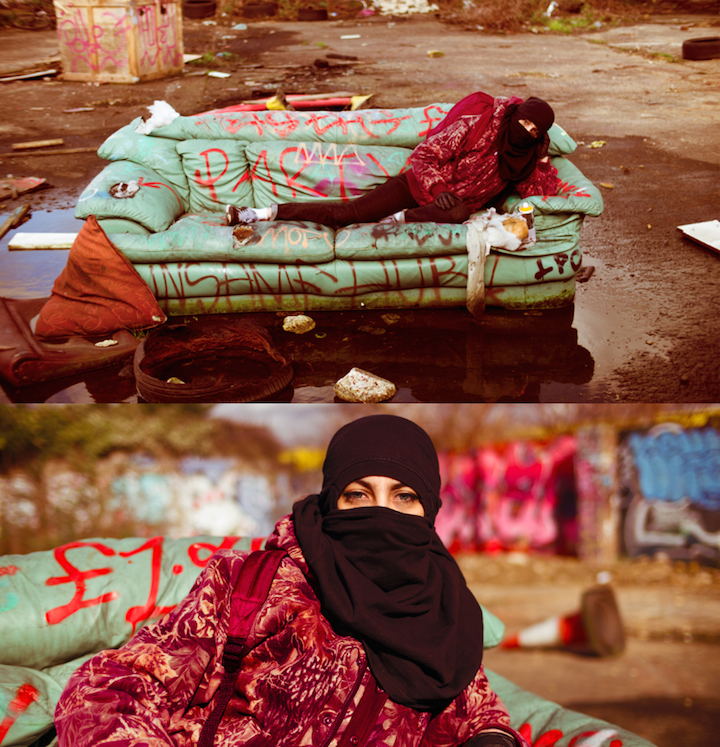
And your burqa? It’s such an intriguing, powerful image. What does it represent?

Since I began painting — back in 1995 — I’ve had to deal with hiding and covering myself. I’m fascinated by the relationship between one’s interior self and the exterior world. And I love playing with the concept of protecting your body by hiding it. Covering your face can be a choice, but sometimes it is a necessity — a rule that others impose on you. Through my burqas, masks and balaclavas, I also tell stories that range from personal experiences I’ve had with real people to secret urban legends. If you scratch away the plasticine on my scratch card artworks, you can win my face.

Nemo-artwork

"Nemo Tibi Amat"

What about your characters? Can you tell us something about them?

The characters themselves tell me how to draw them. You would have to ask them.

What is like being a female in a male-dominated world?

I don’t think about it. If you know who you are and where you are, you can manage just about everything going on around you. Most of the time, I paint on my own, and most of my friends are guys. I think I’m lucky, as I feel free from those mental prisons that a lot of girls feel enclosed in.  I don’t, though, support the feminist way of thinking as it only increases the separation between us.

"Nemo Tibi Amat"

What is your impression of NYC?

Everything is really messed up, and I do love it.

Interview by Lois Stavsky with assistance by Daniela Croci aka Zoe;  Photos 1, 2, and 5 courtesy of the artist; 3 and 4 by Lois Stavsky

{ 0 comments }
Pablo-Power-City-Bird-Gallery

Co-owned by artists Sarah Wang and Shaina YangCity Bird is a creative space recently launched on the Lower East Side. While visiting its current exhibit Natural High yesterday, I had the opportunity to speak to Shaina Yang and find out a bit about the gallery and its mission.

I love the eclectic mix of art in this exhibit. Can you tell us something about City Bird’s mission?

We see ourselves as a unique space in which we are free to unleash our creativity in a playful manner.  There is no one to tell us what to create or how to create it. It is up to us — the artists!

"Chris Mendoza"

When was City Bird born? 

Our inaugural exhibit opened on November 7. It was curated by the Under1roof Project.

"Lady Millard"

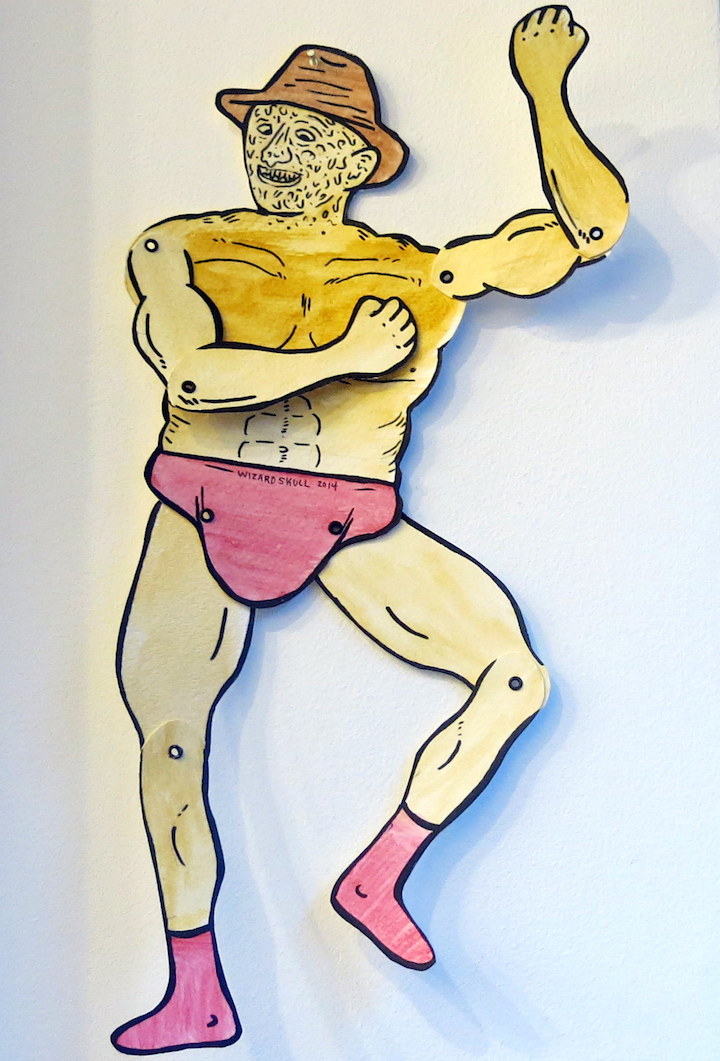
Many of the artists on exhibit – such as KingbeeWizard Skull and Dek 2DX— are also active on the streets. How did you meet each other?

Many of us know each other from the collective, Con Artist, and many of Con Artist’s members also get up on the streets.  Lady Millard’s Under1roof Project also brought us together in a collaborative manner. Basically, it was friends and friends of friends!

Kingbee

"Wizard Skull"

Dek2DX

I’d imagine that renting and maintaining a space like this on the Lower East Side could be expensive. How do you raise the money to do this?

When there are no exhibits here, we rent out the space to pop-up shows, poetry readings and a range of creative events.

"copie rodriguez"

What’s ahead?

A mix of imaginative exhibits featuring work by a range of artists, including street artists. We are already booked through the spring. You are in for some surprises!

Smurfo

City Bird is located at 191 Henry Street on Manhattan’s Lower East Side. 

Images:

1. Pablo Power

2. Chris Mendoza, close-up

3. Lady Millard, close-up

4. Kingbee

5. Wizard Skull

6, Dek 2DX

7. Copie Rodriguez

8. Smurfo Udirty

First image courtesy of the gallery; all others photographed by Lois Stavsky

{ 1 comment }

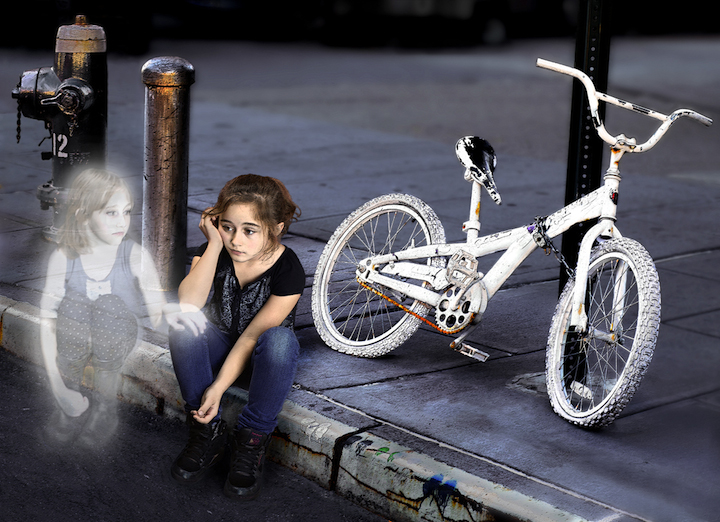
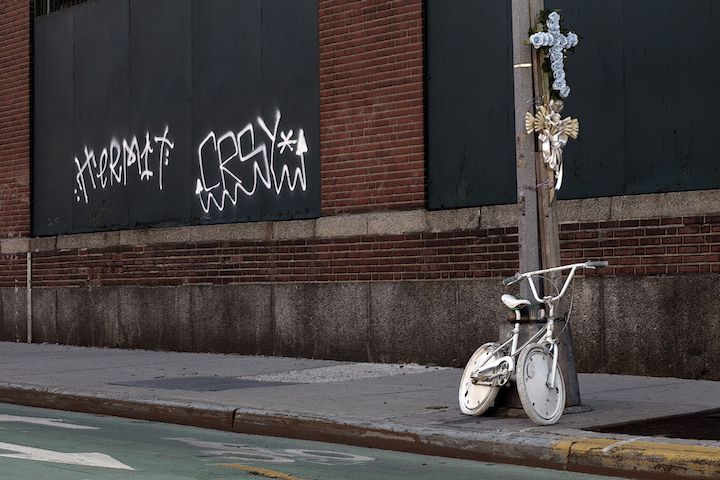
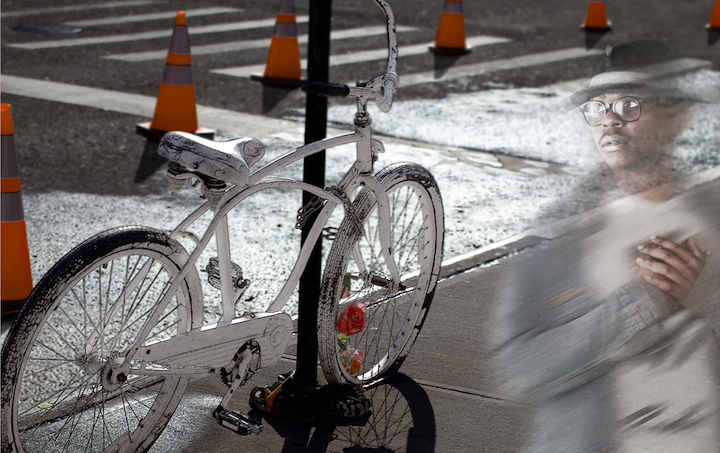
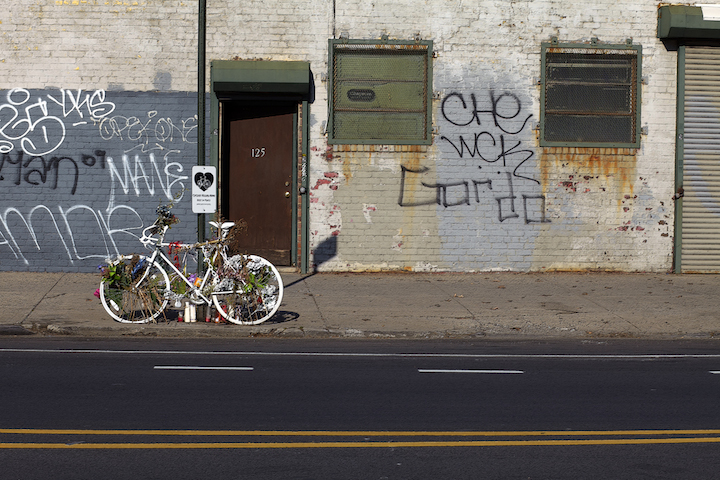
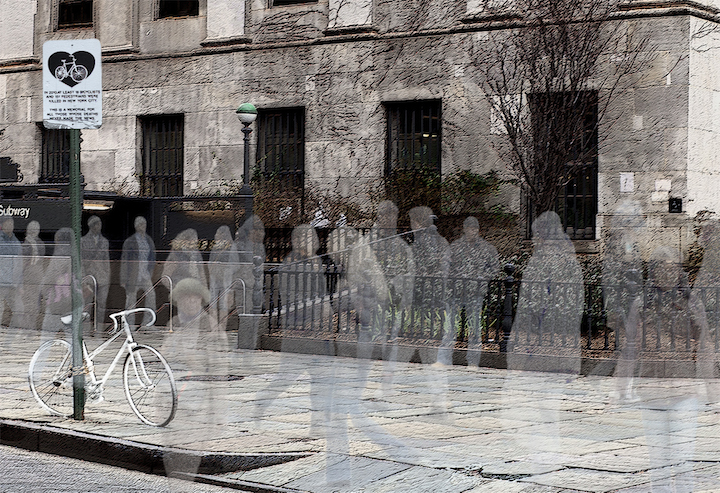
Currently based in Brooklyn, New York, Genea Barnes began exhibiting her artful photography in 2005. Her current work has taken her into the streets of over 50 cities where she has photographed hundreds of ghost bikes. 

"Genea Barnes street photography"

When and where did you begin photographing ghost bikes?  

I saw my first ghost bike in Brooklyn in May 2010. It struck me. It felt like someone had punched me in the chest. That was the first ghost bike I photographed. I’ve since traveled to over 50 cities photographing them.

"Genea Barnes photography"

Why — do you suppose — you became so committed to this project?

I feel a special connection to these bikes. I am taken by their intense beauty. Their impact was — and still is — tremendous on me. They remind us of lives that were lost and they remind us to keep safe. I knew, at once, that I wanted not only to photograph them, but to share my findings with others.

"Genea Barnes photography"

Have you any particular message you would like your photos to convey?

I am frustrated by people’s lack of spatial awareness. A ghost bike represents the most grievous outcome of this. A ghost bike, like much of  street art, is a way to call people out. We must all start paying closer attention to our surroundings.

"Genea barnes photography"

Why a book?

I had always hoped that my art would make a difference…that it would raise awareness. And after my first exhibit of ghost bike images, I knew that it could. Not everyone will attend an exhibit, but anyone can check out a book and, hopefully, be moved by it.  We are so distracted by technology that we often forget to pay attention to our surroundings. And the outcome of that can be fatal.

"Genea Barnes photography"

You can find out more about Genea’s remarkable photography project here and help fund her book at her Kickstarter here.  

{ 3 comments }
"The X-Spot"

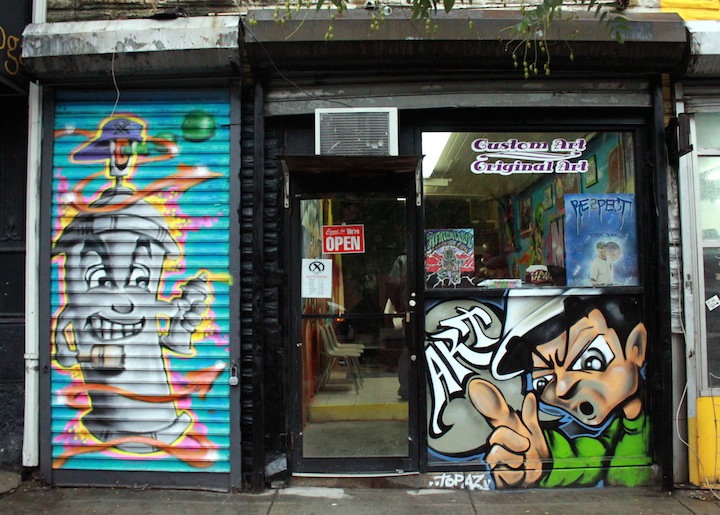
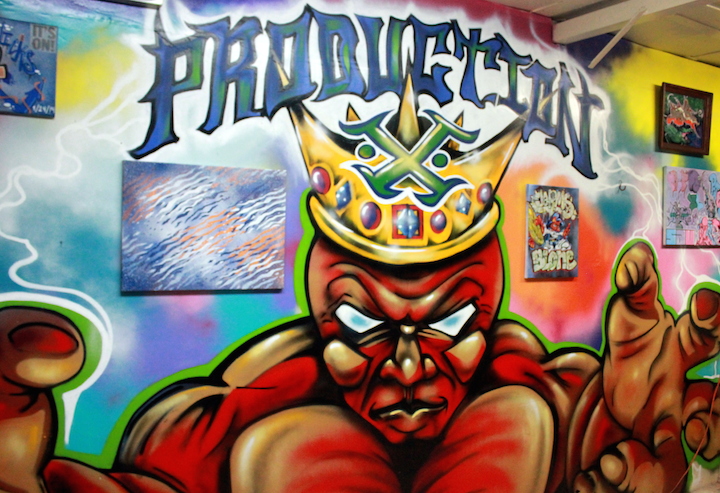
Topaz – one of the most active members of the hip-hop and 5Pointz communities – began customizing T-shirts when he was in junior high school. His most recent venture is the X-Spot, a unique space at 2 East 116th Street in East Harlem. We recently visited him and had the opportunity to speak to both Topaz and Jay, the manager of Production X.

Topaz

How did you guys come up with the idea to open such a space?

We grew up together in Rego Park, Queens, and we’ve been working together for years. We’ve actually had two stores before – one in Paterson, New Jersey and the other in South Carolina. We wanted to do something different from what we’d done in the past.

Jerms

In what ways is this venture different?

Our emphasis here is on providing services and maintaining a gallery.  It is production-based. Although we sell graffiti art on canvases, select magazines — like the latest issue of Flashbacks — and CD’s, our space here is not primarily a store or shop.

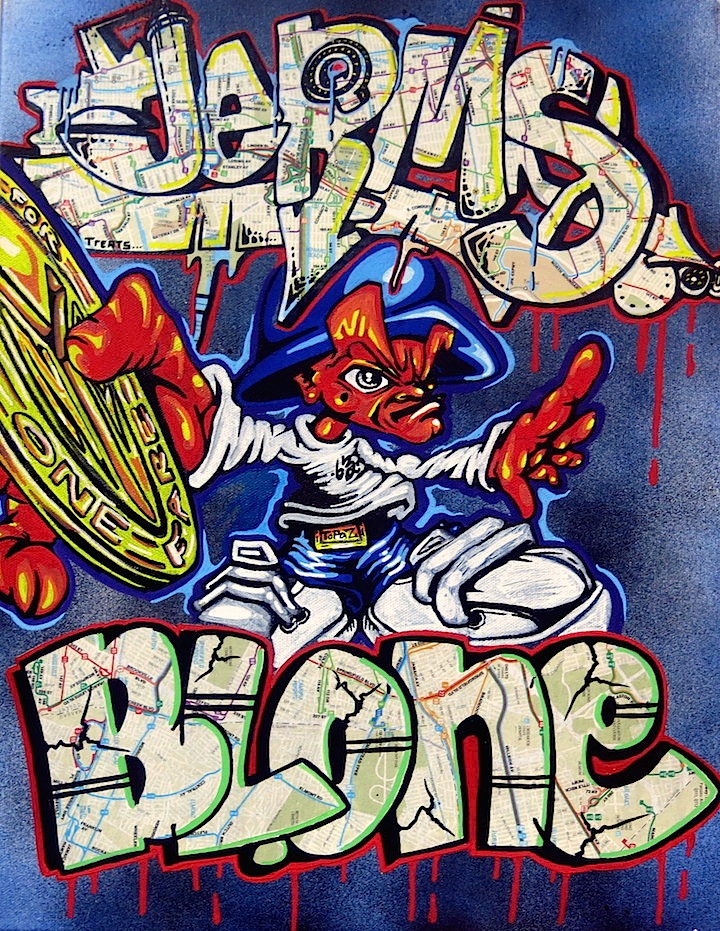
Jerms-Topaz-and-Blone-graffiti-on-canvas

What are some of the services that you provide?

We provide clients with all forms of graphic design — customized murals, logos, portraits, canvases, T-shirts and more.

Jay-ProductionX-with-street-treat-graffiti

It sounds – and looks – great! Whom do you see as your principal clientele?

At this point, it is largely the hip-hop community – rappers and entertainers. But, ideally, the general public, especially as graffiti continues to gain respect and recognition as an art form.

Treat Street-graffiti-on-canvas

This is such a great location! It’s right off 5th Avenue in East Harlem and down the block from the 2 and 5 subway lines. How did you guys come up with such a great locale?

A lucky set of circumstances – as Jay’s cousin had previously worked at this location.

Poet-Pace-Jerms-Sav-Ice-graffiti-on-canvas-gallery

The artwork on display here is primarily by you, TopazJerms and Treat Street NY. Are you open to other artists participating in your projects?

Absolutely.  Talented and committed artists can stop by our space or drop us an email at ProductionX@aol.com or LordRoccolypse@aol.com.

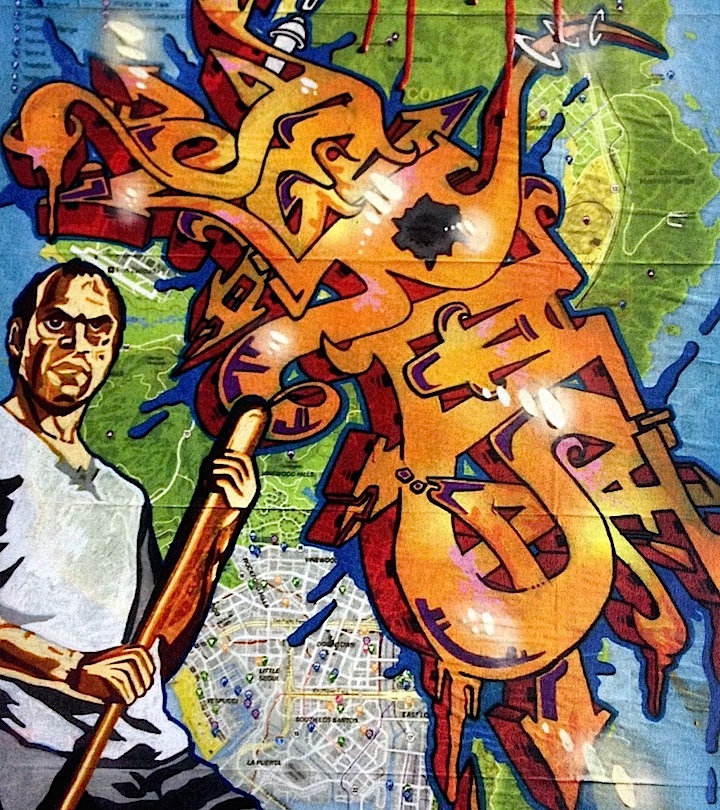
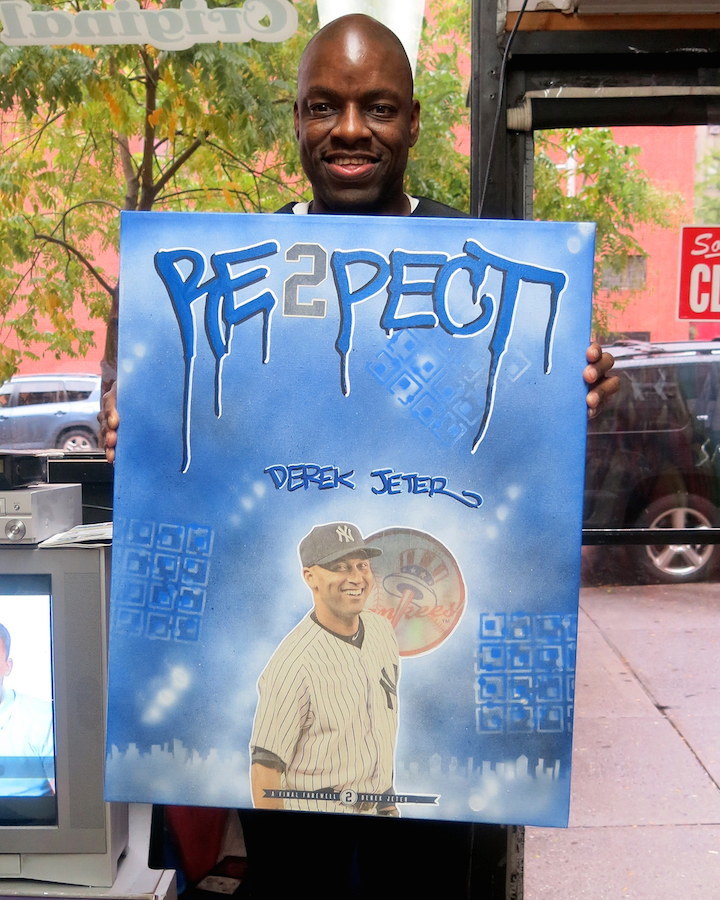
Photo credits: 1. and 2. Topaz by City-as-School intern Tyler Dean Flores; 3. Jerms by Lois Stavsky; 4. Jerms, Topaz & Blone by Lois Stavsky; 5. Treat Street with Jay (X-Productions) by Lois Stavsky; 6. Treat Street, as commissioned by Derek Jeter’s nephew, by Lois Stavsky and 7. PoetPaceJermsSav, Ice and more by Dani Reyes Mozeson

{ 2 comments }
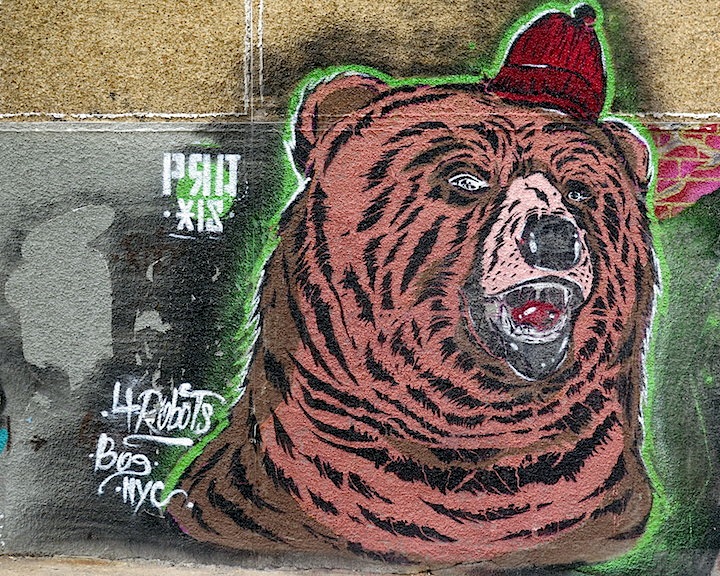
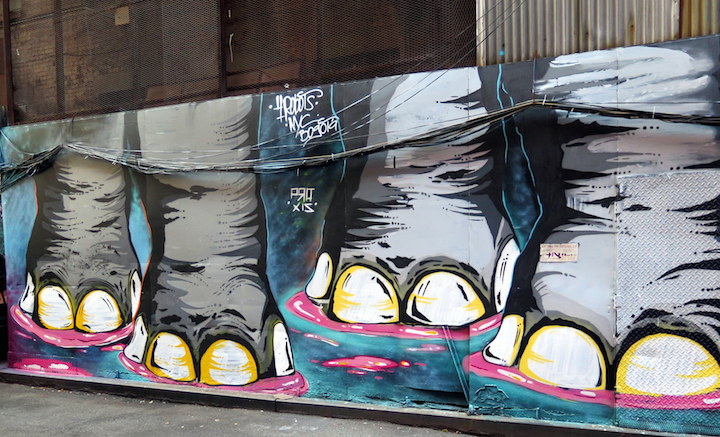
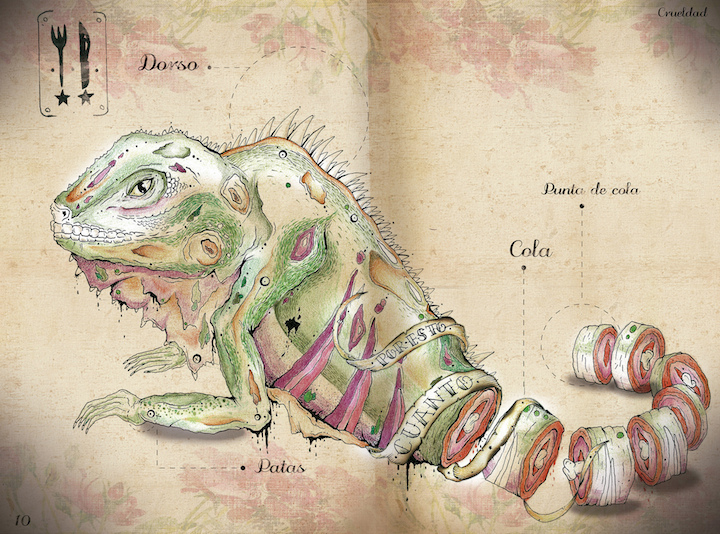
Known for his socially conscious, often satirical, stencils that have surfaced throughout his native Bogotá and beyond, Praxis has lately been sharing his vision and talents with us here in NYC.

Praxis-stencil art

What inspires you to get your work out there on public space?

I love to paint anywhere, on any surface – but especially in places where I know that folks will appreciate it.  I also like to paint in neighborhoods where there isn’t much art. Those are the spaces that need it. I like bringing cheer to others!

Have you any messages that you wish to convey in your artwork?

There is always some concept or message behind what I do. I’m especially concerned with animal rights and human injustice.

Are there any specific cultures that have influenced your aesthetic?

Certainly the culture in which I grew up in Bogotá. I’ve also been influenced by African culture and from what I read. I read a lot!

"Praxis stencil art"

You’ve been in NYC for a few months now. Any particularly striking differences between painting here and back home in Bogotá?

Back home, there is more of an appreciation for artists who paint on the streets.  The people love it.  They bring us drinks and food, and they always make us feel welcome.

Any thoughts on the graffiti/ street art divide?

I don’t feel it. Many of the writers I know work with or alongside street artists.

How do you feel about the movement of graffiti and street art into galleries?

It’s a great opportunity for us to make money some money, although I often don’t like the attitude of some of the folks who run the galleries. And graffiti and street art really do belong on the streets!

Do you prefer working alone or collaborating with others?

Both; I enjoy the mix of different styles.

Praxis

Is there any one artist with whom you would especially like to collaborate?

C215.

Any thoughts about the role of the Internet in this scene?

It’s useful.

Do you have a formal arts education?

I did study art formally – but just about everything I learned was by painting with other artists.

What’s the riskiest thing you’ve done?

Bombing in cities far from home – like Berlin.

"Praxis stencil art:

Were you ever arrested?

Twice back home in Bogota. I ended up each time spending over 12 hours with drunks and thieves – but they all liked graffiti.

How would you describe your ideal working environment?

Painting in La Candeleria in downtown Bogotá.

What percentage of your day is devoted to your art?

All of it!  When I’m not painting on the streets, I work as an illustrator.

Praxis

Are you generally satisfied with your finished piece?

Of course!

How do you feel when you look back at the work you did a number of years back?

I feel that my skills have improved.

What do you see as the role of the artist in society?

To bring happiness to others.

What’s ahead?

I will be showing in STREET MURALS: An Exhibition, curated by Kevin Michael, opening this evening, October 24th 6pm-11pm at Be Electric on 1298 Willoughby Avenue in Bushwick, BK.

What do you see yourself doing in five years from now?

I would just like to paint all day every day!

Interview conducted and edited by Lois Stavsky; images 1 and 5 courtesy of the artist; photo 2 by Lois Stavsky; photos 3 and 4 by Dani Reyes Mozeson

{ 0 comments }