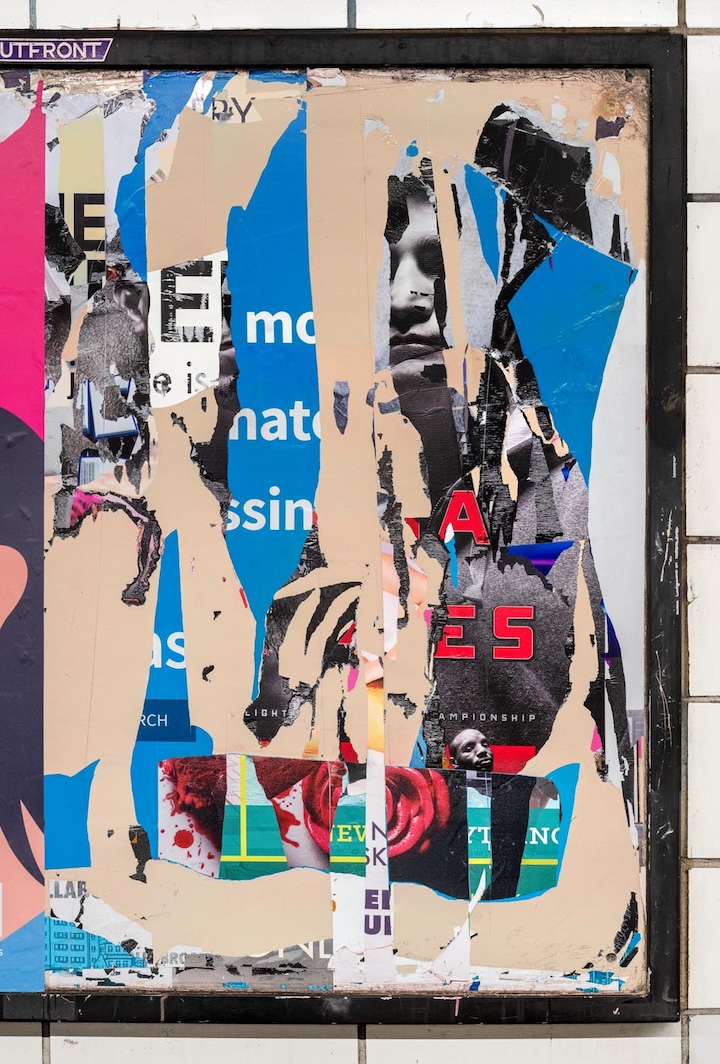
With his rich aesthetic sensibility and creative eye, Bed-Stuy-based filmmaker and photographer Barton Lewis seeks out and captures surfaces transformed by graffiti, advertisements and organic decay—on the streets and in the subways. Rooted in the nouveau réalisme movement of 1960s France, his edited photographs brilliantly blur the line between found art and fine art. We recently had the opportunity to spend some time with Barton and ask him about his work.
When did you first hold a camera in your hand with the intent of capturing an image?
My first camera was a film camera, a Kodak Super 8 Camera. I was about 10 at the time, and I began making films enlisting my classmates.
Have you ever formally studied photography?
No, I never studied photography or art formally. But I grew up in a family of artists, and I ‘ve studied music.
You have since produced an impressive body of work. Is there a central theme that ties your work together?
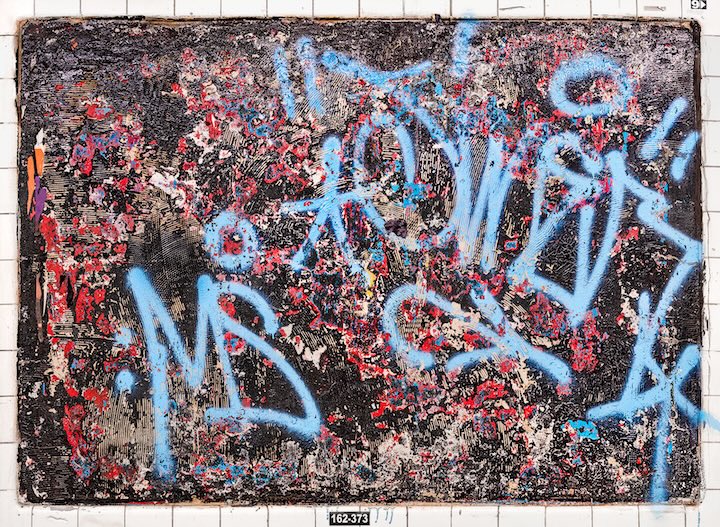
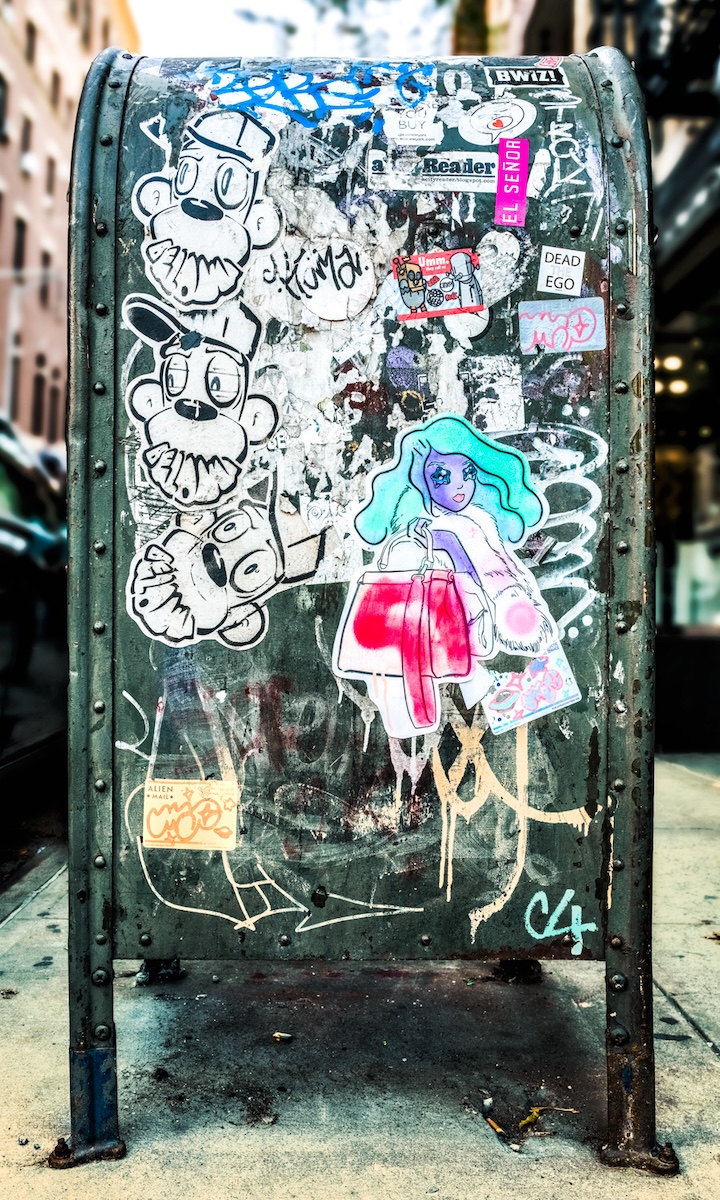
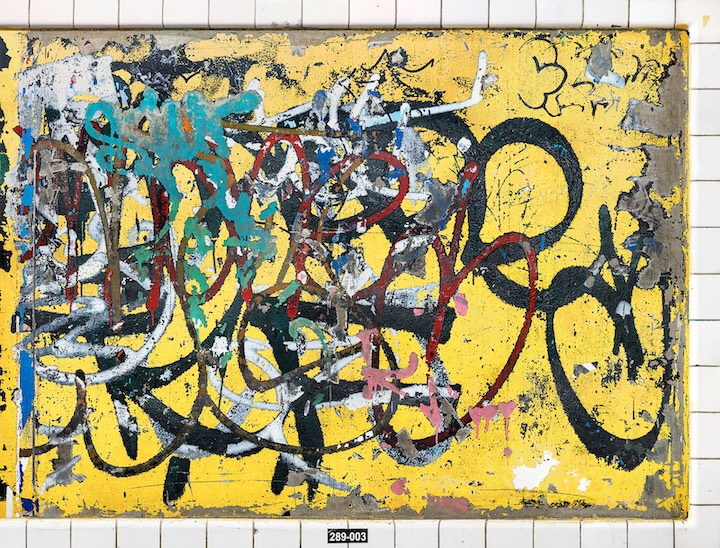
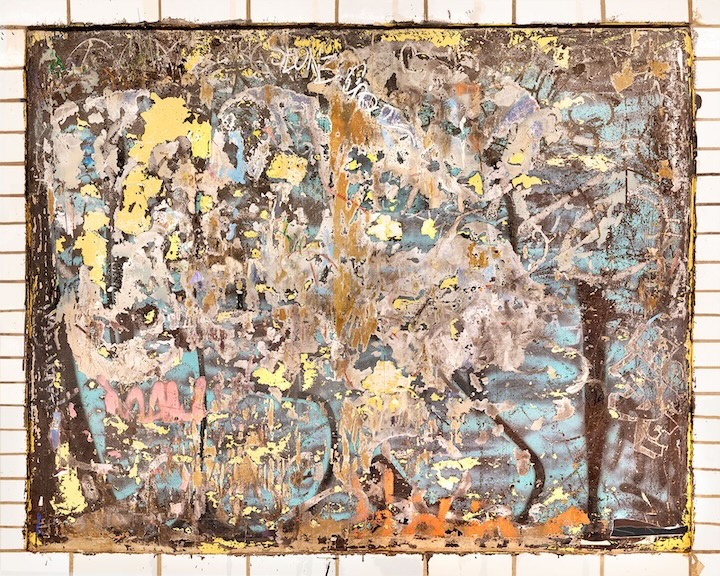
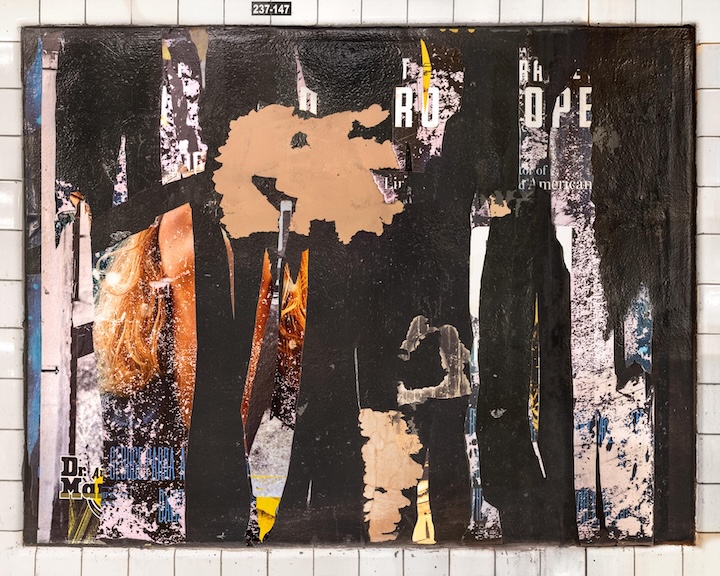
The focus of my photography is “found art.” I’m drawn to images that I come upon accidentally that were not meant to be seen as “art.”
What drew you to “found art?”
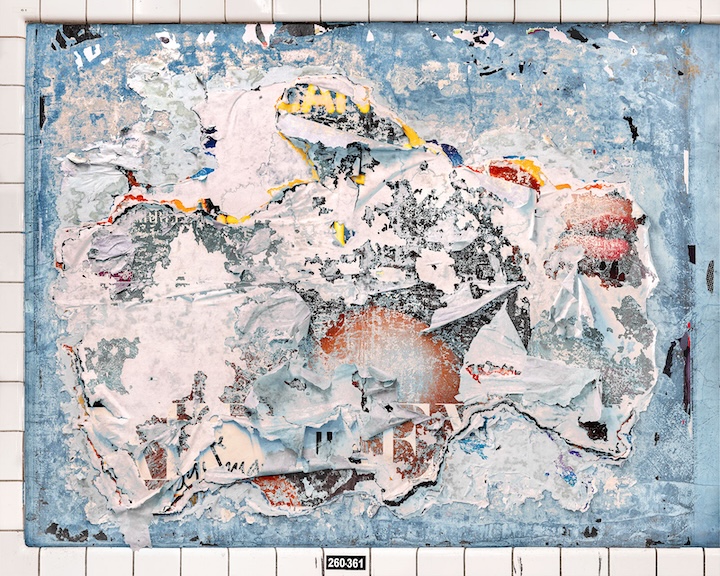
I’ve always been attracted to NYC’s rich texture and organic beauty, and in 2018 I began photographing it. A collector saw one of my photos, bought it and suggested that I focus on stills.
What particularly do you look for in these “found” surfaces—that are often overlooked and considered by many to be unappealing?
I seek out surfaces with abstract images that are painterly composed and ones with figurative images that are artfully balanced.
What are some of the challenges you’ve faced in your attempts to capture an ephemeral image?
I often work with a tripod so that I can best capture segments of a piece. And it’s illegal to use a tripod in a subway station.
How has your photography evolved in the last decade?
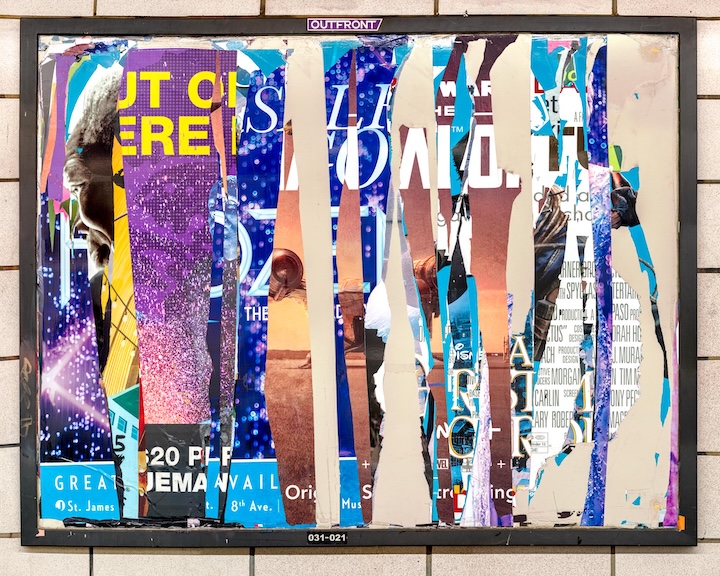
It’s gotten better! I’ve improved both at taking the photos and at editing them. I shoot each subject in sections, then stitch those images together in Lightroom. Over time, I’ve learned how to keep the angles, lighting and settings consistent so everything fits together seamlessly.
How long do you generally spend on the editing process?
It depends on the size of the image and how much needs adjusting. A typical wall cut takes an hour or two; a long wall or construction fence can take five to fifteen hours. My biggest project—a nearly 49-foot-wide photograph of 156 wheat-pasted Levi’s ads in Greenpoint—took over a year and hundreds of hours. I’d discovered the ads five years after they went up. I start in Lightroom, choosing the sharpest shots and making basic corrections. Then I move to Photoshop to fine-tune the light, color and contrast and correct any distortions.To me, decay can make an image more interesting than it was originally. My job is to bring that out.
Is there a particular time of day when you feel most comfortable photographing?
I generally try to head out early, depending on the weather.
How important is the viewer’s response to you? What would you like your viewer to walk away with?
The viewer’s response is usually not that important to me, but I’d love the viewer to walk away with a renewed appreciation of the world around us,
Are there any cities that you haven’t photographed searching for ephemeral art – outside of NYC – that you would like to visit?
Yes! Paris, Munich, Hamburg and Istanbul are among them,
A monograph of your photographs, The Many Pleasures: Found Art in New York City, was published by Daylight Books in July 2024. Have you also exhibited your photography?
Yes. My photography has been showcased in close to a dozen spaces. Most recently, it was included in “De-Constructed, Collective Photography Exhibition” at Loop – Raum Gallery in Berlin, Germany.
How do you decide which photos to share on social media?
Anything I’ve shot that I’ve successfully worked into a piece.
Have you any favorite photographers?
I love Saul Leiter, particularly how he captures colors on the streets.
You’ve studied music performance at Julliard and English literature at Columbia? How has your educational background impacted your work?
My study of music influenced my sense of form.
How does your family respond to what you are doing?
They love it. Everyone is supportive.
What’s ahead?
I’d like to put more of an effort into marketing my art. I’ve trying to achieve a balance between making art and marketing it.
How can folks contact you?
They can email me at: brtnlws@gmail.com, or they can DM me on my Instagram page.
Interview conducted by Lois Stavsky with Tara Murray; all photos courtesy Barton Lewis

Warning: count(): Parameter must be an array or an object that implements Countable in /srv/users/serverpilot/apps/streetartnyc/public/wp-content/themes/thesis_189/lib/classes/comments.php on line 43
{ 0 comments… add one now }