urban art

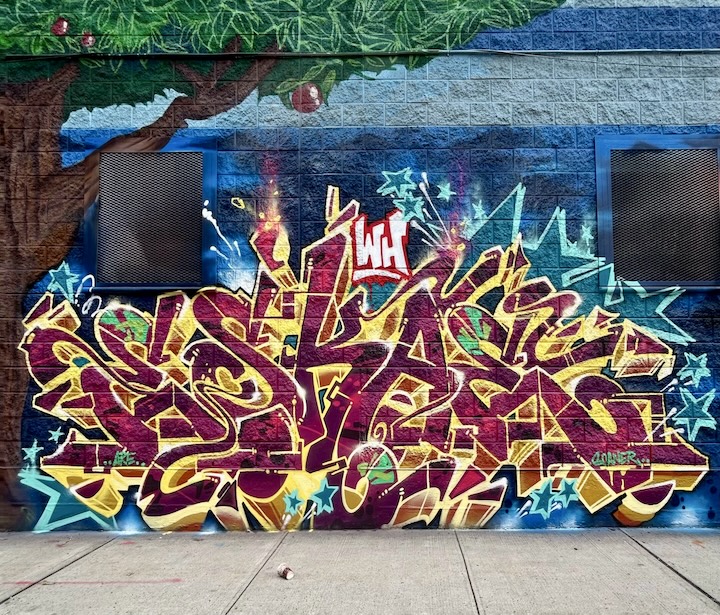
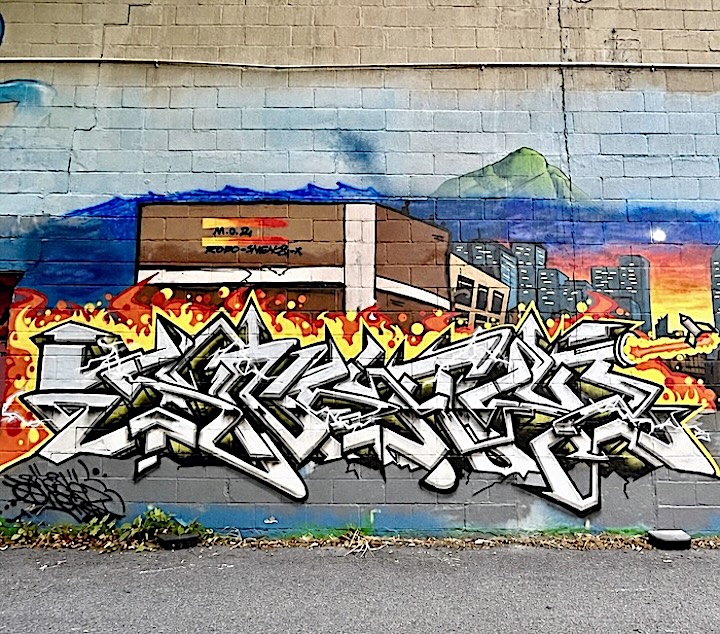
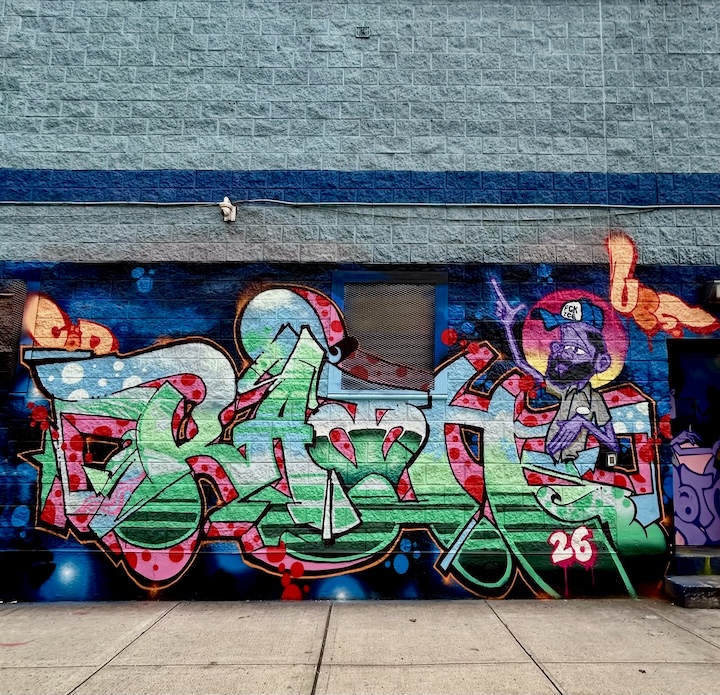
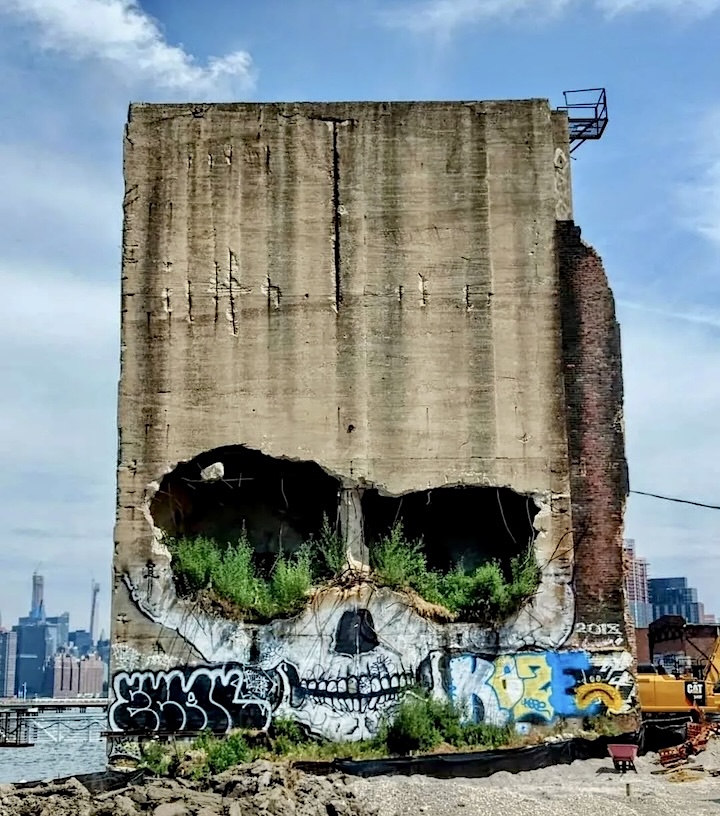
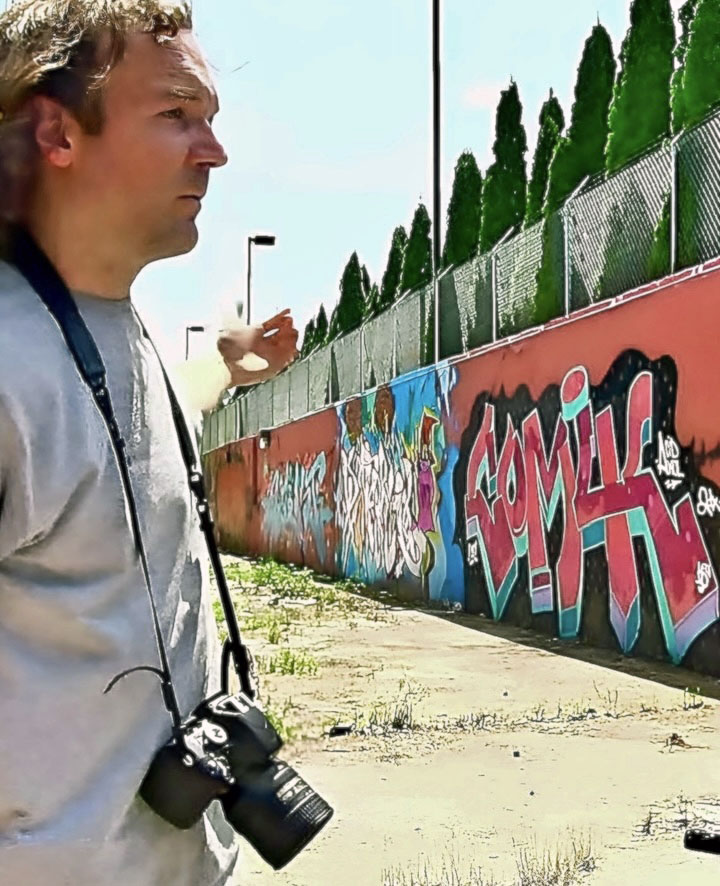
Based in Woodside, Queens, Richard Alicea has been documenting urban culture for over four decades. We initially met over our shared passion for graffiti and recently reconnected after a ten-year hiatus. I was delighted to have the opportunity to interview Richard, who had introduced me to such graffiti pioneers as Flint and the late Mico.

When did you first hold a camera in your hand with the intent of capturing an image?

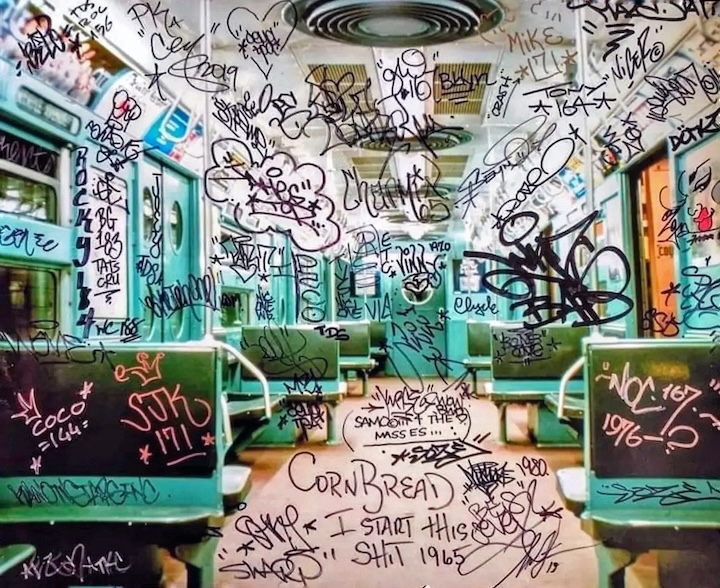
Back in 1976, my brother gave me my first camera.  The first image that I remember capturing was inside the GG train in Court Square, LIC.  I’ve since had multiple copies of that particular image signed by just about everyone who’s made a mark on NYC’s graffiti culture!

What kind of camera did you use back then? And what camera do you use now?

Back then I used a Fuji. These days  Panasonic LUMIX is the camera of my choice.

You have since produced an impressive body of work. Is there a central theme that ties your work together?

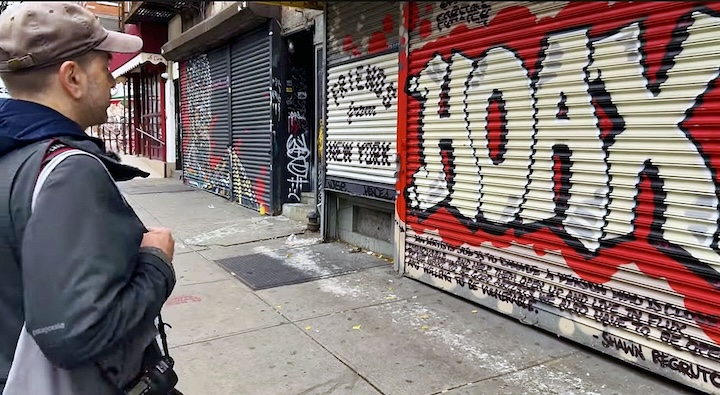
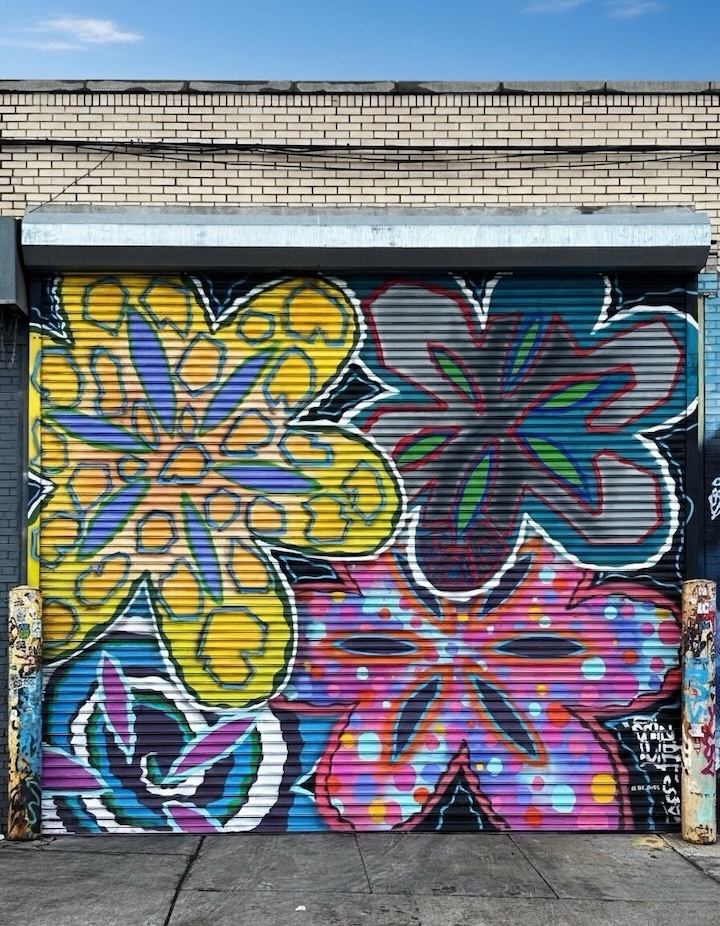
My principal interest is the urban environment – the art on the streets, the various cultural heritage celebrations and NYC’s distinct architecture.

Have you ever formally studied photography? Or was there a close friend or relative who influenced you?

Just about everyone in my family was passionate about photography. But I did study photography back in 1981 at New York Technical College. And a particular influence was Mycal Watts. A photographer and Vietnam veteran, Mycal has invited me to photo shoots at his Woodside studio.

Is there anything about your particular heritage that impacted you as a photographer?

My family raised me to honor my Puerto Rican heritage.  And I somewhat naturally began to appreciate and respect other cultures, particularly those with close family bonds.

What drew you to graffiti and urban art?

I was drawn to it the moment I saw it. Its appeal to me was instant!  Living in Woodside, I didn’t see much in my immediate neighborhood. But it began to surface in the 70s in nearby neighborhoods and along the 7 line. And I was especially impacted by the books that were published in the 80s.

How has your photography evolved in the last decade?

I have more patience than I used to have. With camera in hand, I will wait until I can get the best capture possible in a particular setting. And though I continue to focus on the art that surfaces on the streets, I’ve begun to focus more on the city’s overall culture, particularly parades.

What are some of the challenges you’ve faced while trying to capture a particular moment?

People can be suspicious of me! They’re not quite sure what I’m after!

How long do you generally spend on the editing process?

After each photo session, I’ll spend anywhere between one to two hours editing.

How important is the viewer’s response to you?

I’d like people to like what I do. But I understand why some folks may not.

How has your family responded to your passion for photography?  

They love it. They particularly like watching me interact with other people whom they don’t know.

Are there any places outside NYC that you haven’t photographed but would like to?

I’d like to make my way to Wynwood, Miami.

Have you ever tried to market your photography?

No. I’ve just been following my passion.

How do you decide which photos to share on social media?

I edit the photos I like, and then it’s kind of random which ones I choose to share.

Do you have any favorite photographers?

My favorites include street photographer Ira Berger, hip-hop culture documentarian Ernie Paniccioli and Mycal Watts.


Do any particular memories stand out?

9/11.  I vividly remember watching the first tower fall from where I was standing in Whitestone and taking photos that evening from the Brooklyn Promenade. I actually raced home before nightfall, concerned that the city might issue an executive order restricting driving.

Having documented New York City for decades, what are some of the biggest changes you’ve witnessed in the city?

Massive high-risers are reshaping neighborhoods like Long Island City, while mega-chains continuously replace traditional mom-and-pop stores.

How can folks view your photos?

They can follow me on Instagram and on Facebook.

What’s ahead?

I’d love to be able to predict the future, but I can’t!

Interview conducted and edited by Lois Stavsky

All photos © Richard Alicea

  1. Suitswon, Greenpoint, Brooklyn, 2017
  2. GG train, Court Square, Long Island City, 1976, signatures on this particular copy of photo completed 2019
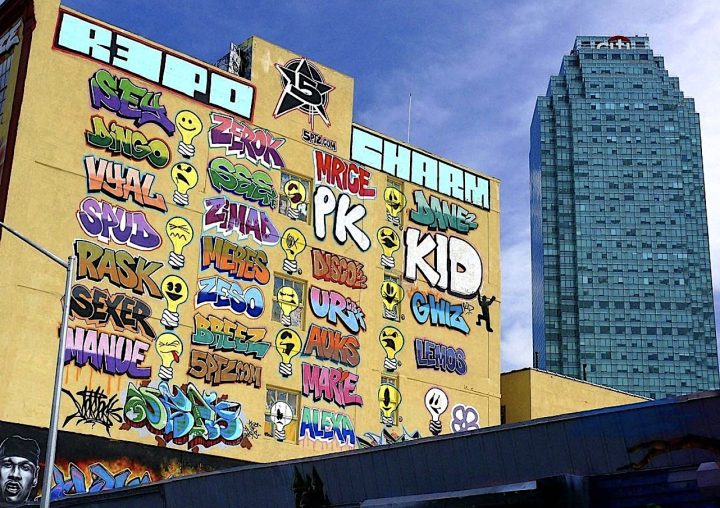
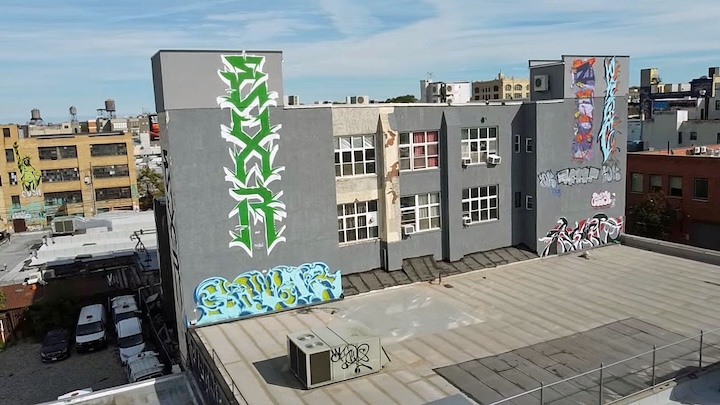
  3. 5Pointz, Long Island City, circa 2011
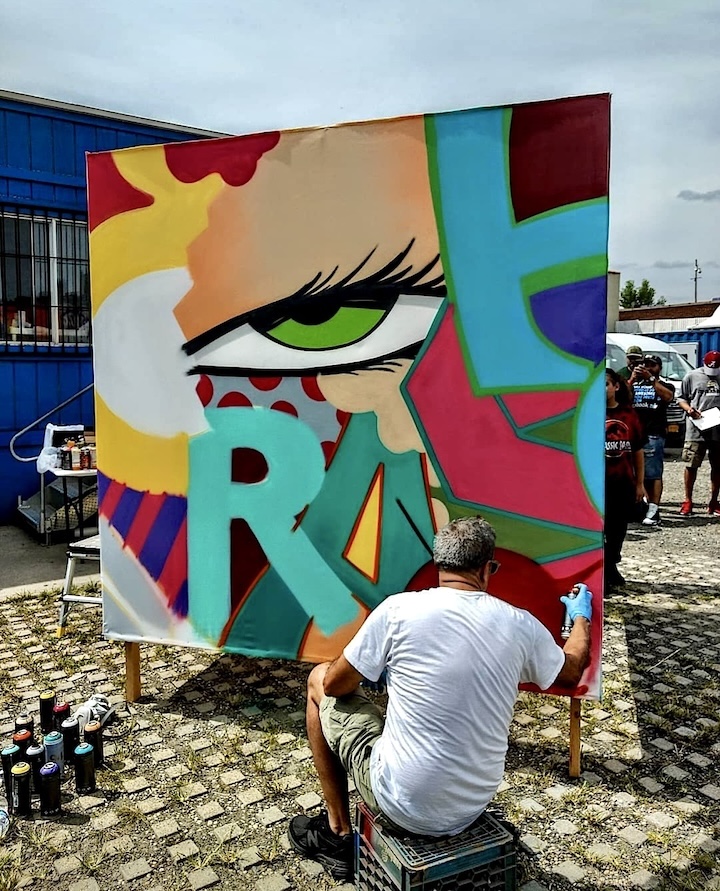
  4. Crash One at The Point CDC in the Bronx, 2018
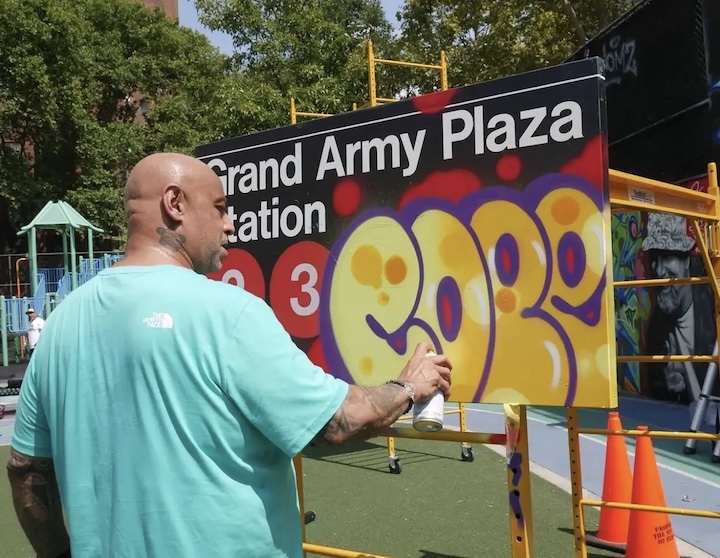
  5. Cope2 at the Graffiti Hall of Fame, East Harlem, 2024
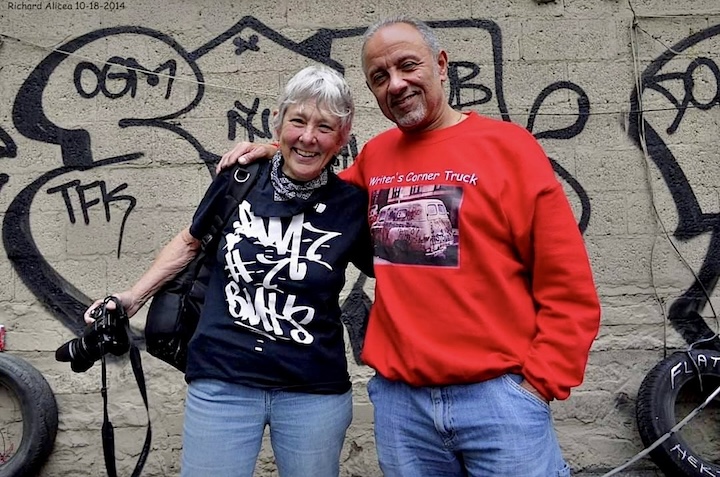
  6. Martha Cooper and Eddie Rodriguez aka Snake 1, Chinatown, NYC 2014
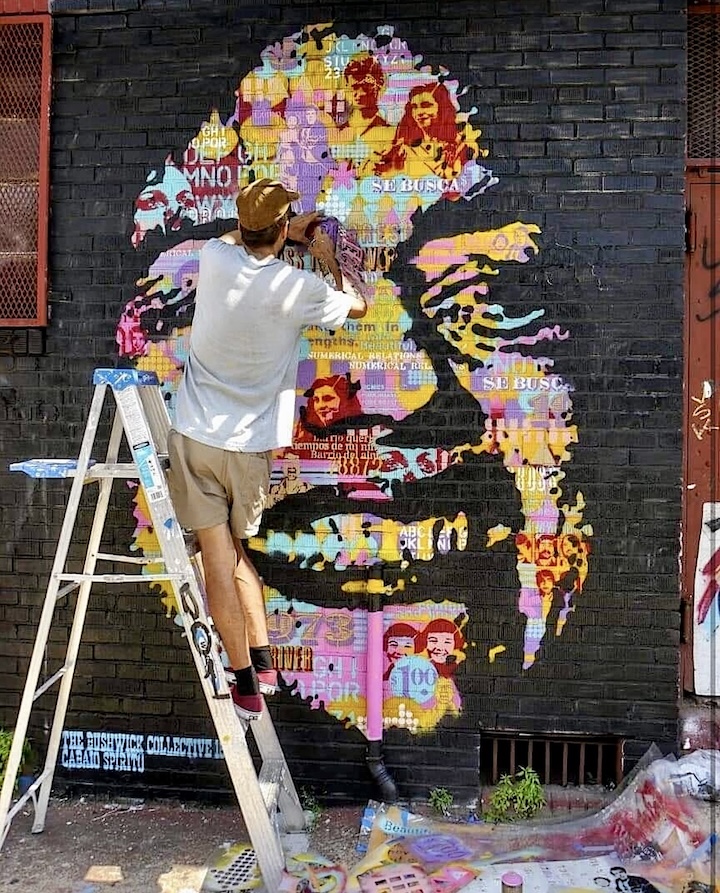
  7. Argentine stencil artist Cabaio Spirito at the Bushwick Collective, 2018
  8. Cey Adams at Welling Court, 2014
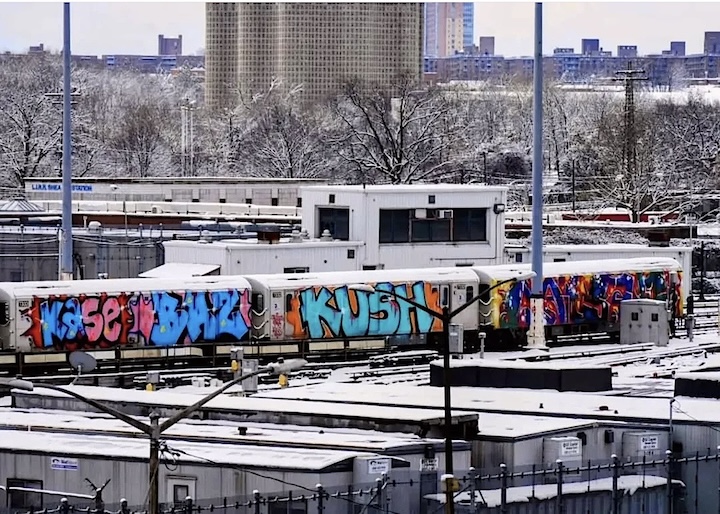
  9. The MTA Corona Yard,
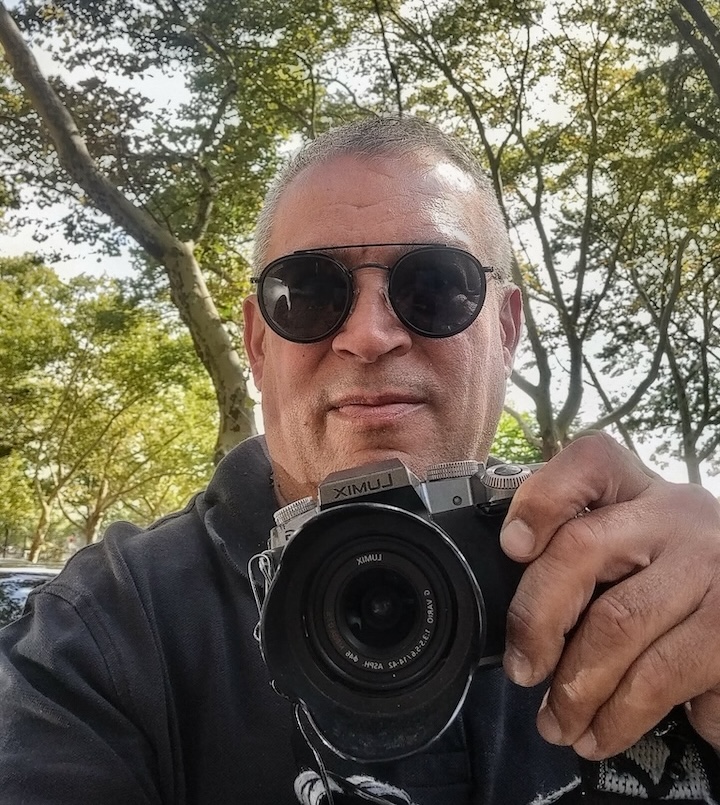
  10. Richard Alicea, Selfie

{ 0 comments }

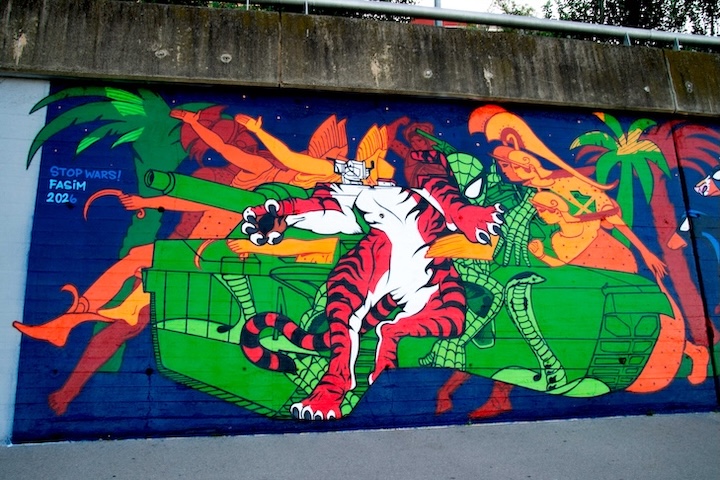
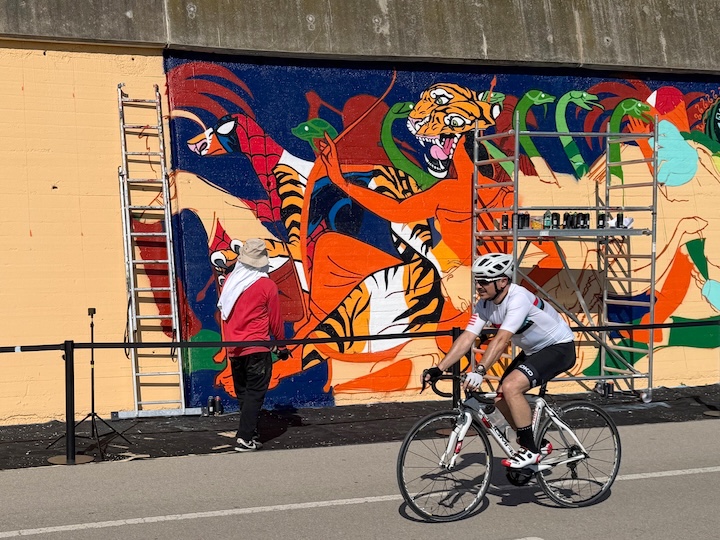
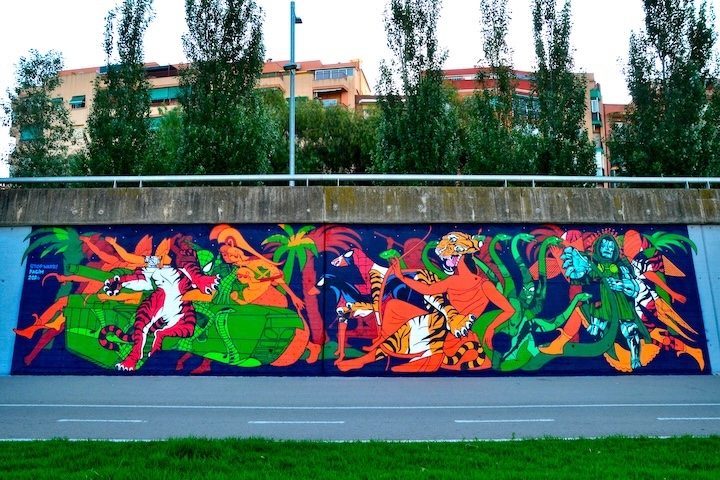
Barcelona-based artist Germán Bel, aka Fasim, recently fashioned a large-scale mural for BesArt The River Museum. Titled Stop Wars!, the hugely impressive work is a poetic reflection on armed conflict, blending classical iconography with images of war, fragmented bodies, snakes, hybrid figures, and other symbolic forms in Fasim’s distinctive visual language.

The mural is part of BesArt The River Museum, a momentous open-air urban art project promoted by the Mediterranean Street Art Association (AMSA). Founded and directed by David Hernández and curated by Jordi Rubio, the museum stretches for more than 18 kilometers along the Besòs River, linking Barcelona, Sant Adrià de Besòs, and Santa Coloma de Gramenet in one of Europe’s most extensive public art initiatives.

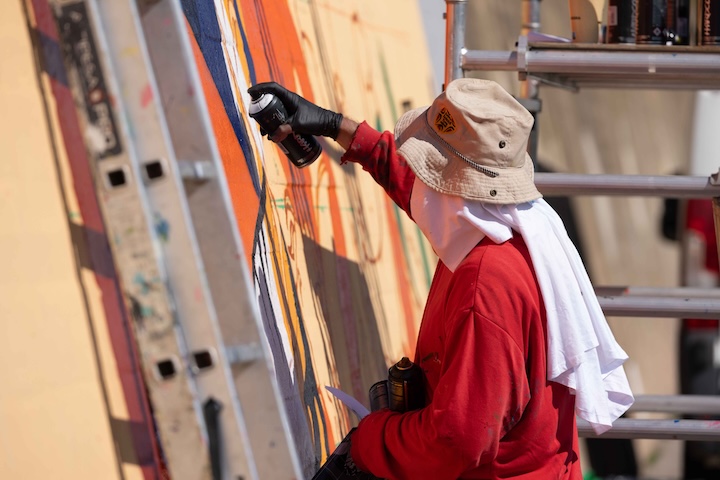
Featured above is the mural in its entirety. What follows are several close-ups — including those documenting the artist at work:

First segment of the mural with assembled elements: Greek mythology, a tank, a tiger, and a piece of Spider-Man

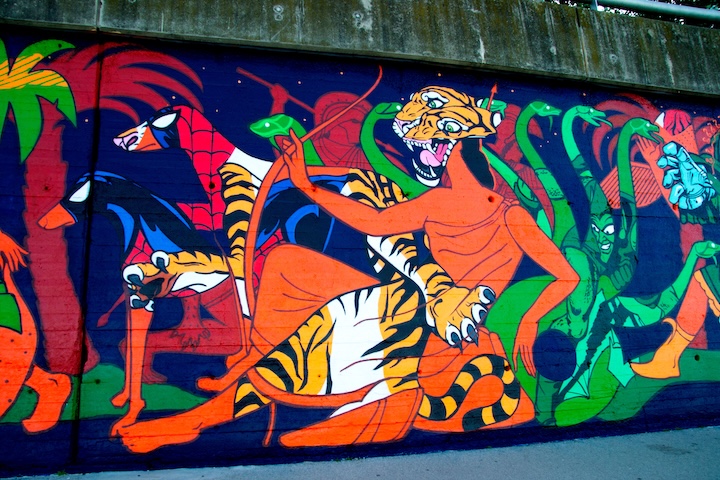
Second segment of the mural with assembled elements: Artemis, the goddess of the hunt; the Hydra from Greek mythology; a tiger; and characters from the Marvel universe

Fasim at work with cyclist passing through 

Fasim at work, close-up

All photos courtesy BesArt 2026

{ 0 comments }

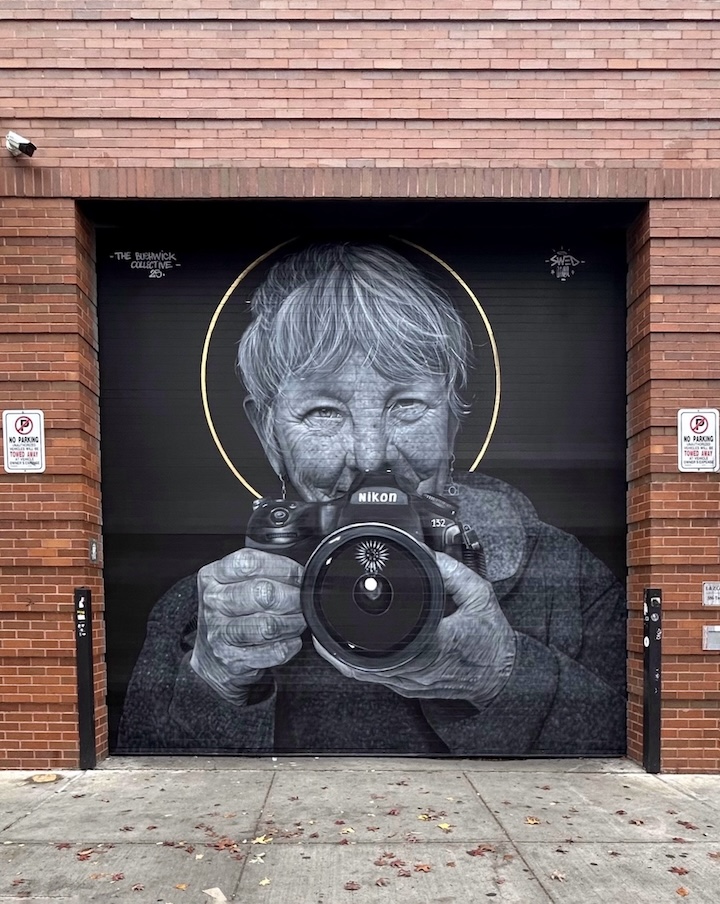
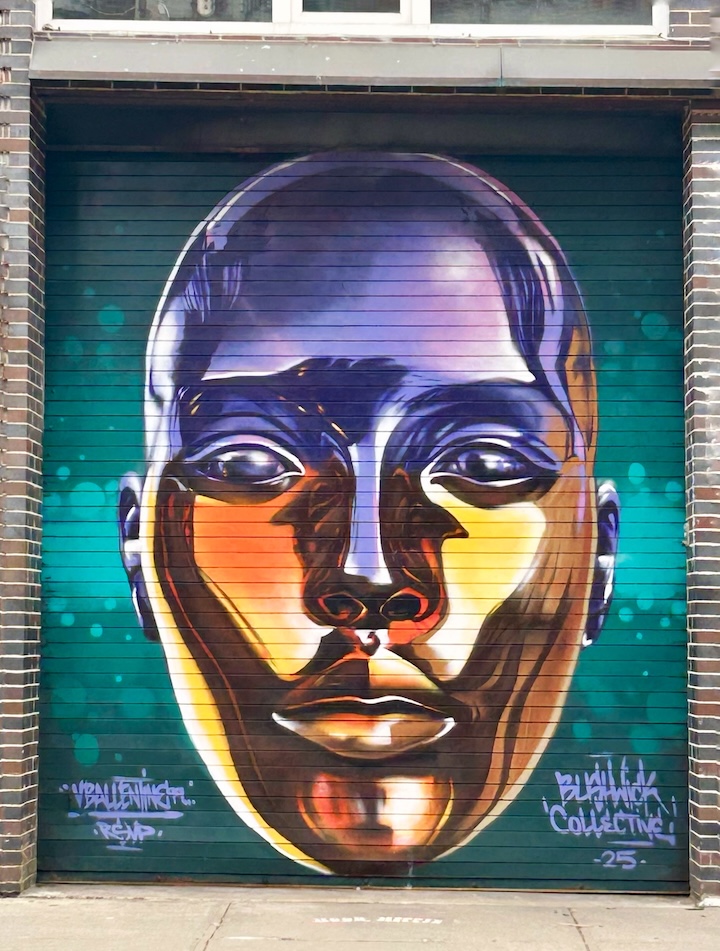
Pictured above is a striking photorealistic portrait of the legendary Martha Cooper, painted at the Bushwick Collective by the hugely talented French artist Swed Oner. Several more images of faces that have surfaced in NYC public spaces follow:

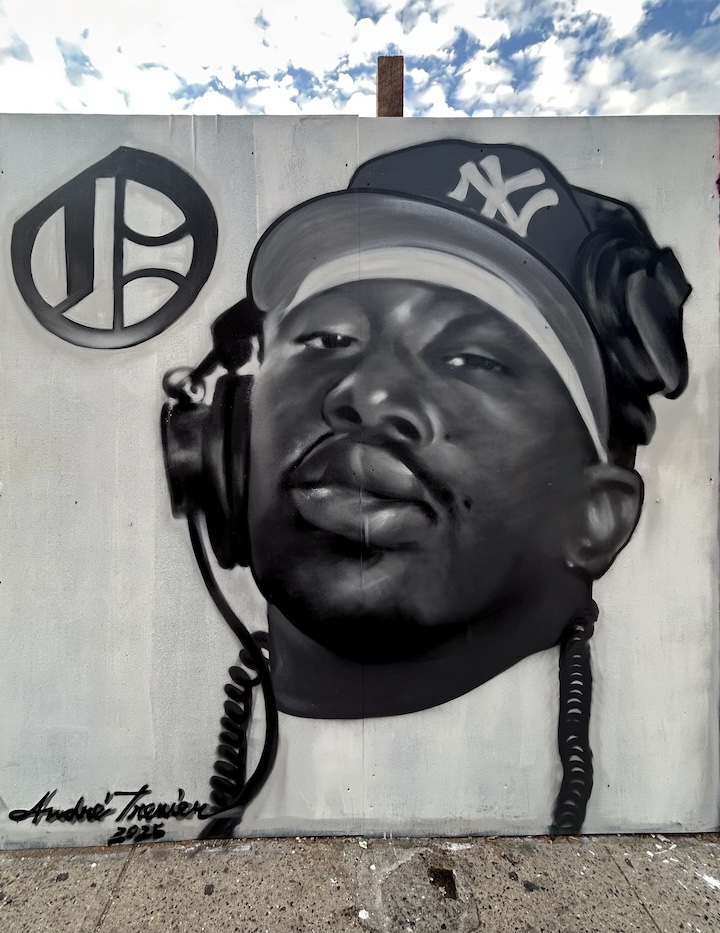
Bronx-born and bred artist Andre Trenier with Uptown Grand Central in East Harlem

New York-based Japanese artist Dragon 76 in Midtown West

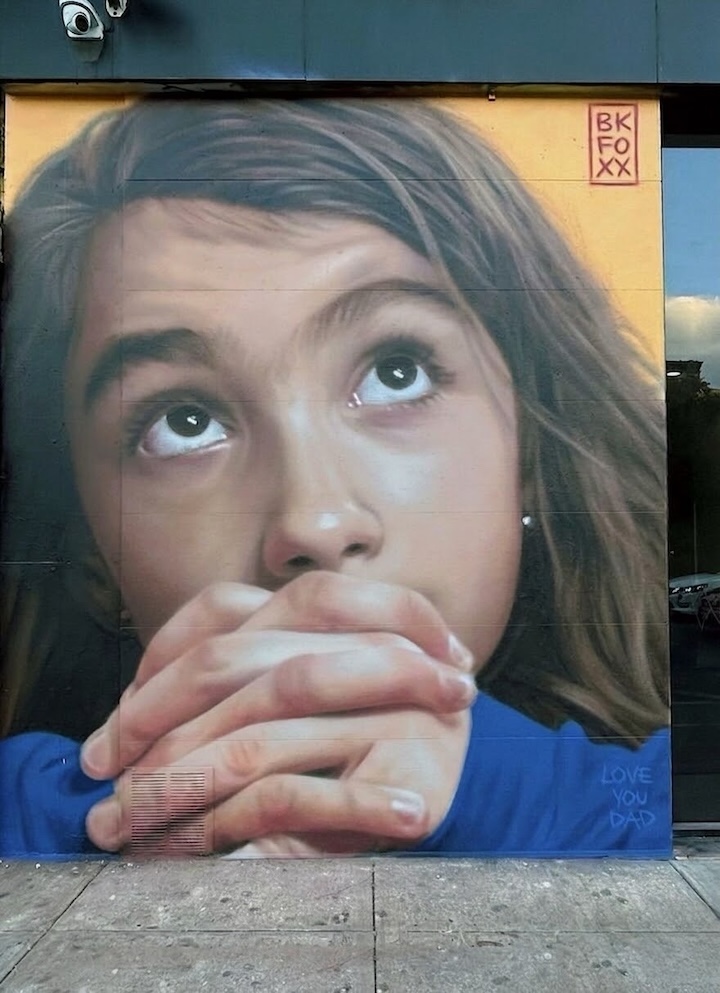
Photorealistic muralist BKFoxx at the Ridge Hotel on Manhattan’s Lower East Side

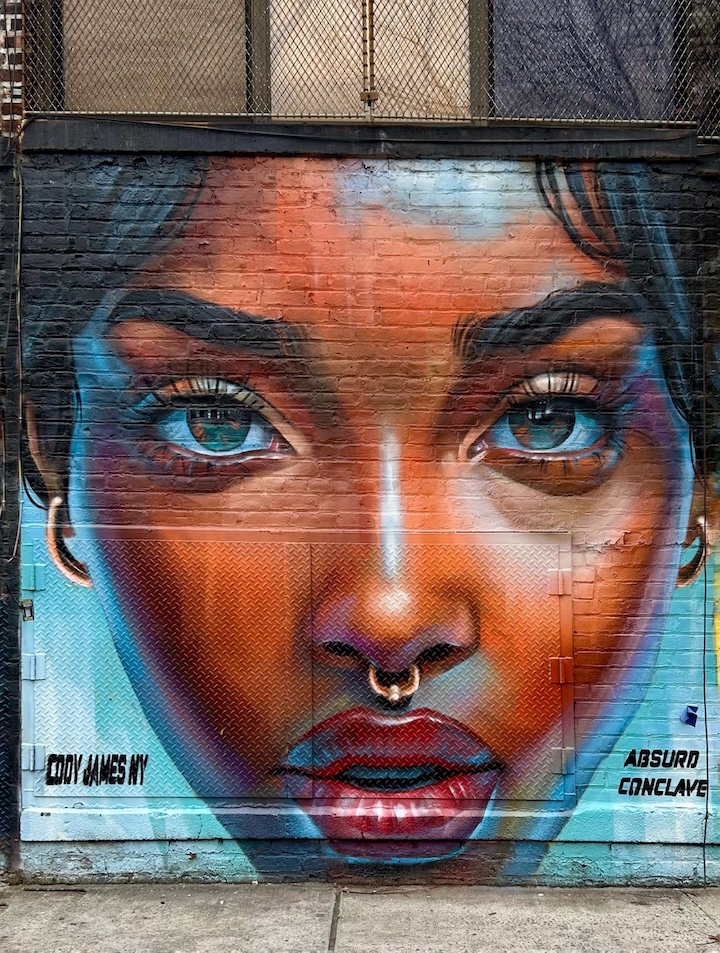
NYC-based artist Cody James with Absurd Conclave

The itinerant, socially-conscious artist Joel Artista in Red Hook, Brooklyn

Brooklyn-based multidisciplinary artist Vince Ballentine at the Bushwick Collective

Photo credits: 1, 2, 4, 5 & 7 Lois Stavsky; 3 & 6 Tara Murray

{ 0 comments }

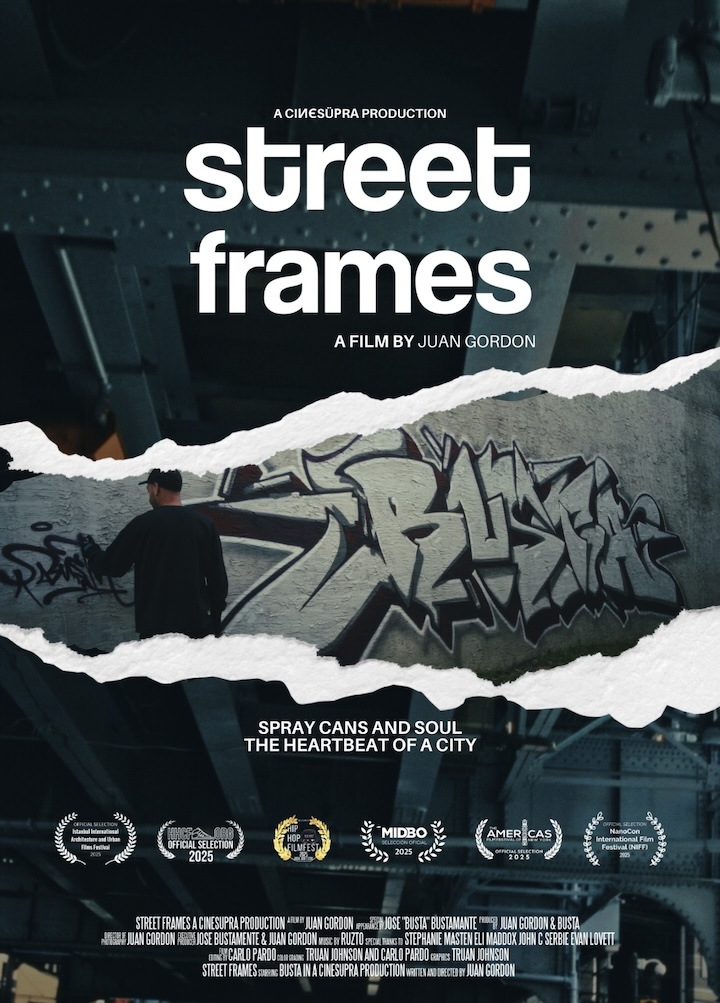
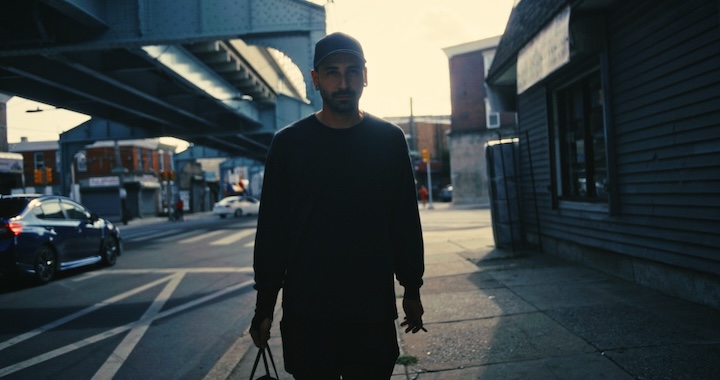
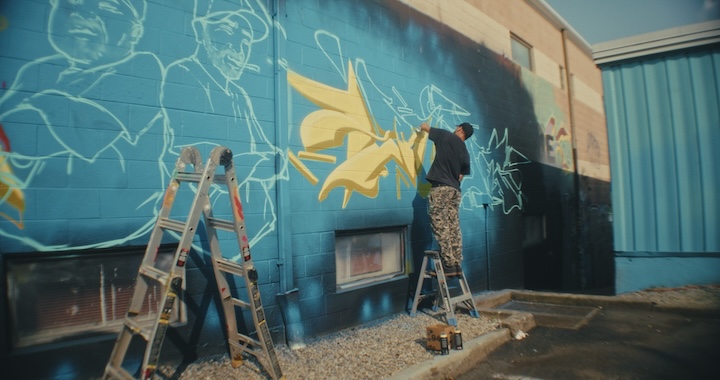
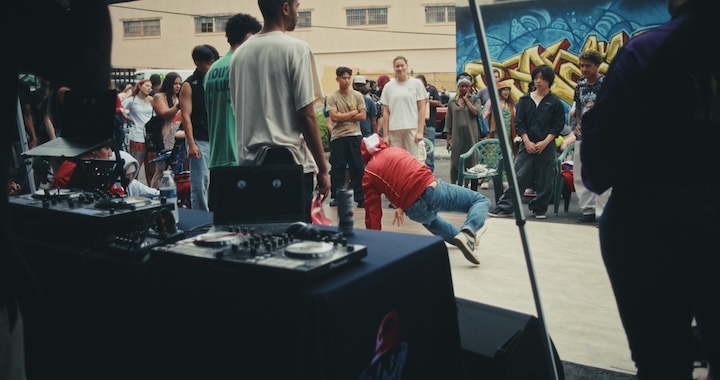
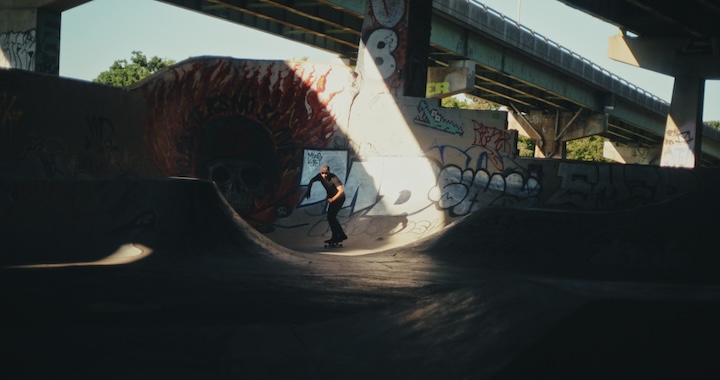
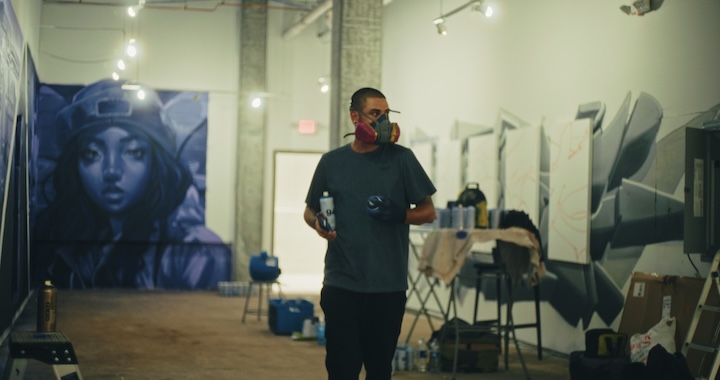
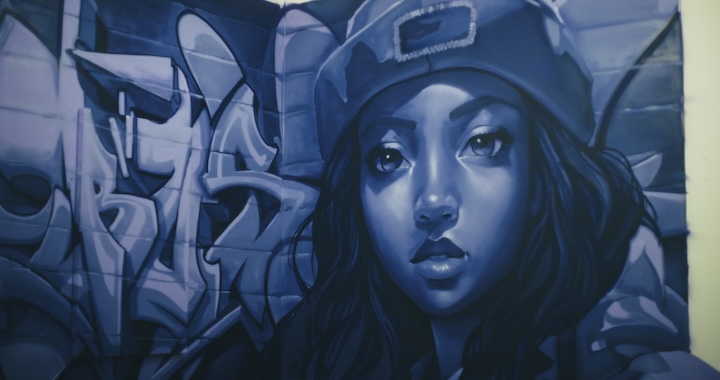
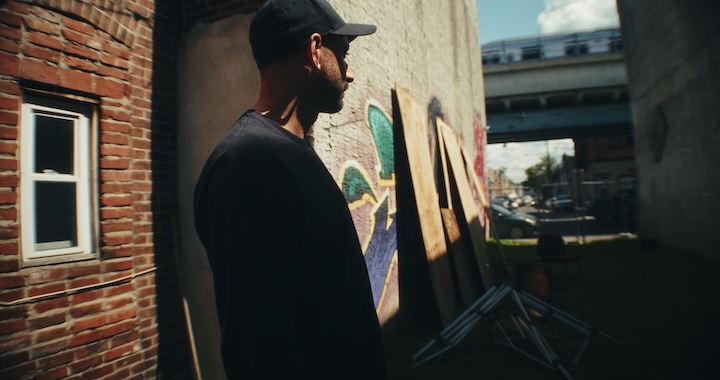
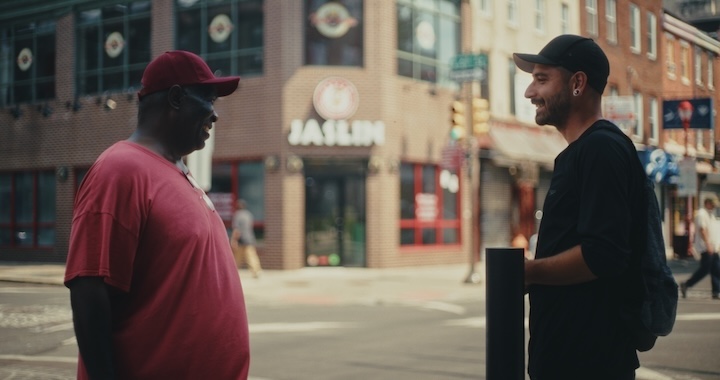
In his latest short film, Street Frames, Colombian filmmaker Juan Gordon pays homage to graffiti, Hip-Hop culture, and Philly-based, Colombia-born multimedia artist José “Busta” Bustamante. The result is a film that is both intriguing and informative, as it draws viewers into Busta’s world — its dualities, its challenges and its rewards. After viewing it, I posed a few questions to Juan:

What inspired you to produce a film spotlighting Jose Bustamante, known to us as Busta? What drew you specifically to Busta?

I’ve known Busta for over 15 years. We met in the streets of Bogotá through skateboarding, and I’ve witnessed his artistic evolution firsthand. In 2024, he invited me to his first solo show in downtown Philadelphia. I accepted, but with a distinct intention: I wanted to document his process, his dualities, his conflicts, and his relationship with the community. While his aerosol work is visually stunning and continues to evolve, it’s his philosophical foundation that truly fascinates me. I’m grateful he opened up in such a raw way to achieve this result.

What were some of the challenges you faced in seeing the project through?

Logistically, there were very few. We filmed in August with perfect weather, and thanks to a great network of collaborators, I had access to everything from secure locations in Kensington to secret spots across Pennsylvania and Jersey. The real challenge was internal: how to capture the profound soul of my subject—the artist, his art, and the complex emotions in between—while maintaining a deep sense of respect for the Hip Hop culture that defines him.

What would you like viewers to take away from this film? Are there any particular messages you hope to convey?

The urgency to create must never die; we must remain in constant motion. Personal and communal conflicts are what keep the world turning—without darkness, there is no light. I want viewers to take these and other questions they can perceive, take them home and reach their own conclusions, applying that creative spark to any aspect of their lives. Movement is life.

How does the graffiti scene in Philly and Trenton differ from the one in your Bogota hometown?

In general terms, they are very similar. You’ll find tags and pieces in the most hidden corners, whether they are “under the radar” works or governmentcommissioned murals. Bogotá, however, is a graffiti city par excellence due to its deep respect for the culture’s constant advancement. The main difference is structural: Bogotá currently has no subway system. Construction began recently, with the opening set for 2028. I’m eager to see how the culture will react to this new architecture—new canvases for paint, music, and film. Evolution is dual: it builds and destroys. simultaneously.

What kind of responses have you received to the film so far?

It has been incredibly positive. Throughout 2025, the film toured festivals, ranging from those focused strictly on Hip Hop cinema to general film festivals where audiences knew nothing about graffiti but were drawn to the story itself. Premiering at the Hip Hop Film Fest in NYC was a major milestone, as was seeing it reach Turkey, Italy, Mexico, Colombia and more. The feedback has been warm and noble; people really connect with the human element behind the art.

What’s next?

I am currently developing a narrative feature film set in a near-future Bogotá. The focus shifts from the walls to the internal movement of the city, exploring human dignity and the weight we carry through life. And yes, it still features a character who can’t help but leave his name on the walls.

How can folks view Street Frames?

After its successful run through the international film festival circuit, it is now available for public viewing on YouTube. You can also see a teaser for it here.

Note: All photos are stills from Street Frames, courtesy of Juan Gordon; interview questions by Lois Stavsky and Tara Murray

{ 0 comments }

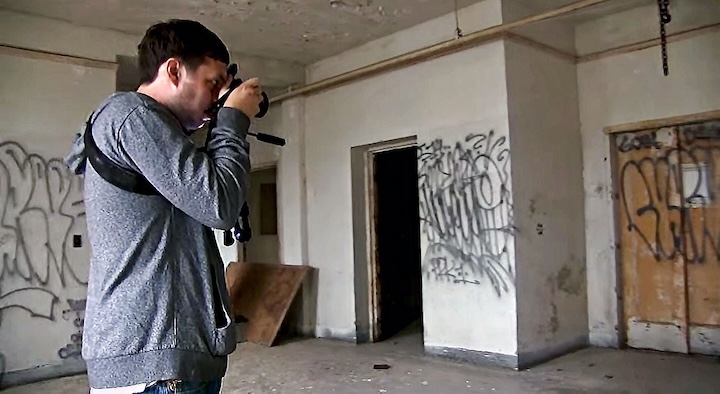
While numerous documentaries focus on graffiti artists themselves, few spotlight the photographers who track down their work and share it with the public. There’s No Reward is the exception. Filmed by Queens-based subculture observer Ray Parada, There’s No Reward takes us into the minds and lives of those photographers and documentarians who preserve this ever-ephemeral culture. Although they do not take the extraordinary risks many of the writers do, those featured in There’s  No Reward share their frenzied fervor, often bordering on obsessiveness. They, too, trespass into abandoned and soon-to-be-demolished spaces as they feed their addiction.

While each photographer’s particular approach may differ, all share an acute curiosity about graffiti, particularly unsanctioned public art. To Fresh Paint NYC — featured above — it’s largely a matter of tracking down and learning the history of graffiti, as well as documenting its continual evolution. To others, such as Luna Park, it’s a joyous adventure — a “walking meditation” that has taken her into neighborhoods and sites that she  most likely would never have discovered if not for her love of graffiti.

As Carnage observes, “Once you learn about graffiti and start seeing graff in your environment, you can’t unsee it. You’re always going to be curious about it, and you are always going to want to see more.”

After viewing the documentary, I had the opportunity to pose several questions to Ray.

What spurred you to produce a documentary that focuses on graffiti photographers and documentarians?

I had been into graffiti ever since discovering it in the ’80s. But in 2015, I met Steve aka Smkjr who introduced me to a scene I hadn’t known about — a secret world where graff hunters get up at 6 a.m. to hunt down anything new that may have surfaced since their last mission. Discovering a new piece by the likes of Curve, Klops, or Kuma was an instant high.

“There’s no reward,” explained Steve, “other than the adrenaline of exploring a spot and discovering an artist you admire.”

How were you able to connect with these photographers?

I actually worked with both Smkjr and Intospaces in the same workspace. I met others through them and through word of mouth.

The documentary covers a 10-year span. What were some of the challenges you experienced in shooting it?

When I first started, I was working with a handheld camcorder. I didn’t feel secure, and I felt the final product could be stronger. In addition, I lost a disc that held dozens of valuable photos and interviews. That was incredibly discouraging. But then COVID hit, and things picked up. The technology had improved significantly, and I regained the confidence I had lost.

How has the scene changed from when you first started shooting There’s No Reward?

Rappel graffiti has had a huge impact on the scene. Some of the artists who were active a decade ago are no longer around. Some of the places the photographers frequented no longer exist. Some of the photographers — due to family responsibilities — are not as active as they had been. And several of the photographers now use drones.

Note: You can view the documentary in its entirety here.

Interview conducted and edited by Lois Stavsky

Screenshots

  1. Fresh Paint NYC 
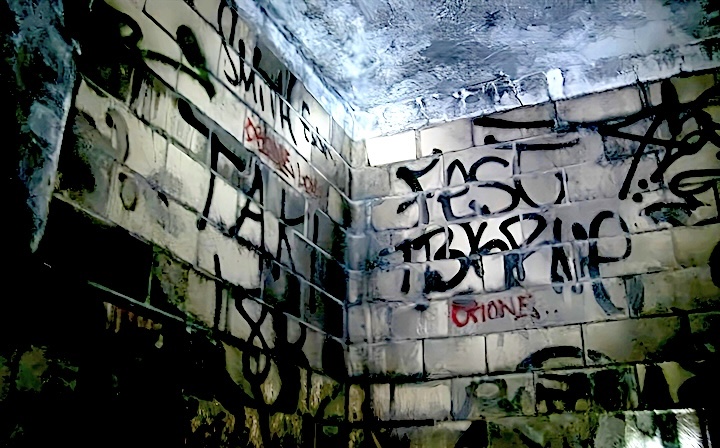
  2. Smith and Taki 183 & more as uncovered by Fresh Paint NYC 
  3. Wombat ICBM + captured by Carnage
  4. Luna Park
  5. Smkjr captures Curve and more in abandoned property
  6. Captured by Graff Season NYC 
  7. Carnage
  8. Exr and more rappel graffiti captured by Intospaces

{ 0 comments }
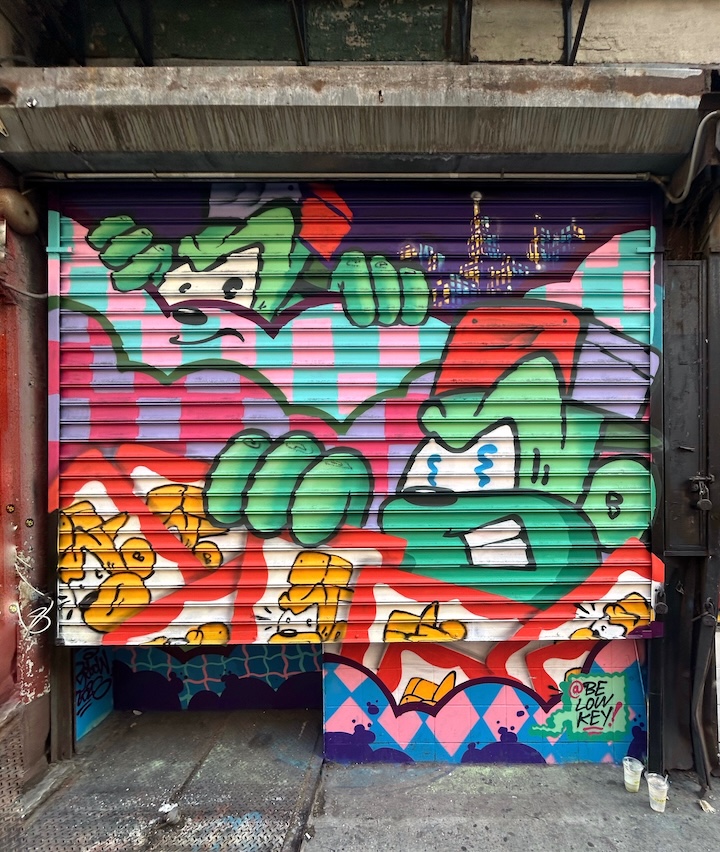
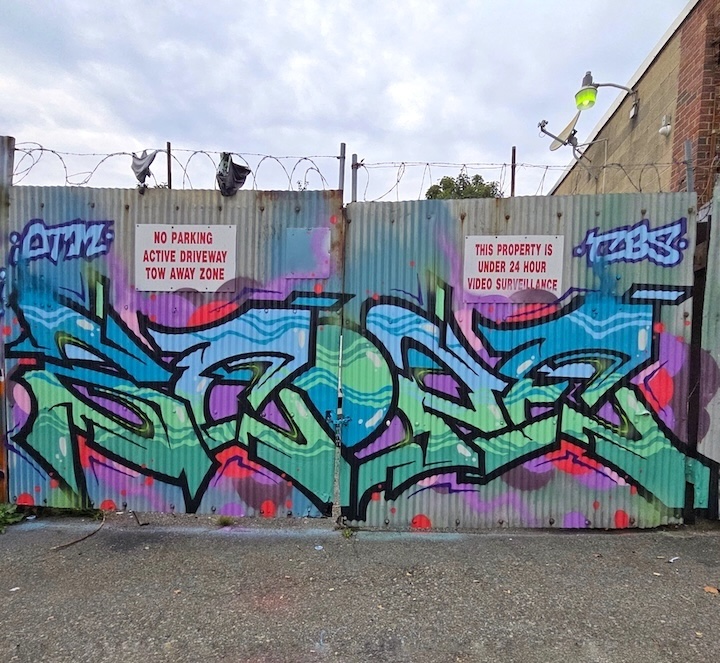
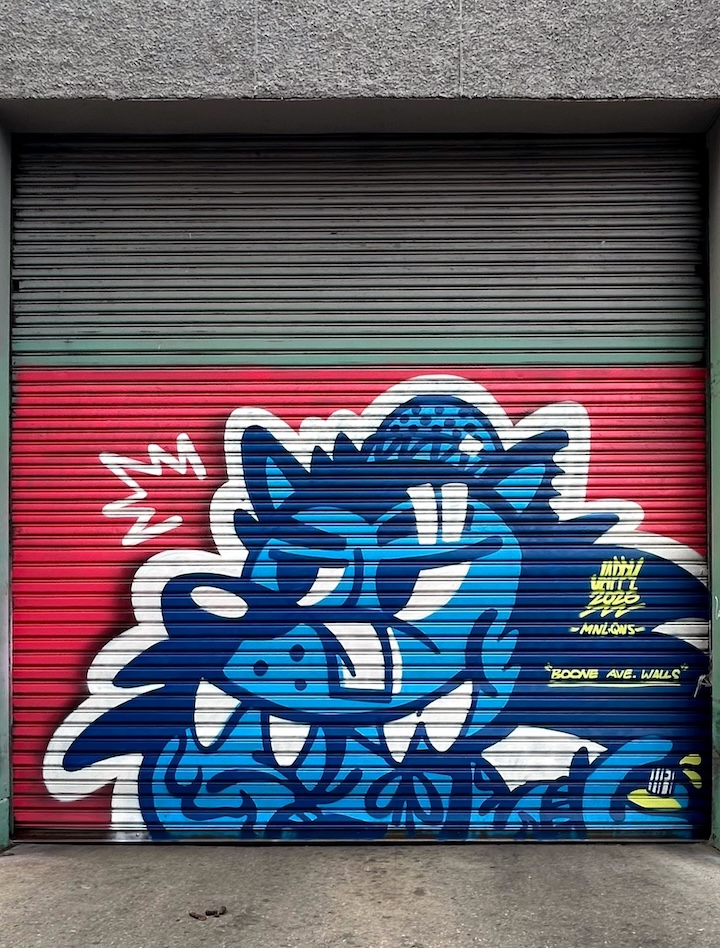
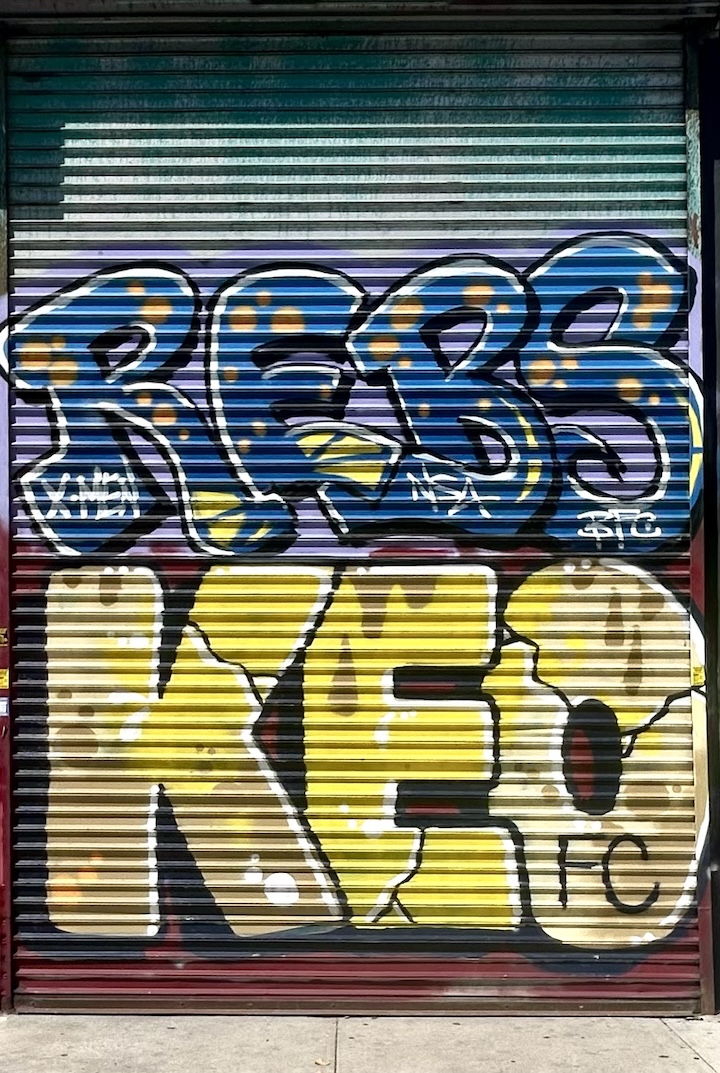
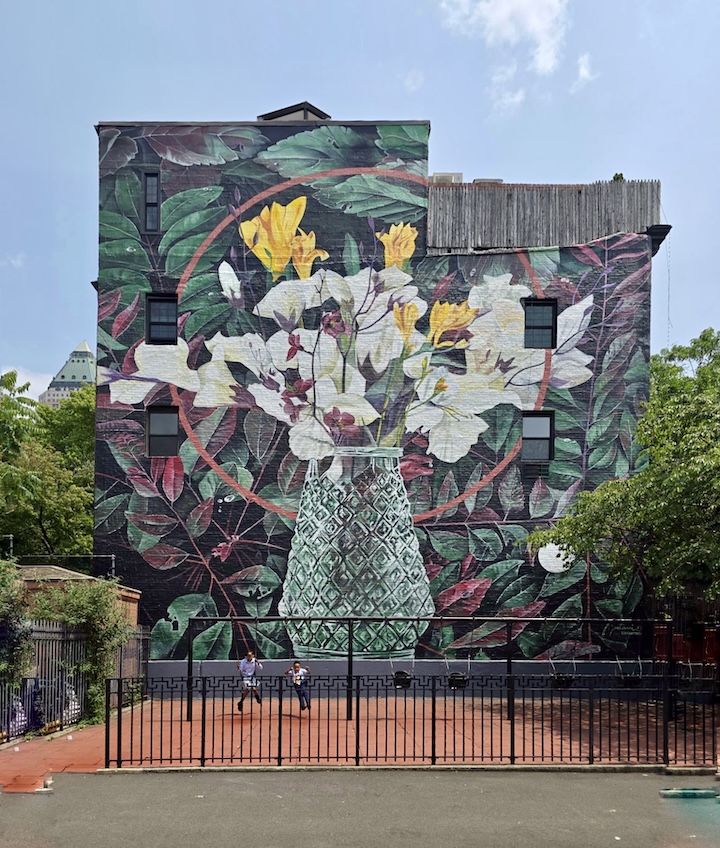
The stunning image featured above, “Botanical Plus,” was painted in Hells Kitchen by the Italian muralist Fabio Petani. Created in collaboration with the nonprofit YOURBAN 2030, it was fashioned with Airlite, a special eco-paint that reduces pollotion. Several more images of nature-inspired street art follows:

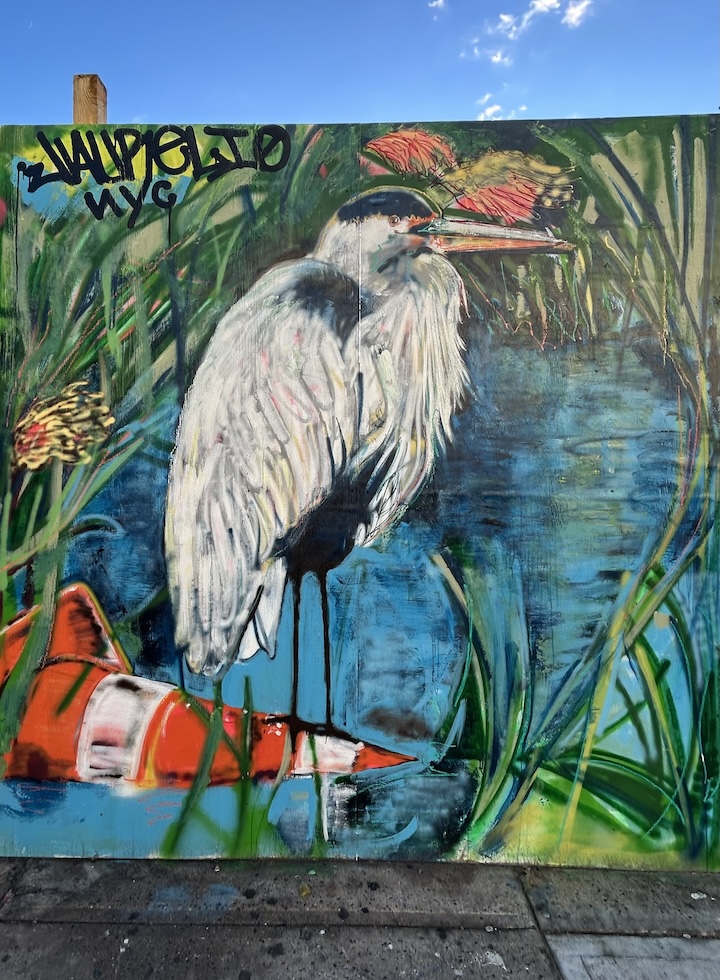
 Veteral graffiti writer BC NBA at Boone Avenue Walls in West Farms, Bronx

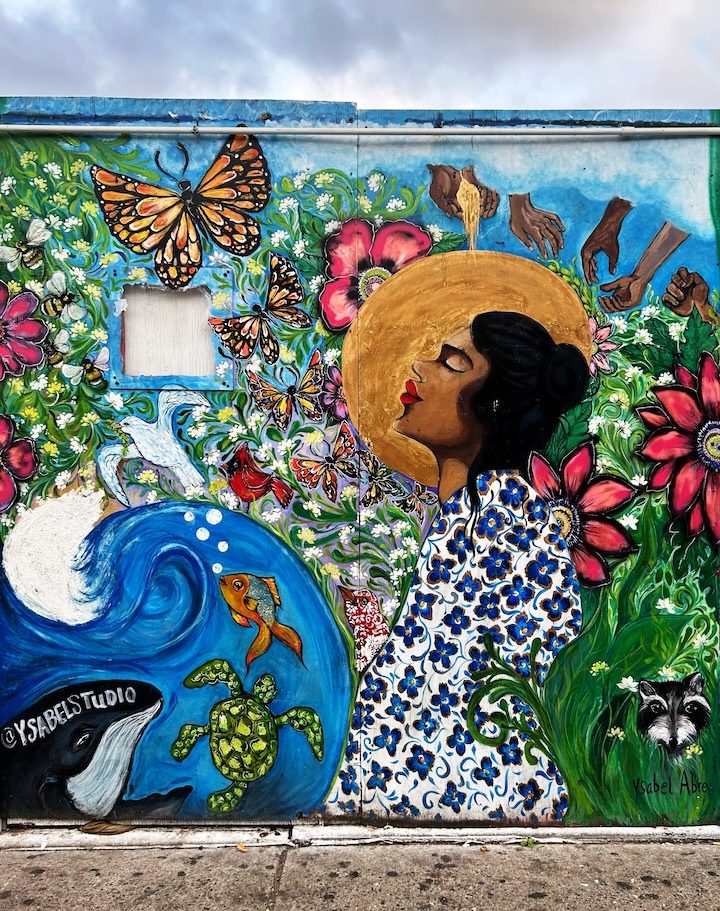
East Harlem-based artist and activist Ysabel Abreu in East Harlem with Uptown Grand Central

Bronx-born mixed media artist Jose Baez in East Harlem with Uptown Grand Central

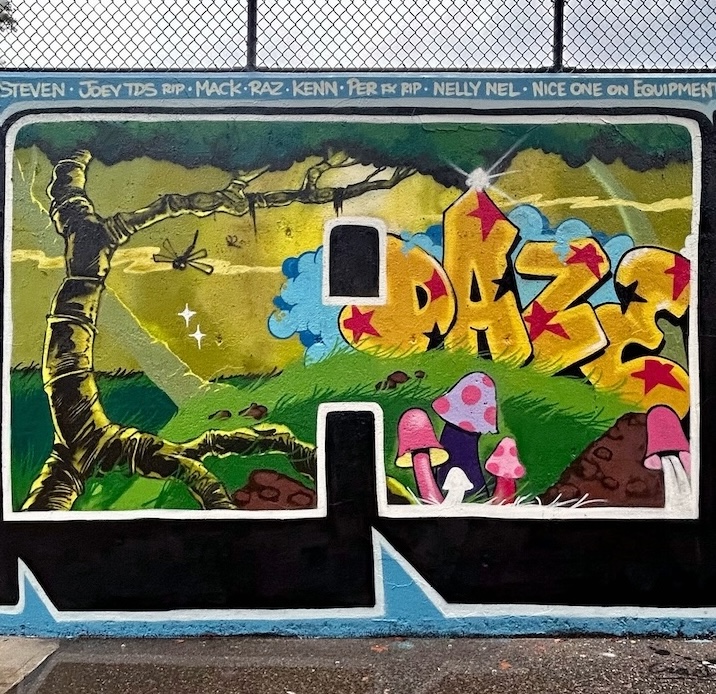
The legendary Chris “DAZE” Ellis  — segment of collaborative mural — outside the Graffiti Hall of Fame

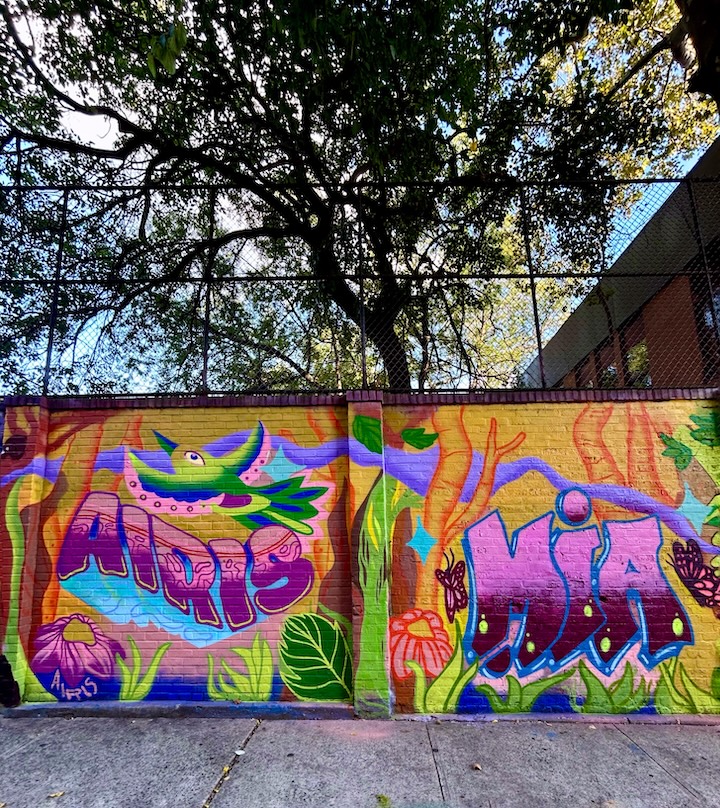
Multidisciplinary artists Airis and Mia at Boone Avenue Walls in West Farms, Bronx

Bronx-based Kingbee buzzing up in the Heights

Photo credits: 1 Tara Murray, 2-7 Lois Stavsky

{ 0 comments }
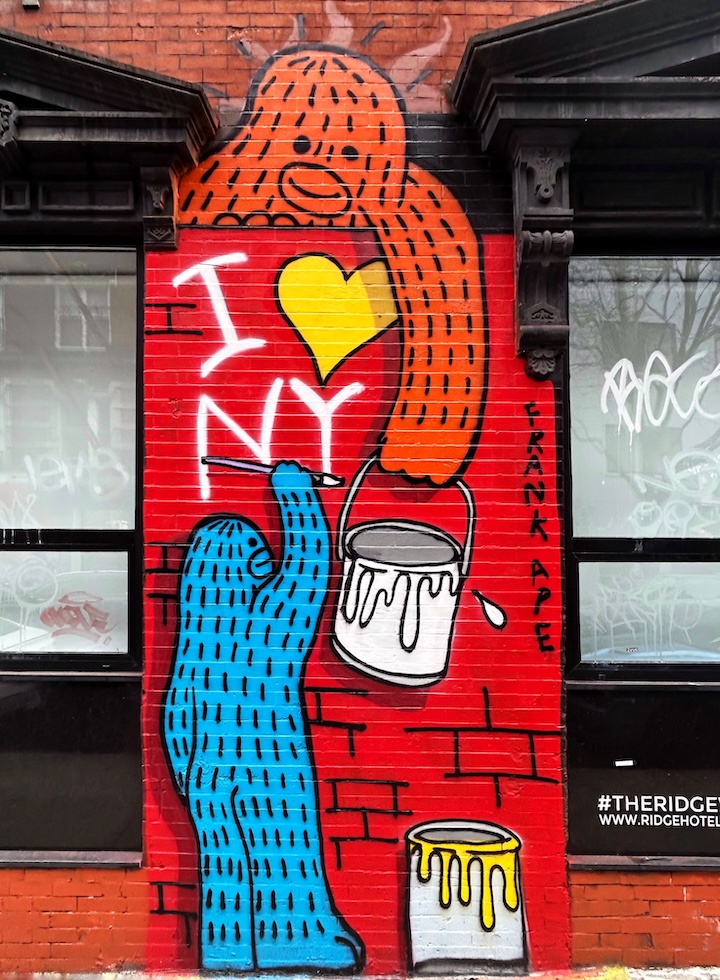
Pictured above is New York–based artist Brandon Sines‘ visual ode to NYC featuring his beloved, magical creation Frank Ape. What follows are several more homages to NYC off and on Houston Street that I captured this past Sunday.

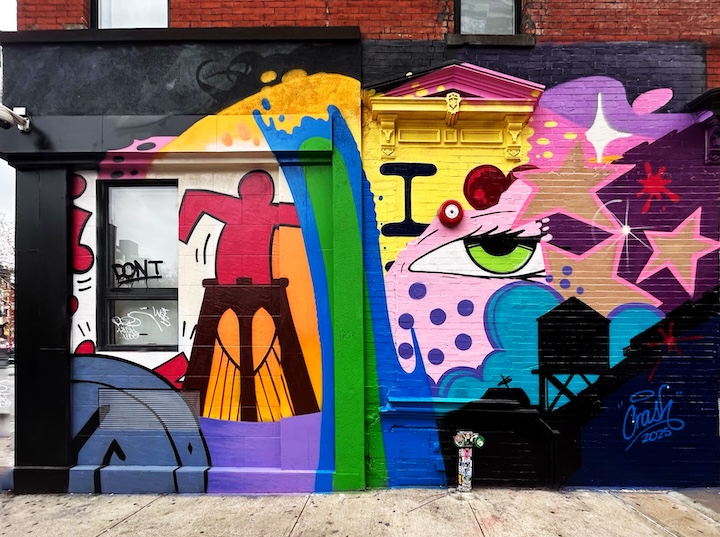
The legendary Bronx-based artist John “Crash” Matos salutes the late Keith Haring in his ode to Downtown NYC. This mural also appears on the walls of the Ridge Hotel directly off East Houston Street. 

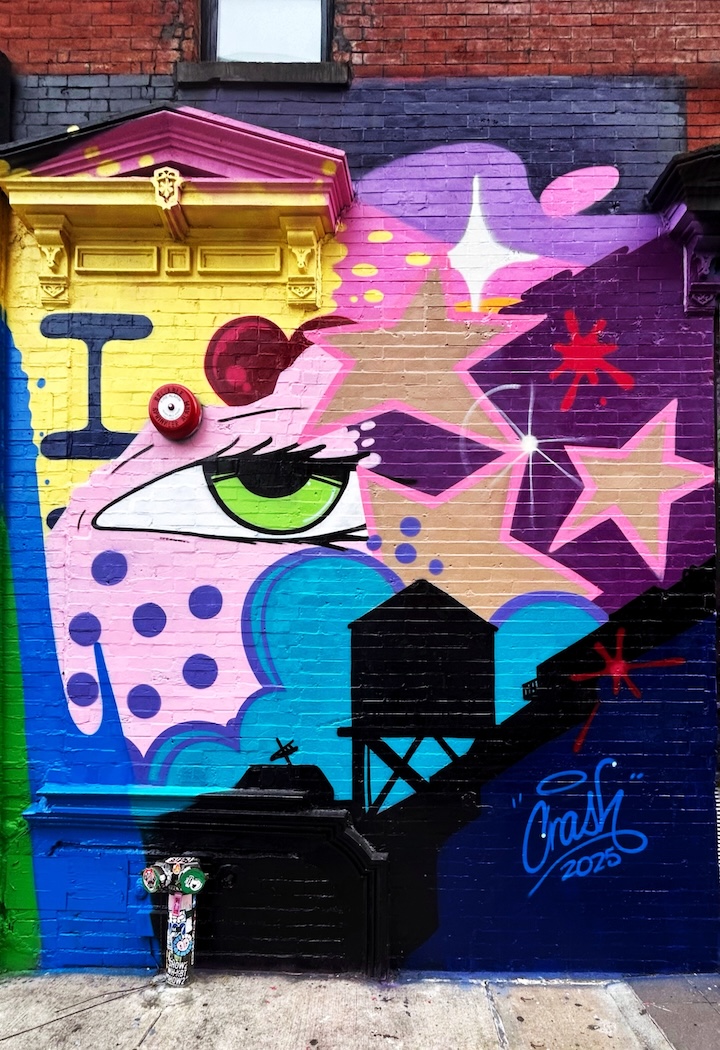
Close-up of John “Crash” Matos mural featuring the artist’s signature eye

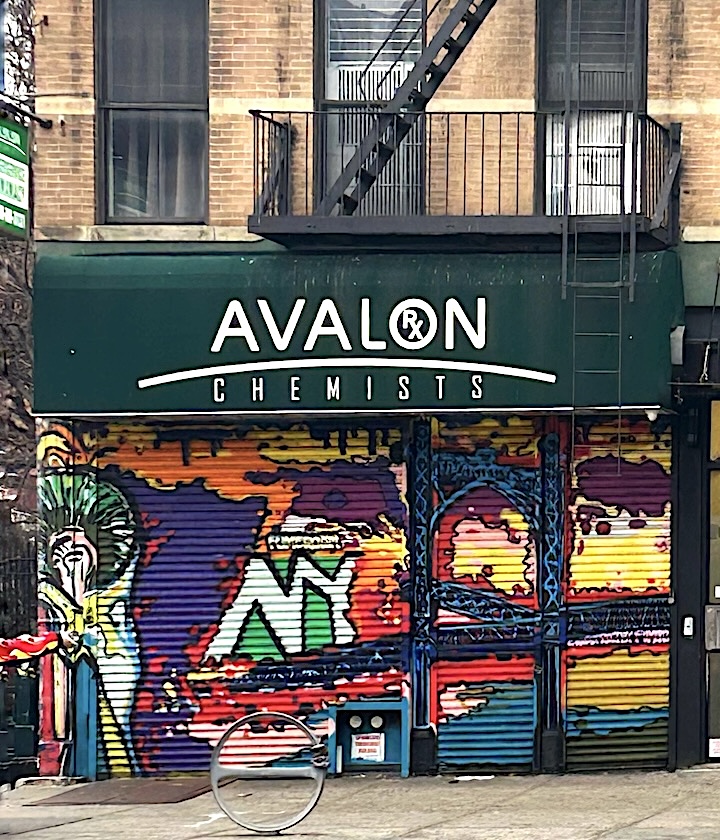
GRAFSTRACT originator Fumero brings his distinct aesthetic to Avalon Chemists’ on the corner of Houston & 2nd Avenue 

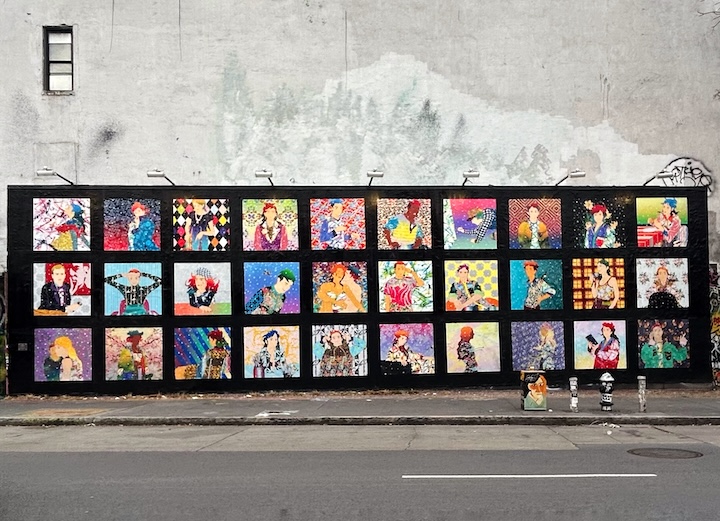
Japanese artist Tomokazu Matsuyama‘s “homage to New York’s diversity” on the iconic Bowery Wall

Photos: Lois Stavsky

{ 1 comment }

Directly off the Alabama Avenue stop on the J train is an open-air gallery featuring over a dozen wonderfully varied and alluring murals. Under the curatorial direction of Queens Art Collective, the East New York Walls attest to the diversity of urban art — as they range from graffiti to stencil art to portraiture. The sumptuously seductive image featured above was painted by Miami-based Peruvian-American artist Diana Contreras aka DidiRok.  Several more images captured last week while visiting these walls follow:

Veteran stylemaster Curve 

NYC-based, Puerto Rico-born artist Epic Uno

Brooklyn-based Colombian artist Praxis

NYC-based artist and arts educator Carnivorousflora

Philippines-born, Queens-based artist Jappy Agoncillo

Buenos Aires-born, NYC-based artist Sonni

Note: Check out the Street Art NYC Instagram for more images from East New York Walls

Photos: Lois Stavsky

{ 0 comments }
The beautification of East 125th Street and its adjacent blocks has continued into the fall as new murals  surface each week. The ebullient artwork featured above was painted by the noted Buenos Aires- born, NYC-based artist Sonni, What follows are several more new murals, along with others painted earlier this year.

Bronx-based artist Taiitan

Bronx-based artist and arts educator KayLove

Rio de Janeiro-born, Brooklyn-based artist Barbtropolis

Madrid, Spain-born, NYC-based multidisciplinary artist Noah Xifr 

Washington Heights-born multidisciplinary artist Danny Peguiro

Bronx-based artist Chelsea Garcia

Photos: Lois Stavsky

{ 0 comments }
During these past few months, the murals along East 125 Street and its surrounding blocks continued to beautify East Harlem with intrigue and charm. The homage to the late Harlem-born artist Faith Ringgold — featured above — was painted by NYC-based, New Jersey-bred artist Anna Lustberg.

What follows is a selection of images captured in our continued 2025 documentation of Uptown Grand Central:

Anna Lustberg poses in front of her mural while in progress

Bronx-based Lola Lovenotes

Yonkers-based Evan Bishop

Colombian artist Alexis Duque

Bronx-based KingBee

   Newark-based Diego Molina

Photos: Lois Stavsky

{ 0 comments }